Study Led by SCOPE PI Jonathan Zehr Wins AAAS’s Newcomb Cleveland Prize
Featuring
-

Jonathan P. Zehr
Principal Investigator, Simons Collaboration on Ocean Processes and Ecology
Bringing people and ideas together to fund, conduct, and share transformative science.
Our grants advance knowledge and strengthen connections between science and society.
Discover the latest news, research, and updates.
We convene scientists, mathematicians, and thinkers to share ideas and explore new questions.
Founded by Jim and Marilyn Simons, we’re a private philanthropy advancing mathematics and basic science.
Work with us on the frontier of basic science research.
The Flatiron Institute is a research center that uses computational science to advance fields like physics, biology, and astronomy.
Search
Principal Investigator, Simons Collaboration on Ocean Processes and Ecology
The American Association for the Advancement of Science (AAAS) announced this week that a team of researchers led by Simons Collaboration on Ocean Processes and Ecology (SCOPE) Principal Investigator Jonathan Zehr has received the Newcomb Cleveland Prize.
This prize, supported by The Fodor Family Trust, is awarded annually to the authors of an outstanding paper published in the research articles or reports sections of Science. Recipients of the award, the oldest awarded by AAAS, collectively receive $25,000.
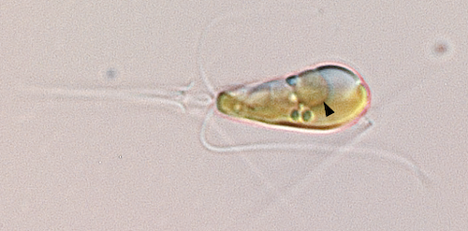
Zehr and his team were recognized for their paper, “Nitrogen-fixing organelle in a marine alga,” which reported their groundbreaking discovery within single-celled algae of a biological “factory” that converts nitrogen gas into ammonia. The research was funded in part by grants from the Simons Foundation.
The discovery of the structure — called an organelle — provides insights into the evolution of organelles, a process that was pivotal in the evolution of complex life and has likely only occurred a handful of times in biology. The newfound organelle converts nitrogen gas into ammonia, helping the algae survive in nutrient-poor ocean regions. The cellular structure identified by Zehr and colleagues is derived from another microbe that the algae have incorporated, an important finding for evolutionary biology.
As part of SCOPE, Zehr examines the genomic and physiological bases of free-living and symbiotic nitrogen-fixing microorganisms and how they relate to growth, distributions and biogeochemical activities in space and time. He hopes his work will provide a better understanding of the links between microbial community structure and the biogeochemical cycles of carbon, nitrogen and phosphorus to develop a better quantitative and predictive framework for understanding microbial processes in the sea.
Zehr received his B.S. in biology from Western Washington University and his Ph.D. in ecology from the University of California, Davis. He completed postdoctoral work at Stony Brook University, Brookhaven National Laboratory and New England Biolabs, Inc. He is currently a distinguished professor emeritus in the Department of Ocean Sciences at the University of California, Santa Cruz.