Two Studies Highlight the Utility of Carrier-Derived iPSC-Derived Neurons for the Study of Neurodevelopmental Disorders
Featuring
-

Erik Ullian
SFARI Investigator
-
Lauren Weiss
SFARI Investigator
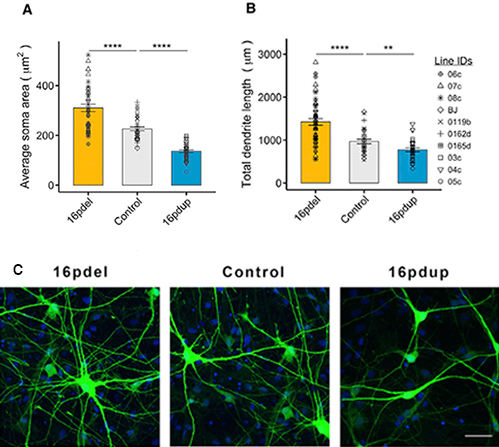
SFARI Investigators Lauren Weiss and Erik Ullian were awarded a SFARI Research grant in 2015 to develop human induced pluripotent stem cell (iPSC) lines for the identification of specific cellular phenotypes associated with neurodevelopmental disorders arising from 16p11.2 copy number variants (CNVs) and from HRAS and BRAF-mediated RASopathies. Recently, Weiss and Ullian published interesting results coming out of their efforts. In Deshpande et al., the researchers demonstrated possible cellular bases for the opposing macro- and microcephaly phenotypes in 16p11.2 deletion and duplication carriers, while also providing insights into synaptic mechanisms that might underlie the overlapping behavioral phenotypes in these disorders. Separately, by developing an iPSC neuronal cell line from the most common BRAF mutation found in the RASopathy cardiofaciocutaneous syndrome (CFC), a paper by Yeh et al. uncovered developmental alterations that parallel clinical observations in CFC and demonstrated the importance that cell context plays in the alterations to Ras signaling seen in this syndrome. More broadly, by exploring developmental, cellular and biochemical alterations in these various carrier-derived cell lines, the Weiss and Ullian laboratories have shown that carrier-derived iPSC lines are a valid, and valuable, model for understanding the cellular pathologies associated with neurodevelopmental disorders.

