Search
What are you looking for?
Featured



Results
-
 … theory and particle physics. In this talk, I’ll describe some basic aspects of this concept, starting with simple physical problems and illustrating the ideas using familiar …
 -
 Earth’s climate trajectory over the next few decades will be influenced by human-induced climate change and by internally generated variability in the climate system. Clara Deser …
 -
 On 25 April 2013, Matthew State discussed genetic discoveries in autism research and the challenges that lie ahead.
 -
 The genetics and genomics of autism spectrum disorders have reached a tipping point. The recent focus on de novo mutations has led to systematic, highly productive gene discovery …
 -
 The mighty water molecule is responsible for much of what we know about climate and climate change, and even more of what we don’t know. In this …
 -
 This lecture presented by Brian J. Soden outlines our understanding of the main feedback processes in the climate system and how they impact both the magnitude of future …
 -
 Andrei Okounkov presents a talk about the law of large numbers, in its various manifestations. This is a real cornerstone of probability, which states that a random system …
 -
 Some 90 tropical cyclones develop each year. In this lecture, Professor Kerry Emanuel will review the theory of tropical cyclones and how it informs observed variability. He will …
 -
 Genetics tells us that abnormal synaptic and nuclear proteins are often at the root of major neuropsychiatric disorders. Autism, a prominent and often debilitating disorder of the brain …
 -
 Probability theory was devised in order to understand gambling, but now is the underpinning of statistics, without which we would be clueless in our complex society. Yet probability …
 -
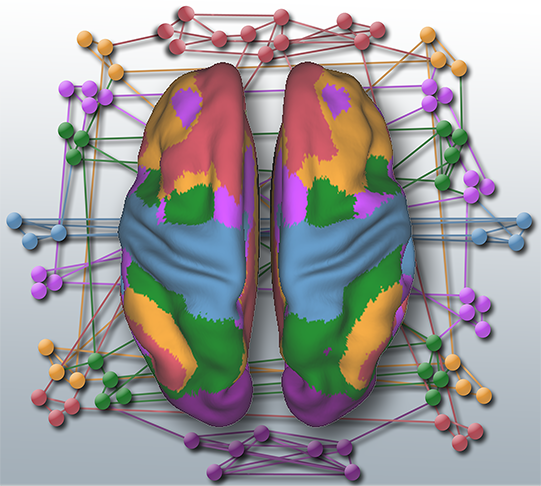
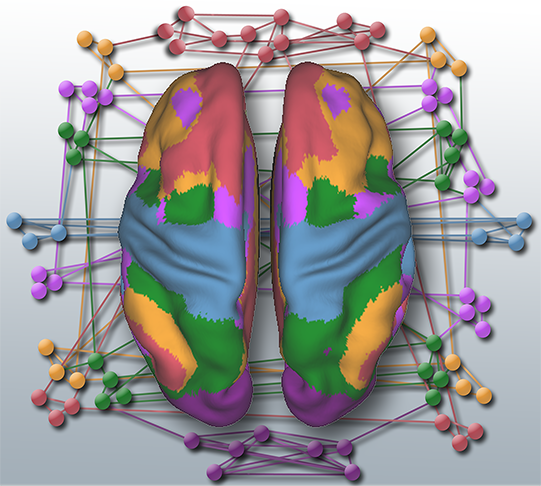 Resting-state functional magnetic resonance imaging (fMRI) has been used to identify consistent functional patterns in neurotypical individuals, as well as changes in neurologic and psychiatric diseases.
 -
 January 31, 2013, 12:30-5:30 p.m. EST Gerald D. Fischbach Auditorium at the Simons Foundation 160 Fifth Avenue, New York, NY This Biotech Symposium will …
 -
 This comprehensive and accessible series features some of today’s most pressing issues. This series will not only inform the public about the connection between math and sustainability …
 -
 The talk describes (dis)similarity distances between pairs of two-dimensional surfaces (embedded in three-dimensional space) that use both local structures and global information in the surfaces.
 -
 The mind and brain can be thought of as computational systems — but what kinds of computations do they carry out, and what kinds of mathematics can best characterize …
 -
 Most sensory stimuli in the natural world exhibit strong statistical regularities. A proposed general principle of sensory neuroscience is that the brain’s circuitry is designed to take …
 -
 A talk on recent advances in methods and instrumentation that combine genetically encoded molecular sensors, optical imaging and virtual-reality systems to measure neural-circuit dynamics in the …
 -
 While significant progress has been made on key cosmological questions, many remain unanswered: What happened during the first moments of the big bang? What is dark energy? What …
 -
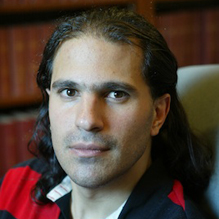 Nima Arkani-Hamed's research has shown how the extreme weakness of gravity, relative to other forces of nature, might be explained by the existence of extra dimensions …
 -
 This talk describes experimental progress toward controlling quantum mechanical coherence and entanglement in a solid-state environment.
 -
 This talk is based on mathematical and computational studies of neural network models. Understanding the range of dynamic phenomena in such models provides a basis for thinking about …
 -
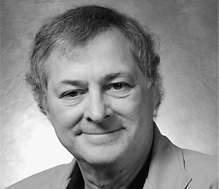 The evolution of organisms requires the generation of some diversity in the offspring and then the selection of the fittest in the present environment from among this diversity …
 -
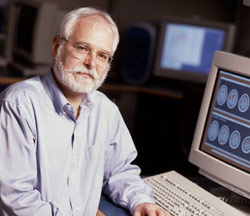 This talk discusses progress in developing devices that can restore lost functions of the nervous system following disease or injury, in particular the development of a brain computer …
 -
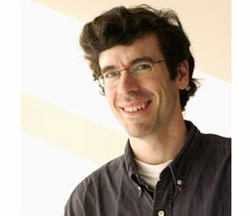 Analyzing the collective behavior and social interactions of hundreds of millions of people with powerful computational techniques offers a radically new perspective on fundamental questions in the social …
 -
 Fundamental gaps remain in our understanding of animal brains, especially human brains, in comparison with other organ systems in the body. One of these gaps is our very …
 -
 Can efficient algorithms find approximately optimal solutions? The classical theory of NP-completeness didn't address or preclude this possibility.
 -
 This talk presents a strategy based on systematic gene perturbation and innovative multiplex detection to derive regulatory networks in mammalian cells.
 -
 Bacteria have developed an astonishing panoply of survival strategies in varying environments. This talk describes some recent experimental and theoretical studies connected with microbial behavior.
 -
 This talk presents the normalization model of neural computation and elaborates the hypothesis that dysfunctions of normalization may be associated with schizophrenia, amblyopia, epilepsy, and autism spectrum disorders.
 -
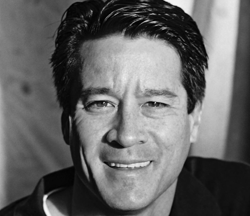 The modern ability to carefully measure large-scale social networks has driven new empirical studies and theoretical models of growth, dynamics, influence, and collective behavior in such systems.
 -
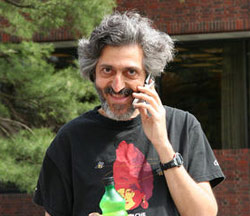 Man has grappled with the meaning and utility of randomness for centuries. This talk describes two main aspects of the research on randomness with respect to the theory …