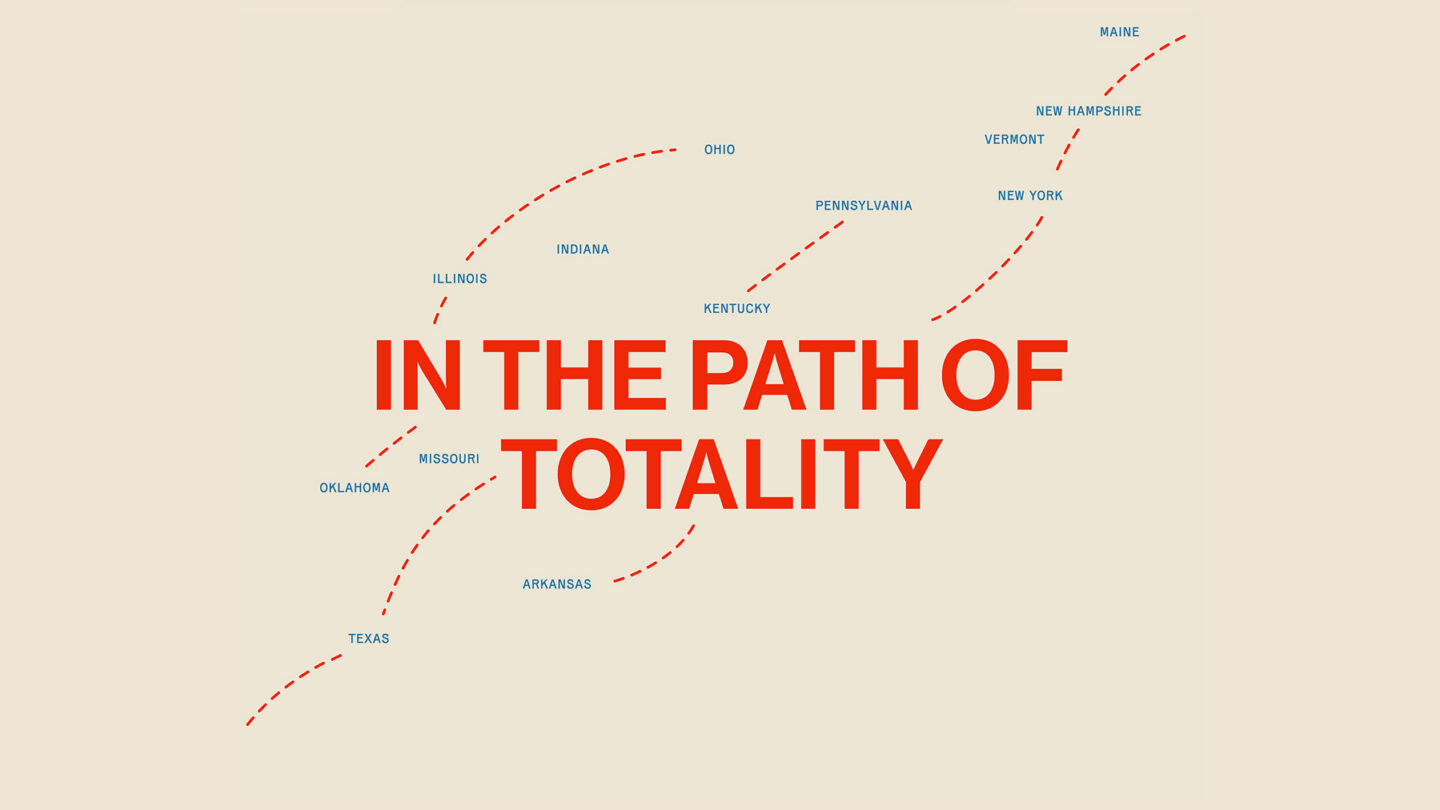
In the Path of Totality
On April 8, 2024, millions of Americans gathered to see the total eclipse of the sun.
What connects Bloomington, Indiana to Buffalo, New York? Or Austin, Texas to Akron, Ohio? At a surface level, it may not be much. But for a few minutes on an April Monday, they were connected by a celestial event that, for many, was a once-in-a-lifetime experience.
Across the Nation
About
On April 8, 2024, a total solar eclipse passed through towns and cities that are home to more than 30 million Americans. People gathered at town squares, festivals, science museums, breweries, parking lots, schoolyards and more. For several minutes, the magnificent power of the sun was dimmed by the Moon, an object 1/400th of its size. The temperature dropped, birds went quiet and a small part of our world went dark.
The physical effects of an eclipse are the stuff of legend — literally. People describe feelings of connectedness, joy and humility. Many travel around the globe to chase eclipses. If legend is to be believed, eclipses have even stopped wars. It’s a singular experience, one with a rare power of bringing us closer — to the cosmos and to each other.
The Simons Foundation worked to ensure that the millions of people in the path of totality had an unforgettable experience. The Sun and the Moon did most of the work, and the communities that make up the towns in the path did much of the rest. Each place celebrated in a way only they can.
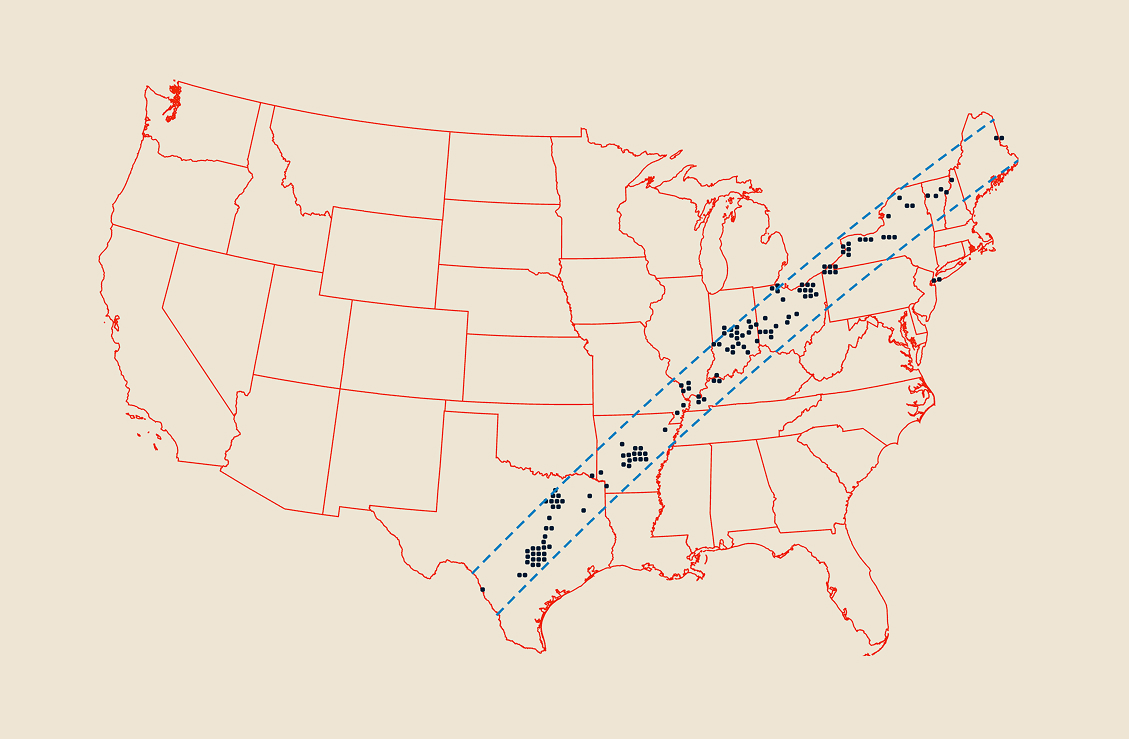
And while the entire country experienced a partial eclipse on that April day, we focused our efforts on places within the path of totality. These communities have less access to science engagement opportunities and resources as those in larger cities like New York or San Francisco.
Through carefully formed partnerships, we provided financial and capacity-building support to institutions and communities along the path of totality. We worked with science museums, cultural centers, local artists and businesses and more.
We’re rarely afforded opportunities for shared joy and wonder at this scale. Every town and every community are different — Buffalo is not Bloomington, and Akron is not Austin — and none of us experience the world exactly the same way.
But for those of us who were in the path of totality, this eclipse connected us, even if only for a few minutes.
From museums to main streets, explore how communities came together under the eclipse.
New York City may not be in the path of totality, but it is the place we call home. The Big Apple will get 90 percent totality on April 8 and, given the Simons Foundation’s commitment to supporting research and public engagement in our beloved hometown, we knew it was important to support eclipse celebrations here.