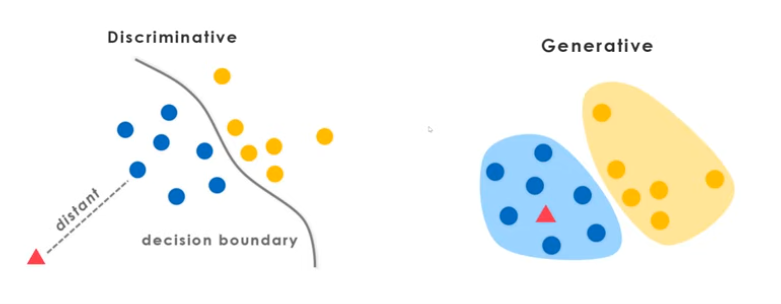
The two types of models are in different stages of development, making it difficult to compare their benefits. Current discriminative models can actually process images, giving them an edge over generative models. (This may reflect more of what researchers can do on a computer rather than what the brain can do, however.) At present, generative models are difficult to train and build and can only really be run on small toy problems — not the real-world challenges the visual system faces. Without models that are as good at image processing as today’s discriminative models, generative approaches don’t stand a chance of beating them on quantitative predictions of neural activity. Trying to compare them is a bit like comparing today’s cars to self-driving cars; self-driving cars may have some good features, but if you need to get around today they won’t be much help.
“At the end of the day, you’re going to have to have a model to test,” says Jim DiCarlo, a neuroscientist at MIT and an SCGB investigator. DiCarlo, who represented the discriminative side in the GAC, has shown the powerful ability of discriminative models trained on object recognition to predict neural activity. “Once someone builds a new image-computable model, only then can experimental data from my lab and others be used to adjudicate the accuracy of that model relative to other models.”
In a way, this reduces the debate over generative versus discriminative approaches to an engineering race. Even if generative approaches make a lot of intuitive sense, researchers still need to make them work in practice in order to make large-scale comparisons to brain activity. At present, they can’t. But generative models may not always be the underdog. Given their beneficial properties — notably, their ability to train without much labeled data — machine learning researchers hope they will become useful in the future. “It’s important that we do not confuse what we find easy or can do right now with what the brain can do,” Ralf Haefner, a neuroscientist at the University of Rochester, said at the event.
Exploring the intersection
Many models don’t fit neatly into one category or the other, as the GAC panelists were quick to note. Recurrent discriminative models exist, some generative models can be fast, and so on. Forcing the brain into boxes defined by statisticians and engineers has risks, said Benjamin Peters, a neuroscientist at Columbia, during the discussion. “We shouldn’t be too literal but rather just take inspiration from the algorithms.”
The visual system could, for example, be using a discriminative component for quick and easy visual perception but still contain generative elements for more deliberative functions. Or a built-in generative model could use its predictions about the world to help provide training data for the brain’s discriminative portion. Talia Konkle, a neuroscientist at Harvard University, argued in her talk for an acknowledgment of the separation between perception and cognition, with perception as a discriminative process and cognition as a more generative one.
Some hybrid approaches are already popular in the field of machine learning. Contrastive learning, for example, is a style of training in which a network learns to group similar things, such as different crops of the same image, and distinguish dissimilar things. This approach has generative components — the training doesn’t require explicit object labels, and it creates representations that capture a lot of the relevant statistics in the data. At the same time, it can work well with feedforward architectures, which are typical of discriminative models. And it does learn to discriminate between similar and different images.
Given that these models can fall on a spectrum, some researchers question whether it makes sense to focus on a binary divide. “Are these even really the terms we want to converge on?” says Kim Stachenfeld of DeepMind. Scientists and engineers acknowledge that a clear distinction between generative and discriminative processing isn’t necessary to build a system that works. Nor is this distinction necessary to understand the brain. “If you think it’s one or the other, you’re missing the point,” Kriegeskorte says. “I’m no longer sure if in 10 to 20 years we will think of it in this dichotomy.”
Part of the purpose of the GAC was to explore the discriminative-versus-generative debate as a means of moving the field forward. Stachenfeld felt that it was useful to try to organize approaches to the visual system into these two camps and then “see what’s left over” — the leftovers illustrate what kind of new terminology and ideas are needed. Others agreed the discussions helped clarify which features are truly essential to each type of modeling approach and how to think through the evidence for each in the brain. Kriegeskorte noted that he is now “avoiding stupid mistakes I used to make” around the use of terminology for these models.
The real test of whether these conceptual advances matter will be the extent to which they impact experiments. Experimental design is an area where real progress is harder to come by, Kriegeskorte says.
Doris Tsao, a neuroscientist at the California Institute of Technology and an SCGB investigator, proposed one avenue for experiments: isolating the generative component of the nervous system and studying its impact on neural activity in the absence of feedforward input about the current state of the world. Previous research in people with corpus callosum lesions offers some hints. In cases where a portion of this pathway between the two hemispheres had been cut, researchers showed a word such as ‘knight’ to the right hemisphere (via the left eye); this caused patients to describe (via the influence of feedback connections in their left hemisphere) a visual scene of knights even without any visual stimuli presented or conscious awareness of the word. Tsao believes similar experiments in animals could help identify the top-down generative pathways responsible for conjuring this imagery. However, GAC participants were divided on whether artificial isolation of the generative system will help elucidate its function under normal circumstances.
Most participants agreed on the need for experiments that focus more on the generative abilities of the brain. Nicole Rust, a neuroscientist at the University of Pennsylvania and an SCGB investigator, made an argument for studying visual prediction, such as the ability to predict what will happen next in a video. DiCarlo said that discussions surrounding the GAC have increased his desire to do more experiments inspired by the benefits of generative processing.
Over the next year, the group will continue to discuss concrete steps for advancing the research and share their progress with the broader community through publications and events. It was fun to “have all these people who think different things in the same room,” Stachenfeld says. And hopefully the effort this diverse group of researchers put into working through their different beliefs and assumptions will help them clarify these concepts and solidify the landscape of future research for both neuroscience and machine learning.