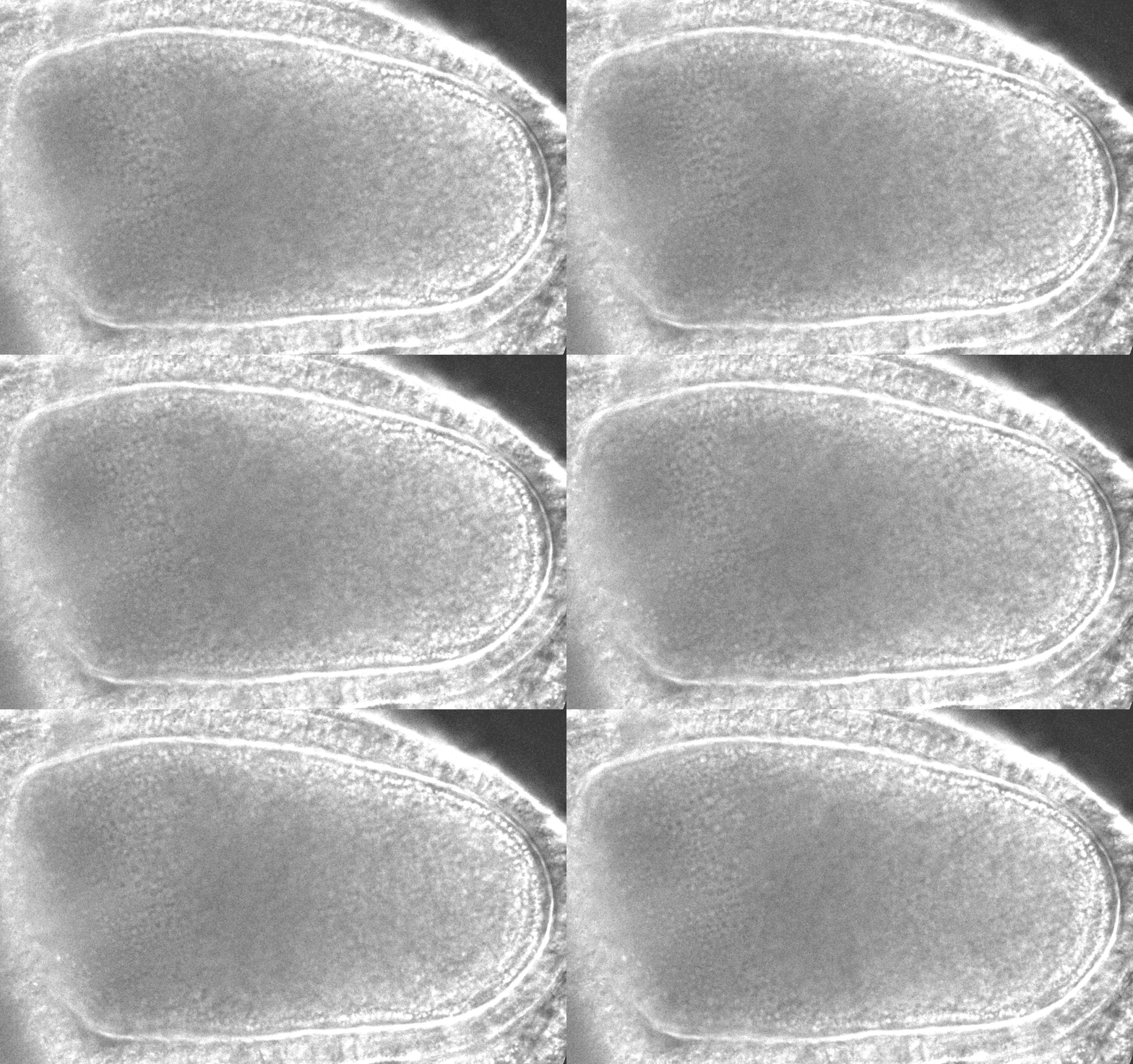
“After it’s fertilized, the oocyte will become the future animal,” says study co-author Sayantan Dutta, a researcher at Princeton and the CCB. “If you destroy the flow in the oocyte, the resulting embryo doesn’t develop.”
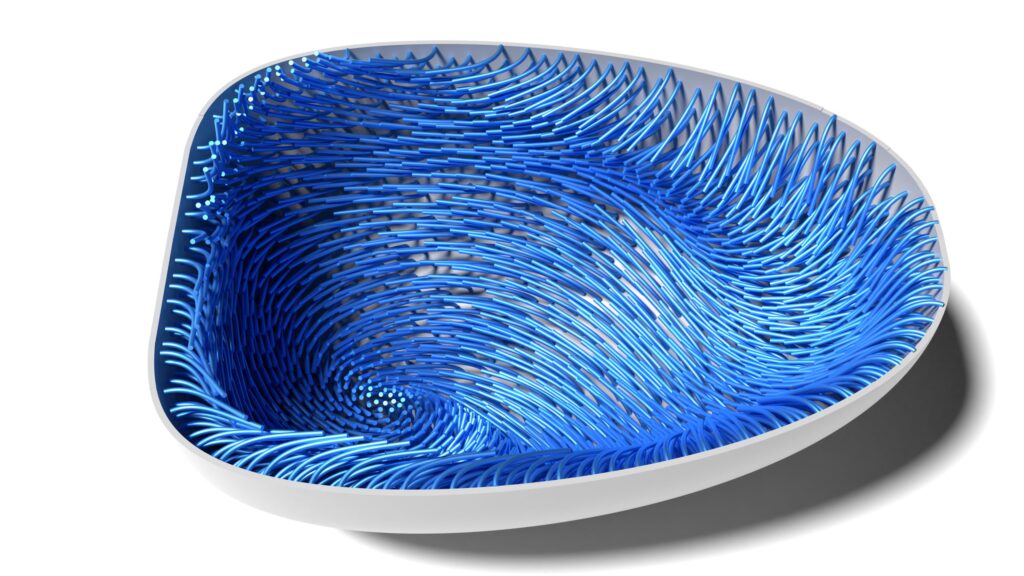
The researchers used an advanced open-source biophysics software package called SkellySim developed by Flatiron Institute researchers. With SkellySim, they modeled the cellular components involved in creating the twisters. These include microtubules — flexible filaments that line the inside of a cell — and molecular motors, which are specialized proteins that serve as cellular workhorses, carrying special groups of molecules known as payloads. Scientists aren’t exactly sure what these payloads are made of, but they play a key role in generating the flows.
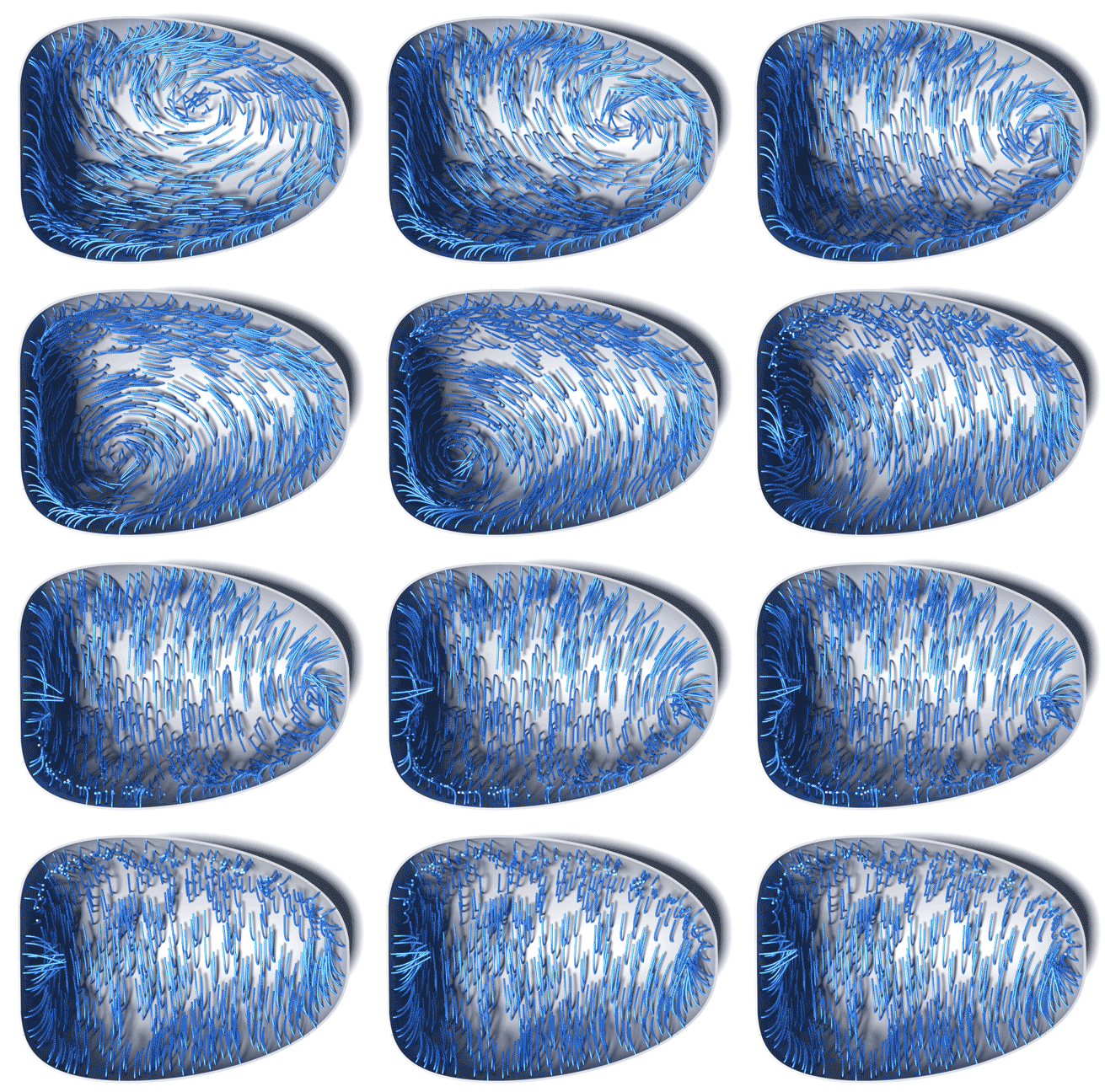
The researchers simulated the motion of thousands of microtubules as they responded to the forces exerted by payload-carrying molecular motors. By going back and forth between experiments and their simulations, the researchers were able to understand the structure of the twister flows and how they arose from the interaction between the cellular fluid and microtubules.
“Our theoretical work allows us to zoom in and actually measure and visualize these twisters in 3D,” says study co-author and CCB research scientist Reza Farhadifar. “We saw how these microtubules can generate large-scale flows just through self-organization, without any external cues.”
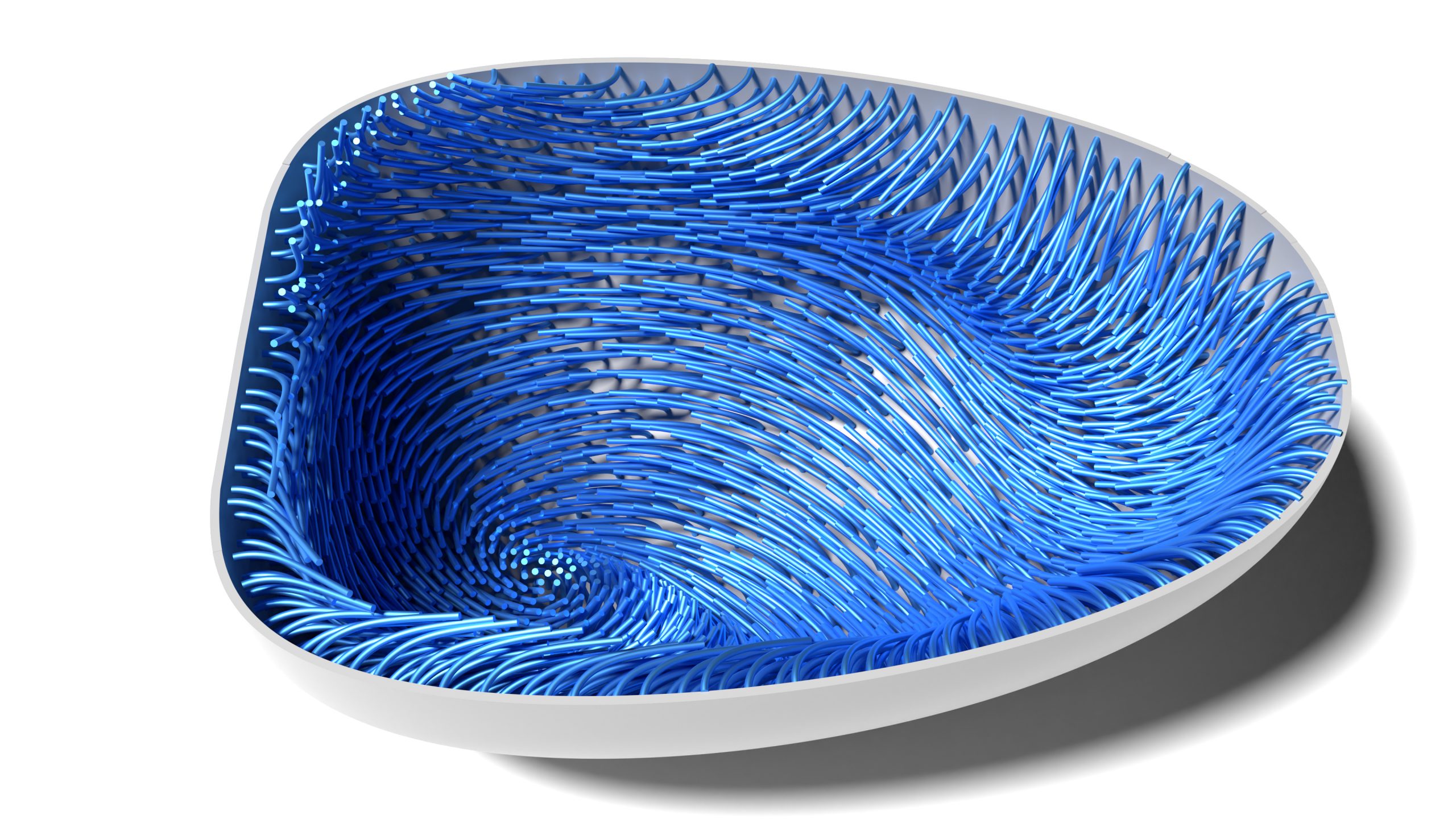
The models revealed that inside the oocyte, microtubules buckle under the force of the molecular motors. When a microtubule buckles or bends under this load, it causes the surrounding fluid to move, which can reorient other microtubules. In a large enough group of bending microtubules, all the microtubules bend in the same direction, and the fluid flows become ‘cooperative.’ With the microtubules collectively bent, the moving payloads create a whirlpool or twister-like flow across the whole egg, helping molecules disperse around the cell. With the twisters, molecules can travel across the cell in 20 minutes instead of 20 hours.
“The model showed the system has an incredible capacity for organizing itself to create this functional flow,” Shelley says. “And you just need a few ingredients — only microtubules, the geometry of the cell, and molecular motors carrying payloads.”
The new findings lay the foundation for a better understanding of egg cell development. The results could also help demystify material transport in other cell types.
“Now that we know how these twisters form, we can ask deeper questions, like how do they mix the molecules inside the cell?” Farhadifar says. “This opens a new dialogue between theory and experiment.”
The new work provides a fresh look at microtubules, Dutta says. Microtubules play a central role in various cell types and cell functions — such as cell division — across almost all eukaryotic organisms, such as plants and animals. That makes them “a very important part of a cell’s toolbox,” Dutta says. “In better understanding their mechanisms, I think our model will help drive the development in a lot of other really interesting problems in cellular biophysics.”