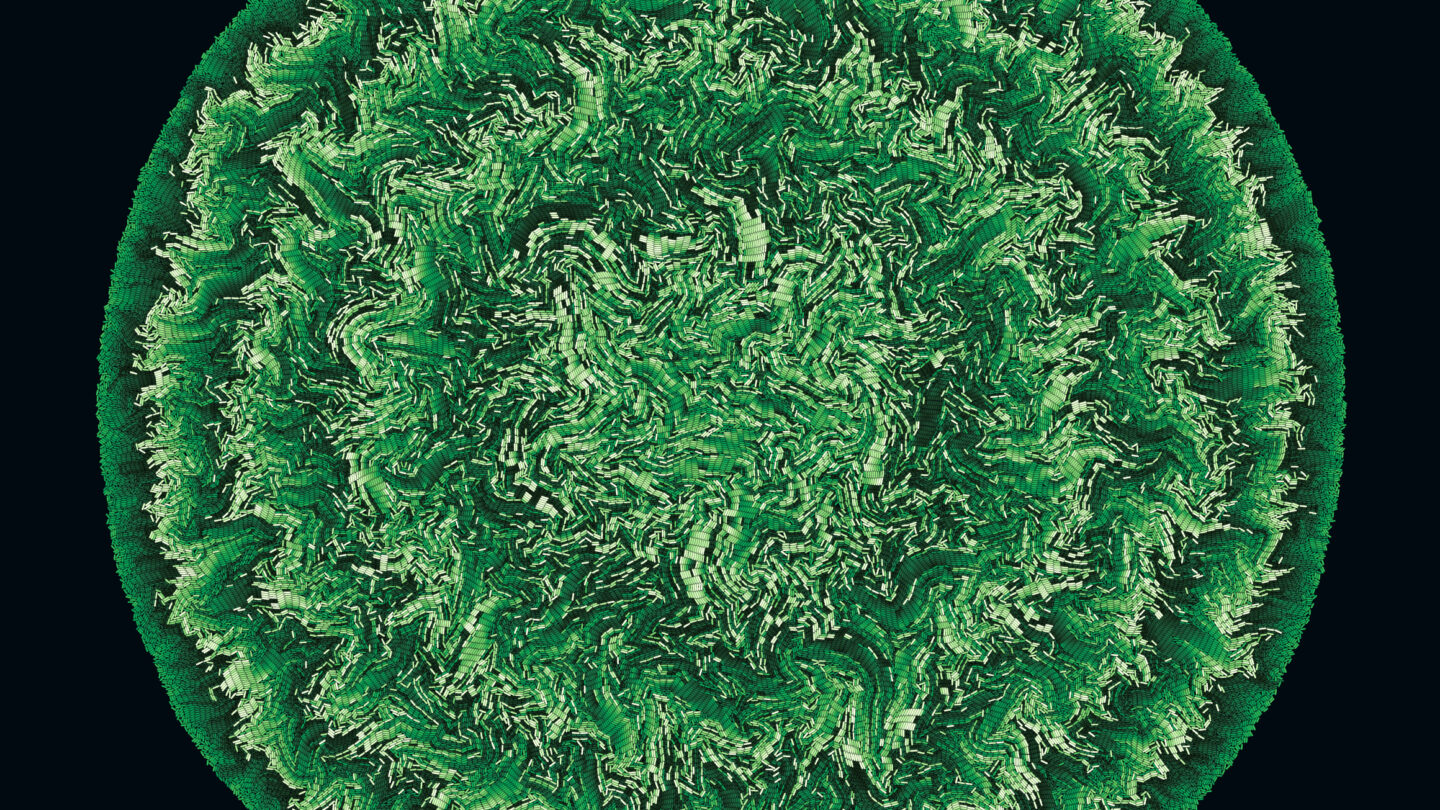
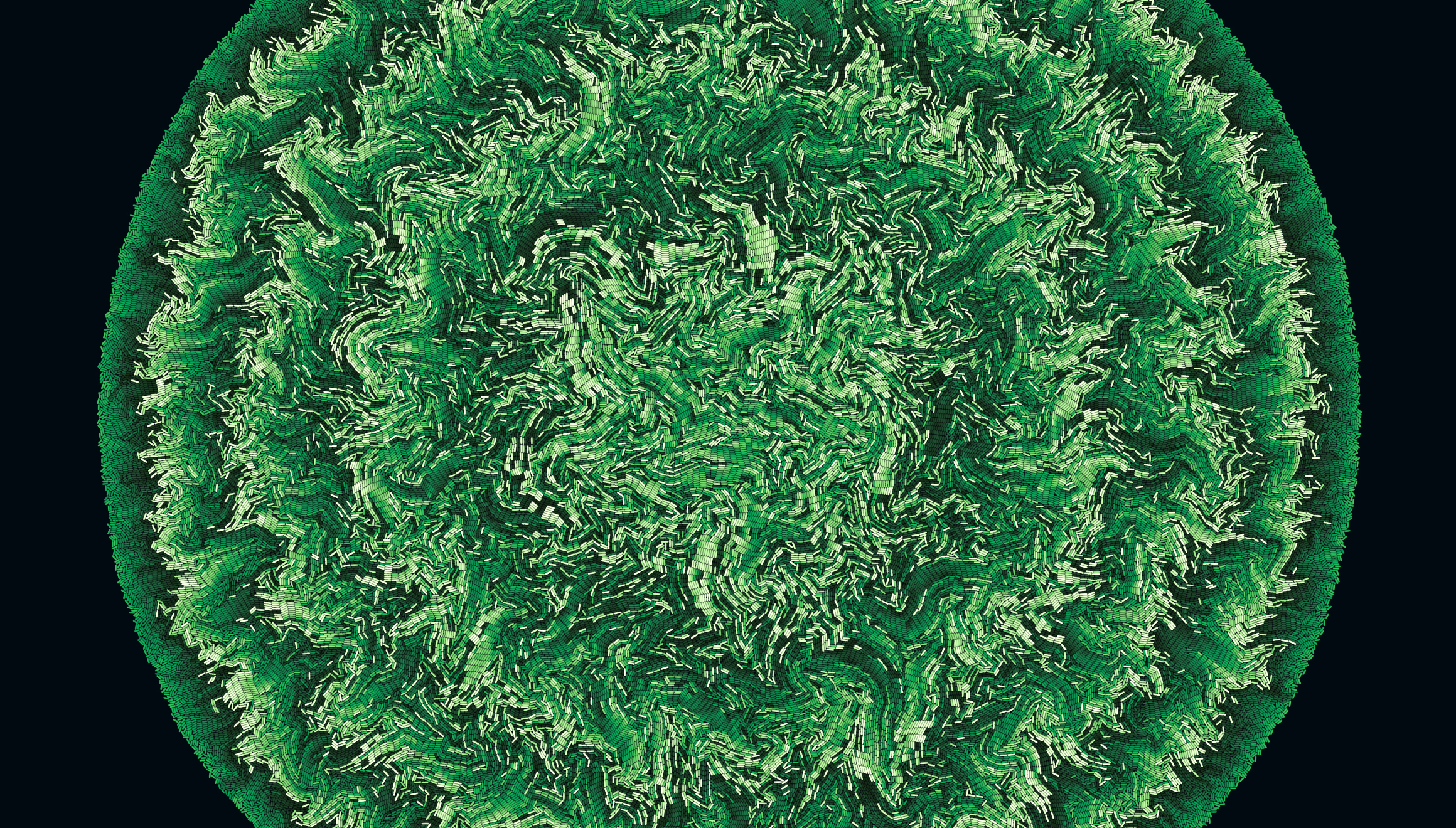
Like so many organisms on the planet, when cells experience mosh-pit-level crowding, they may just become stressed. Yet unlike most other life forms, cells subject to physical stress from crowding by neighbors can find some relief by dramatically slowing their own growth — and in doing so form an eye-catching pattern of concentric circles as a spectacular consequence.
This process, discovered through simulations and modeling of dividing bacterial colonies, is described in a new Physical Review Letters study published on October 10. The findings could suggest new ways to slow the growth of harmful microorganisms in infections or manufacturing, says study lead author Scott Weady, a research fellow at the Flatiron Institute’s Center for Computational Biology in New York City.
“I was definitely surprised to see that cells under this kind of mechanical stress can mitigate growth in that way,” Weady says. “It’s interesting that they form these concentric circles where each ring shows how much they’ve been stifled by their neighbors, ultimately impacting how large they can grow. It’s a robust pattern that comes from a very simple rule, and it’s just something that no one had really thought to measure before.”
Weady co-authored the study with fellow Flatiron Institute researchers Bryce Palmer, Adam Lamson, Reza Farhadifar and Michael Shelley, as well as Taeyoon Kim of Purdue University.
A Deep Dive into Dividing Cells
Weady’s group is interested in biophysical modeling — or, as he puts it, how small-scale rules govern large-scale behaviors. In this case, his team wanted to investigate cell proliferation, the process by which cells divide to make more copies of themselves.
The group began with an exploratory approach, examining simulations of growing bacterial colonies. In the beginning, they were looking at more general measures like cell size regulation, but then started noticing a pattern.
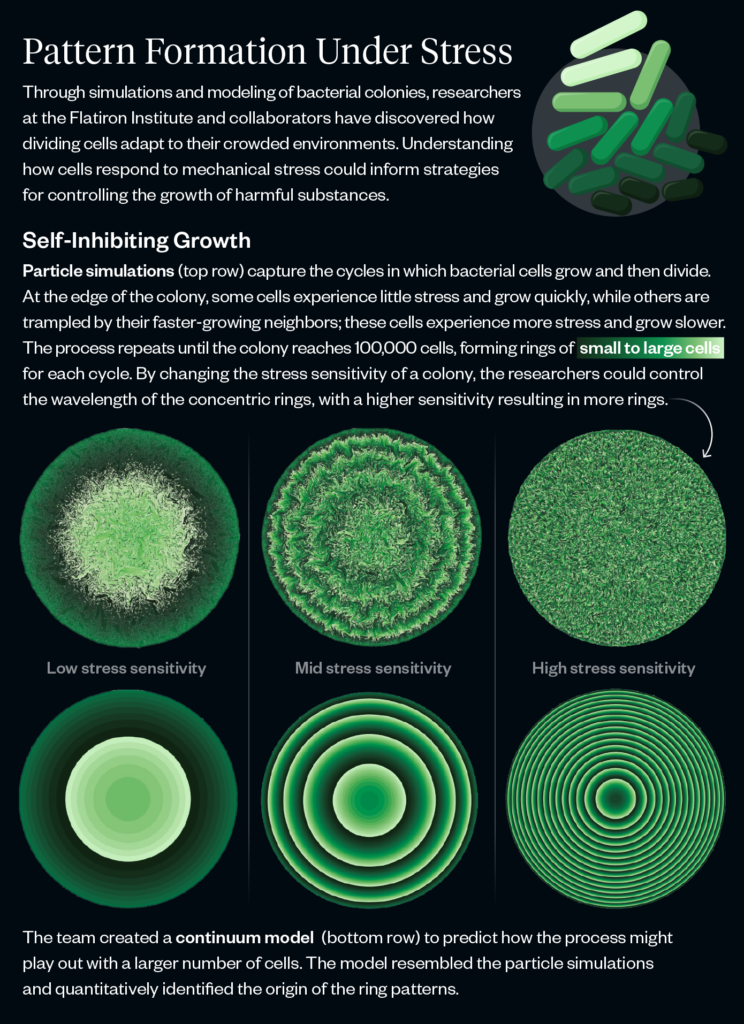
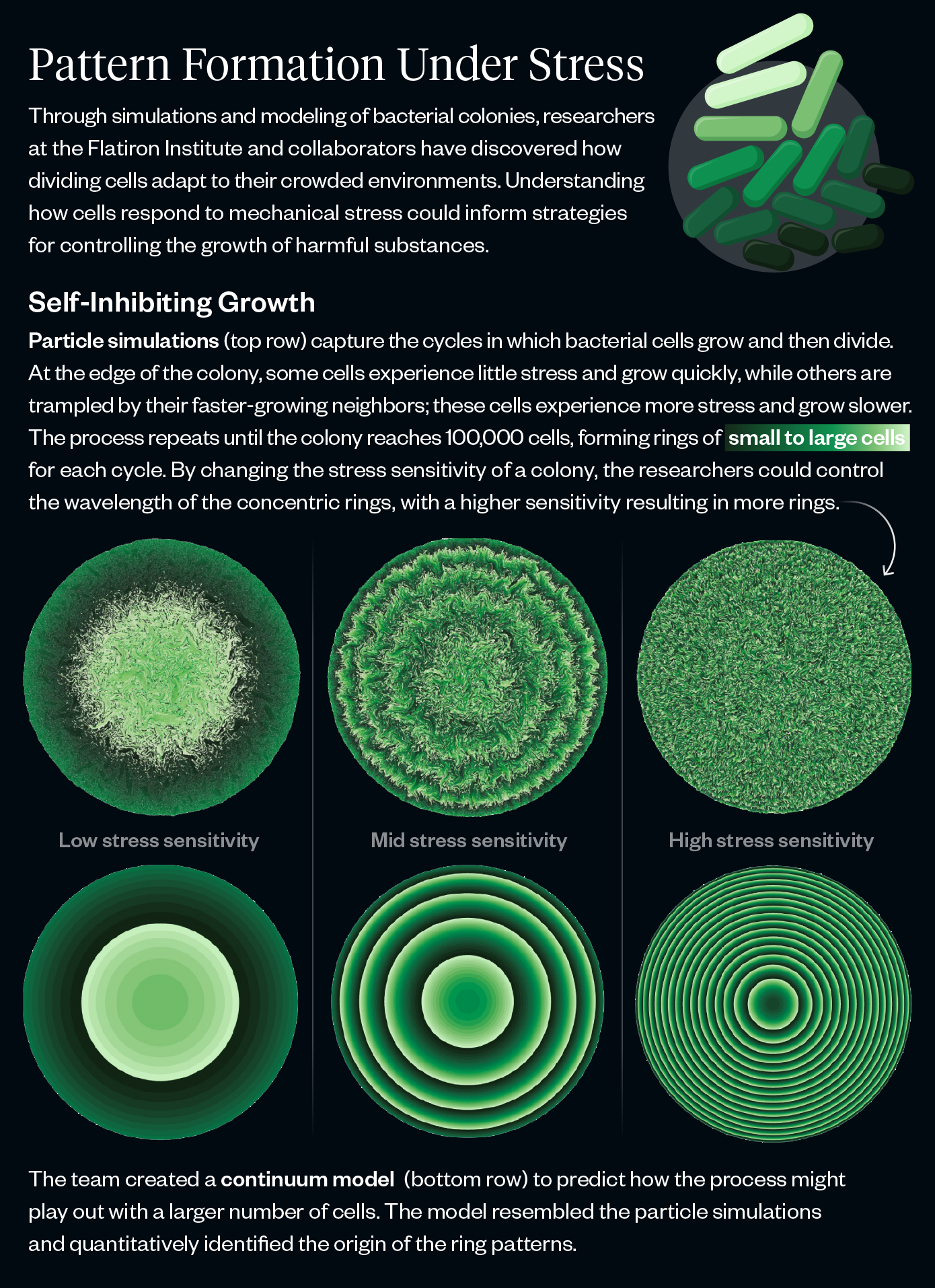
Typically, the cell proliferation process is exponential: A cell splits in two, and those offspring split in two, and so forth, to keep growing at an increasing rate. In their simulations, however, the team noticed that cells weren’t dividing as you’d expect — in fact, their proliferation rate significantly slowed as their environment became more crowded.
“You start with a single cell, which feels little or no stress. Then it divides, and those cells divide, and the cells closer to the center get more and more stressed because there’s more pushing on them, and that causes them to slow their growth,” Weady says. “And so as you move toward the edge of the circle, you get these bands of nonuniform stress sensitivity that manifest as concentric circles.”