
Portrait photo of Igor Tupitsyn
Affiliations
  • University of Massachusetts Amherst

Igor Tupitsyn is a member of the Monte Carlo Group, working with Nikolay Prokof’ev and Boris Svistunov at the University of Massachusetts, Amherst. He obtained his Ph.D. in theoretical condensed matter physics from Kurchatov Institute (Moscow). After a two-year postdoc at the Spinoza Institute of Theoretical Physics (Utrecht University, the Netherlands), he worked as a research scientist at the Pacific Institute of Theoretical Physics (University of British Columbia, Vancouver).

Tupitsyn’s research interests are in the fields of quantum information, critical phenomena, novel computational techniques, topological order and excitations, and Bose-Einstein condensation of quasiparticles. He is a co-inventor of the worm algorithm used in quantum Monte Carlo simulations and co-author of the theory of environmental quantum decoherence for electronic spin insulators and semiconductors. The latter has recently lead to the first absolute comparison of theoretical and experimental decoherence times for complex condensed matter systems and opened a new way for a design of quantum information processing devices.

Related People

Portrait photo of Alexander Gaenko

Alexander Gaenko

Investigator, Simons Collaboration on the Many Electron Problem
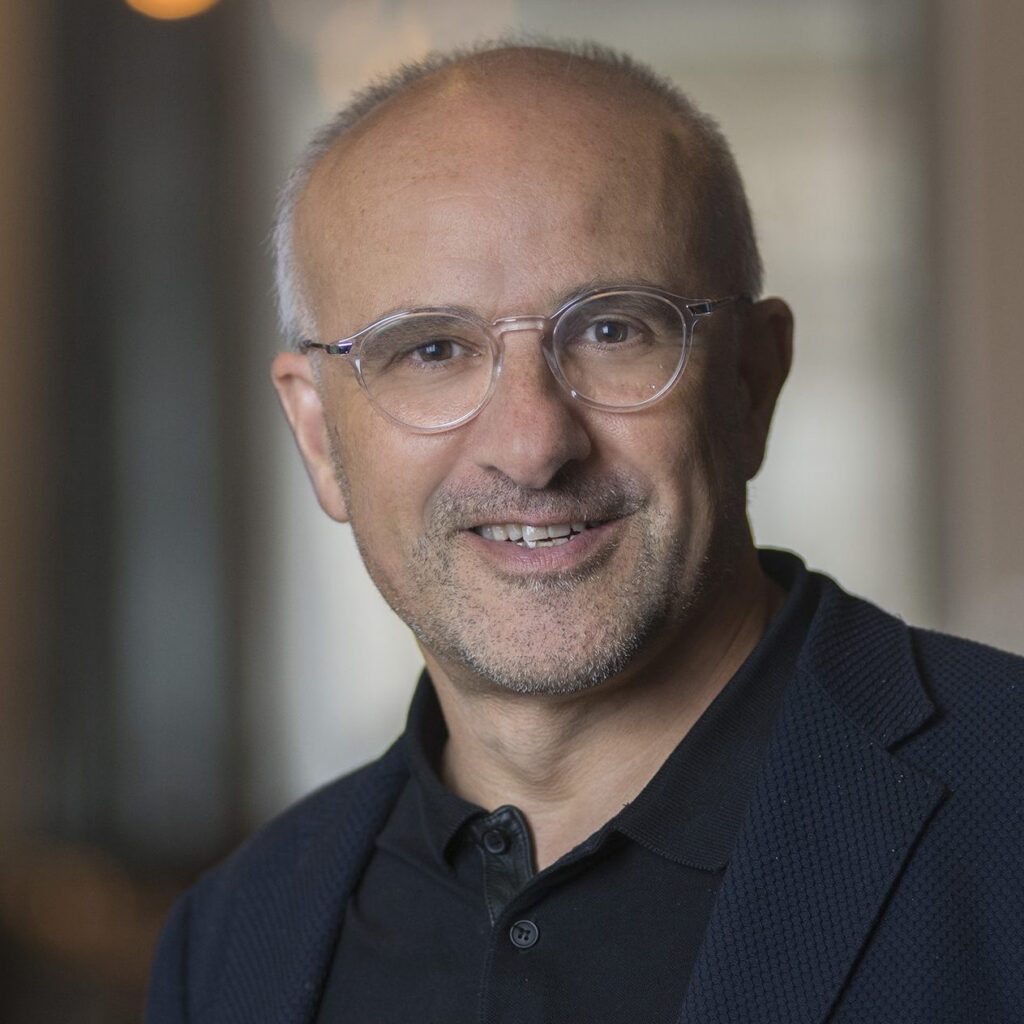
Portrait photo of Antoine Georges

Antoine Georges

Director, Center for Computational Quantum Physics
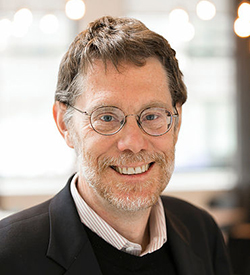
Portrait photo of Andrew Millis

Andrew Millis

Co-Director, Center for Computational Quantum Physics
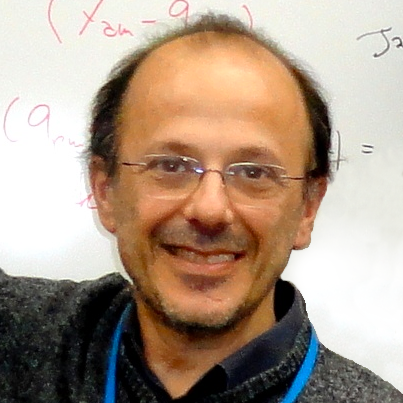
Portrait photo of Sandro Sorella

Sandro Sorella

Principal Investigator, Simons Collaboration on the Many Electron Problem
Portrait photo of Lucas K. Wagner

Lucas Wagner

Principal Investigator, Simons Collaboration on the Many Electron Problem

Mathematics & Physical Sciences

The Mathematics and Physical Sciences division supports research aimed at advancing our understanding of fundamental questions in mathematics, physics and computer science. Through grants and collaborations, the division brings together researchers to pursue ambitious ideas, develop new approaches and foster scientific exchange.
Learn more
Abstract 3D shape with smooth, overlapping blue and light green surfaces, forming a dynamic, swirling pattern on a white background.