How the brain holds information in short-term memory is a mystery. Individual neurons can only hold information for a short period of time, much shorter than what would be required to store a memory. So how do brains maintain short-term memories?
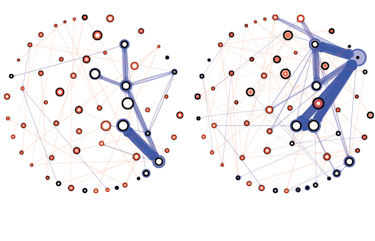
A number of theoretical models propose that the key is in the activity not in single neurons but of populations of neurons. Working in mice, we have developed a simple task to test whether groups of neurons maintain memories. Mice are allowed to explore an object with their whiskers. Based on this sensory evidence gathered by whisking, the mice decide about the object’s location, which they will later indicate by licking in one direction or another. A key aspect of the experiment is that we impose a short waiting period of a few seconds between when the mouse decides where the object is and when the mouse licks to indicate its decision. In this manner, the mouse must hold the decision in its brain for a few seconds: in other words, we’ve trained the mouse to create a short-term memory. Then, using technology that allows us to monitor groups of neurons simultaneously and manipulate their activity, we can test whether these neuronal populations can indeed hold the information relevant to a memory. Many theoretical models propose ways in which the collective activity of neurons holds memories, and our experimental set-up will allow us to test the evidence gained from neurons against these theoretical models. These results will not only shed light on how memory is stored in neural circuits, but will explore the much more general question of how neural activity represents information in the brain.
FULL PROJECT
Awardees

Shaul Druckmann
Investigator, Simons Collaboration on the Global Brain

Karel Svoboda
Investigator, Simons Collaboration on the Global Brain