Others in the field are now trying to build something similar, says AION co-leader François Lanusse.
“Nobody else has yet been able to do the same kind of exercise at this scale. It’s to the credit of the Simons Foundation that we were able to do this when we did,” he says. “When we began, this was really prospective. We knew that if we gathered good people and thought hard about it, we were going to find interesting applications. But this would not have been possible through conventional funding agencies.”
That’s because of the broad reach of Polymathic AI’s models — most other generative AI models in science are built to tackle singular problems. The Polymathic team is building models that could apply across disciplines, an area in which conventional government funding is sparse.
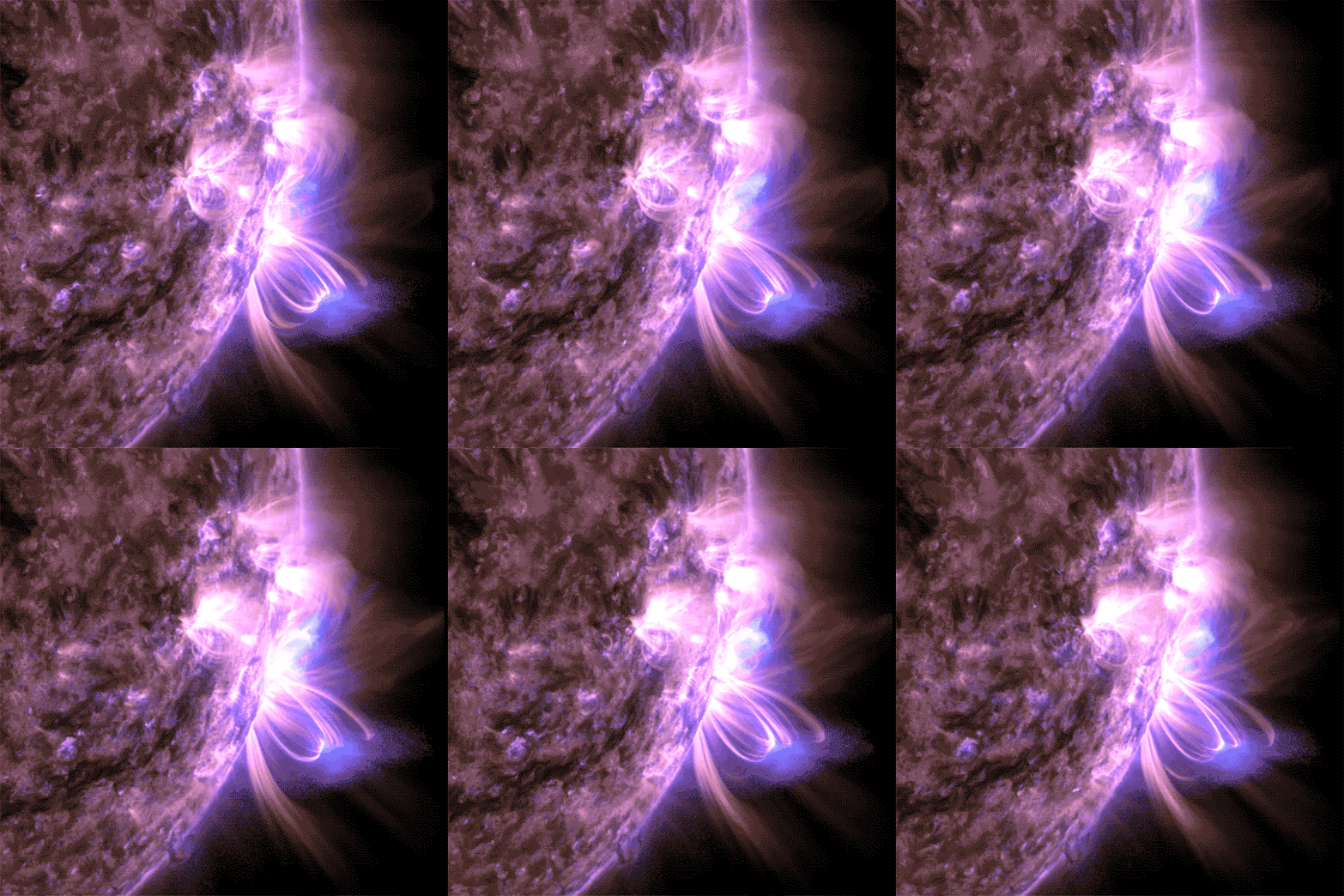
Another model takes aim at a closer celestial entity: our sun. Polymathic AI researchers are modeling the dynamics of active regions on the surface of the sun with data from NASA’s Solar Dynamics Observatory. Solar flares — electromagnetic radiation eruptions on the sun — can disrupt telecommunications here on Earth and even cause electrical blackouts. The ability to predict and prepare for these flares could help governments and businesses protect satellites and other equipment from expensive damage. Other groups have built AI models for predicting the evolution of active regions, but their accuracy drops off quickly over time, whereas the Polymathic AI model remains accurate for orders of magnitude longer, says project leader Rudy Morel. The model could have broader applications across physics for anyone who wants to make predictions on very long timescales.
The Polymathic AI team is also working on complex scientific problems at a much smaller physical scale: biological molecules. Since the Human Genome Project was completed more than 20 years ago, biologists have amassed huge datasets, broadly categorized as “-omics.” These datasets may comprise the full collection of DNA sequences, RNA levels or protein levels in a given cell or organism, among other measurements. But predicting how one type of molecule affects another (say, how a single DNA mutation could have ripple effects throughout the body) remains out of reach for many models. The first iteration of the Polymathic AI model can predict the downstream effects of any mutation and takes meaningful steps toward predicting the structures of RNA molecules, an even thornier problem than the protein structures predicted by DeepMind’s AlphaFold, says project leader Siavash Golkar.
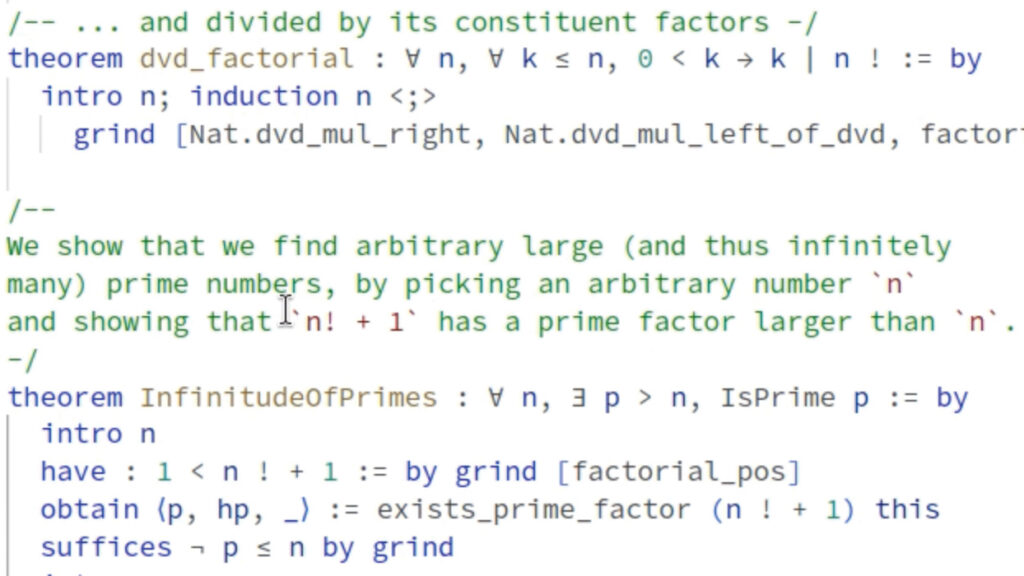
Another group at Polymathic AI wants to understand how AI does what it does. The beauty of, and frustration about, large foundational models such as ChatGPT is that nobody understands how they work — the models’ inner reasoning is not accessible to their developers. The models are built on the backbone of linear algebra and statistical likelihood, but how they arrive at their conclusions remains mysterious. The answers to those mysteries will likely be in the language of math, Ho says.
“Can we turn these models into insight? That insight will probably be in the form of some mathematical equations,” she says. “Math is the basis of all machine learning, and ultimately of everything we’re doing. We are no longer just teaching machines to speak our language; we are teaching them to speak the language of the universe.”