Is Earth similar in composition to the rest of the universe? For physicists and astronomers at the start of the 1900s, this seemed like a reasonable assumption. The Earth is composed primarily of carbon, silicon and iron; its oceans of hydrogen and oxygen; and its atmosphere of nitrogen and oxygen. Meteorites and comets have similar compositions. Over the past century, however, we have learned that this picture is rather incomplete. These elements make up less than 0.1 percent of the composition of the universe. Instead, 95 percent of the energy density of the universe is either in the form of dark matter (some new type of particle that has not yet been seen in any of our experiments) or dark energy (energy associated with empty space).
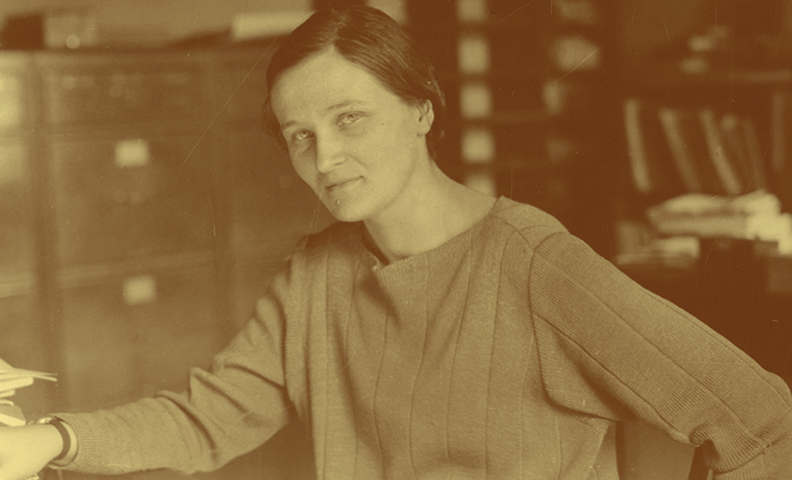
American astrophysicist Cecilia Payne led the first revolution in our understanding of the composition of the universe. In the 1920s, she applied the new physics of quantum mechanics to the spectra of the sun. In her controversial thesis, she showed that the sun is composed primarily of hydrogen and helium. Today, our measurements show that elements heavier than helium make up only 2 percent of the universe’s mass of ‘ordinary matter.’ The sun’s composition is very different from that of Earth: Iron, oxygen, silicon and magnesium make up more than 90 percent of Earth’s mass.
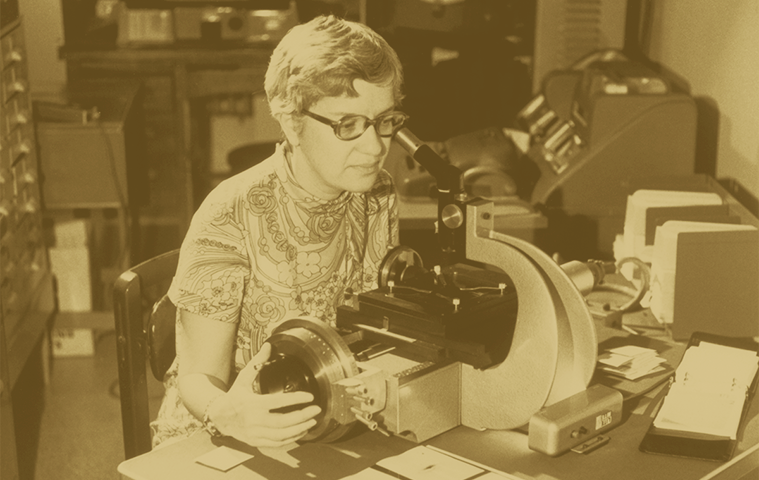
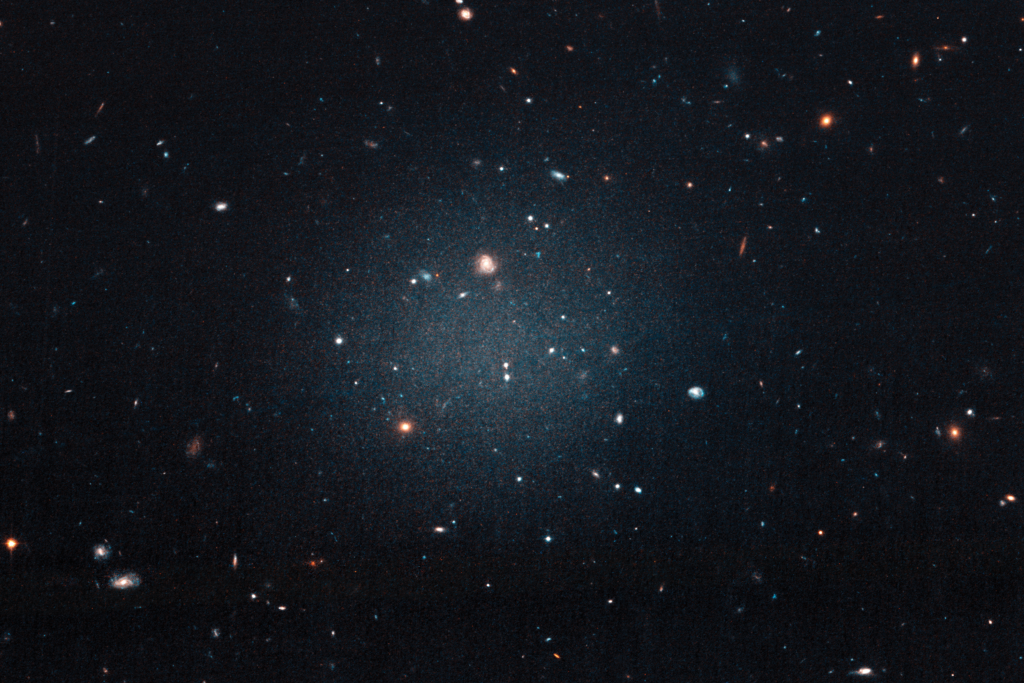
The second revolution in our understanding of the universe began with Swiss astronomer Fritz Zwicky’s observation of very rapid motions in clusters. Zwicky realized that ‘dunkle Materie’ (dark matter) was needed to bind the galaxies into clusters. In the 1970s, American astronomer Vera Rubin and her collaborators found that this dark matter was ubiquitous and dominated the outer regions of most galaxies. Over the past 20 years, cosmological observations, particularly measurements of the microwave background, have found five times more dark matter in the universe than ordinary matter.
What is this dark matter that dominates galaxies? Astronomers have searched for many plausible candidates: hot gas, cold gas, very low-mass stars, planets, even black holes. They have eliminated all of these ‘normal’ possibilities. Moreover, their observations have constrained the properties of the dark matter: It doesn’t interact strongly with protons or neutrons, it doesn’t have an electric charge, and it doesn’t interact much with neutrinos.
Cosmologists eventually realized that galaxies could not form unless the dark matter was ‘nonbaryonic’ — made of something new. Sherlock Holmes stated that, when you have eliminated the impossible, whatever remains, however improbable, must be the truth. The truth seems to be that most of the matter is made not of atoms or neutrinos, but of something else.
What is this ‘something else’? We still don’t know. Particle physicists have proposed several different possibilities: One is the lightest supersymmetric particle, which could be stable. It would have been created in the early universe and could be detected in deep underground experiments.
Another plausible dark matter candidate is axions. CASPEr, the Cosmic Axion Spin Precession Experiment, a Simons Foundation–supported project, is searching for these ultralight particles. CASPEr is sensitive to particles with masses 10-20th that of the electron. Axionic dark matter can cause nuclear spins to precess at a frequency set by the mass of the dark matter. If CASPEr sees these elusive axions, it will provide insights into not only the composition of the universe but also into physics at very high energy scales.
The Simons Observatory measurements of fluctuations in the cosmic microwave background will significantly improve our determination of the abundance of dark matter and also measure neutrinos to determine the energy density of the universe. In the early universe, the dark matter may have decayed into ordinary matter or been annihilated in such a way that it left behind ordinary matter; if so, the Simons Observatory will be sensitive enough to identify a signature of either decay or annihilation.



 David Spergel is director of the Flatiron Institute’s Center for Computational Astrophysics.
This article is part of the "Five Things We Used to Think Were True" section of the foundation's 25th anniversary book.
David Spergel is director of the Flatiron Institute’s Center for Computational Astrophysics.
This article is part of the "Five Things We Used to Think Were True" section of the foundation's 25th anniversary book.