Research Staff
Julianne Dalcanton, Ph.D.
Director, Center for Computational Astrophysics
- [email protected]
- Scheduling
- [email protected]
Bringing people and ideas together to fund, conduct, and share transformative science.
Our grants advance knowledge and strengthen connections between science and society.
Discover the latest news, research, and updates.
We convene scientists, mathematicians, and thinkers to share ideas and explore new questions.
Founded by Jim and Marilyn Simons, we’re a private philanthropy advancing mathematics and basic science.
Work with us on the frontier of basic science research.
The Flatiron Institute is a research center that uses computational science to advance fields like physics, biology, and astronomy.
Search
Research Staff
Director, Center for Computational Astrophysics
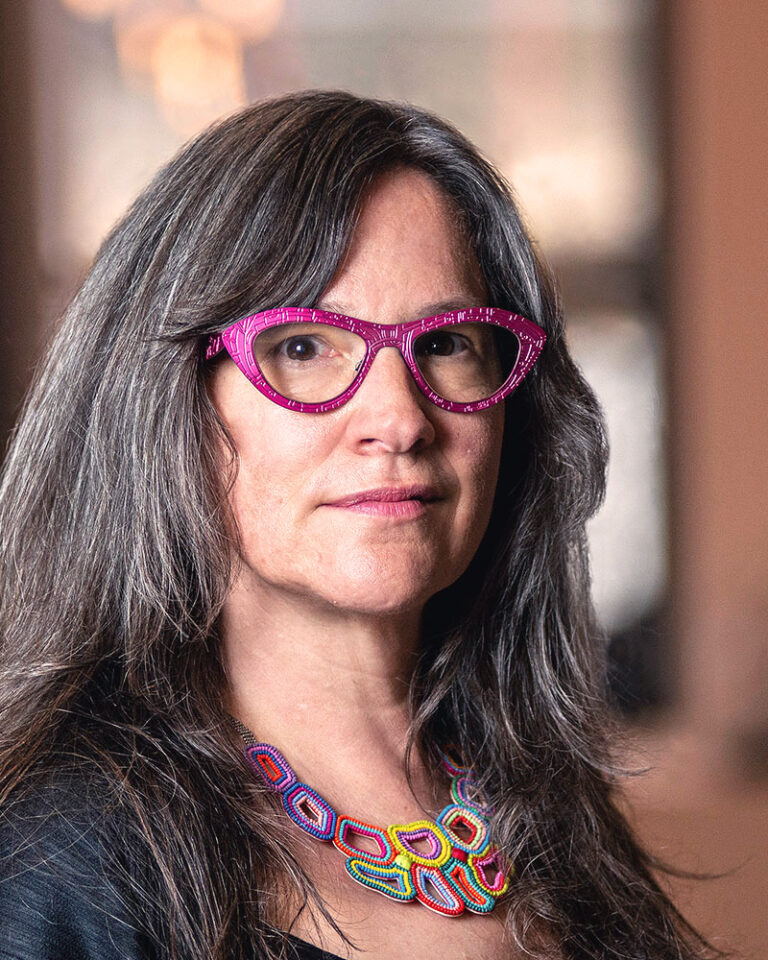
Julianne Dalcanton joined the Simons Foundation in September 2021 as the director of the Flatiron Institute’s Center for Computational Astrophysics (CCA). Her research specializes in the origins and evolution of galaxies.
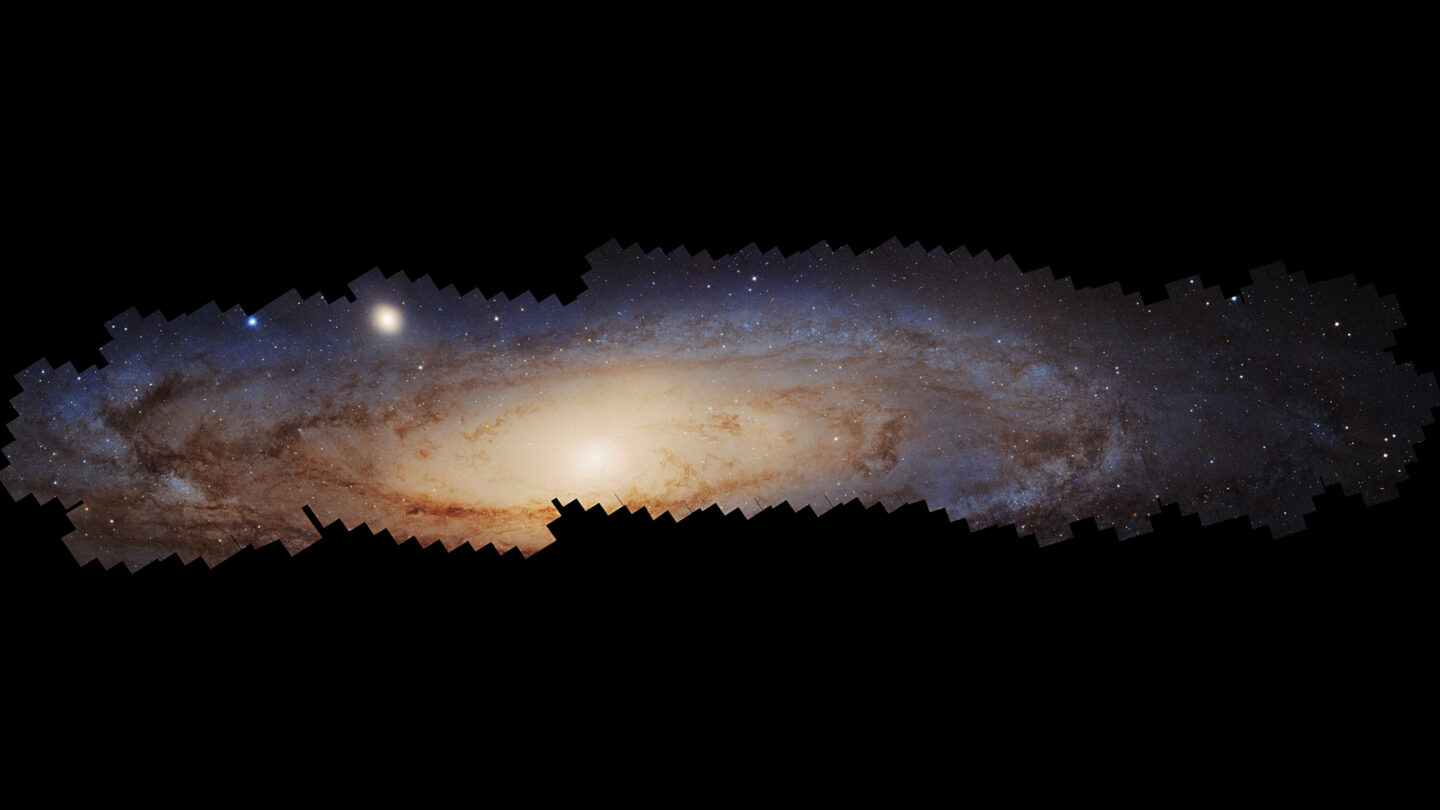
Most recently, Dalcanton has worked with the Hubble Space Telescope (HST) to dissect images of nearby galaxies into millions of stars. Through these efforts, she has become one of the largest single users of the Hubble Space Telescope, most notably as principal investigator of a large HST Multicycle Treasury.
Prior to joining the foundation, Dalcanton served as professor of and chair of astronomy and an adjunct professor of physics at the University of Washington. She earned a Ph.D. in astrophysical sciences from Princeton University and a bachelor’s degree in physics from the Massachusetts Institute of Technology. She completed postdoctoral training at the Observatories of the Carnegie Institution of Washington.
Throughout her career, Dalcanton has been recognized for achievements in the field of astrophysics. She has been awarded an Alfred P. Sloan Research Fellowship, a National Science Foundation CAREER award for junior faculty, a NASA Hubble Postdoctoral Fellowship, a Wyckoff Faculty Fellowship through the College of Arts and Sciences at the University of Washington, the Mohler Prize from the University of Michigan and the Beatrice Tinsley Prize from the American Astronomical Society. She has also given the invited Eddington Lecture at the University of Cambridge, the Baird Lecture at the Ohio State University, the Spitzer Lectures at Princeton and the Sackler Lecture at Leiden University.
In addition to her research programs, Dalcanton has been widely involved in community governance and planning. She is currently serving on the steering committee of the Astro2020 Decadal review, after being vice chair of the Nearby Science Frontier Committee during the Astro2010 Decadal review. She has also previously been a member of NASA’s Cosmic Origins Program Analysis Group, the National Optical Astronomy Observatory’s Optical-NIR Long Range Planning Committee, and the Science Advisory Committee of the Giant Magellan Telescope, in addition to being a co-lead of the AURA “From Cosmic Birth to Living Earths” study of a possible next-generation large space telescope. Dalcanton has served as vice-chair of the Space Telescope Science Institute Council, a member of the Collaboration Advisory Council of the Sloan Digital Sky Survey (SDSS), chair of the SDSS Galaxy Working Group and a member of the AURA nominating committee.
As a third-generation teacher, Dalcanton is equally committed to education and outreach. She has taught more than 1,500 students, and regularly participates in outreach events. She has also written for popular science outlets, including Discover.
The Astrophysical Journal, arXiv:2509.18322, February 2026
Tobin M. Wainer, J. Dalcanton, M. Grudić, Stella S.-R. Offner, et al.
The Astrophysical Journal Supplement Series, arXiv:2509.09011, March 2026
J. Dalcanton, Meredith J. Durbin, and Benjamin F. Williams
The Astrophysical Journal, January 2025
Zhuo Chen, Benjamin Williams, Dustin Lang, Andrew Dolphin, et al.
We develop cutting-edge tools and software packages to explore the inner workings of the universe.
Learn more