Alumni Spotlight: Gokberk Kabacaoglu
Featuring
-
Gokberk Kabacaoglu
Assistant Professor, Department of Computer Science
Bringing people and ideas together to fund, conduct, and share transformative science.
Our grants advance knowledge and strengthen connections between science and society.
Discover the latest news, research, and updates.
We convene scientists, mathematicians, and thinkers to share ideas and explore new questions.
Founded by Jim and Marilyn Simons, we’re a private philanthropy advancing mathematics and basic science.
Work with us on the frontier of basic science research.
The Flatiron Institute is a research center that uses computational science to advance fields like physics, biology, and astronomy.
Search
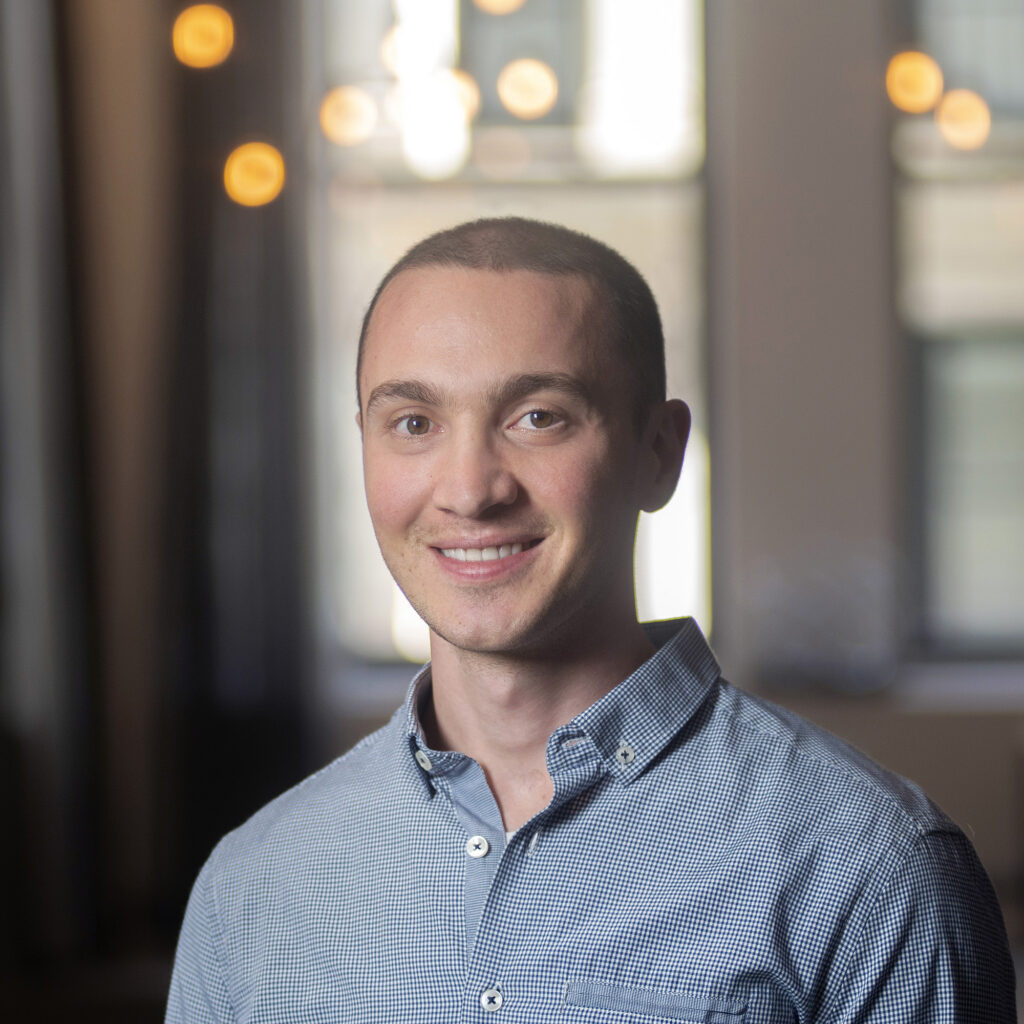
Kabacaoglu, a former research fellow at the Simons Foundation’s Flatiron Institute, is now an assistant professor in the Department of Computer Science at Durham University in England. His work focuses on scientific machine learning and high-performance computing.
Assistant Professor, Department of Computer Science
At the Flatiron Institute from 2019 to 2021, Gokberk Kabacaoglu held a joint affiliation with both the Center for Computational Mathematics (CCM) and the Center for Computational Biology (CCB) where he was a research fellow in the Biophysical Modeling group. His research focused on the interdisciplinary study of cell biomechanics. In particular, he developed a computational tool for simulating many elastic filaments that model microtubules (the skeleton of animal cells). Kabacaoglu received a doctorate in mechanical engineering from the University of Texas at Austin.
We recently caught up with Kabacaoglu to ask him what he’s been up to as he’s continued his career.
The Flatiron Institute works to develop the next generation of computational scientists. Flatiron Institute alumni can also keep in touch by joining our Alumni Network.
I am currently an assistant professor in the Department of Computer Science at Durham University. My research focuses on scientific machine learning and high-performance computing, particularly on developing AI-driven methods to accelerate complex fluid simulations. Alongside research, I teach courses on reinforcement learning and parallel scientific computing. I am also actively involved in building interdisciplinary initiatives around AI for science.
One of the most valuable lessons I took from my time at the Simons Foundation is the importance of making research accessible beyond the immediate scientific community. Through presidential lectures, newsletters and public-facing content such as YouTube talks, I saw how effectively complex ideas could be communicated to a broader audience. That experience shaped my perspective: Science becomes truly meaningful when it is shared and understood by the public. I try to carry that mindset into my own work, both in teaching and in how I present research.
The coolest adventure has actually been an intellectual one: transitioning from a background in mechanical engineering to a faculty position in computer science. It required rethinking my identity as a researcher, learning new tools and perspectives, and stepping into a different academic culture. Looking back, it feels like a high-risk, high-reward journey that has shaped both my research direction and career.
The receptions after the Center for Computational Astrophysics (CCA) seminars stand out the most. There was always a unique atmosphere: great conversations, drinks and a sense of being part of something special. It had an almost “royal” feel, but at the same time remained warm and intellectually vibrant. Those informal moments were just as memorable as the research itself.
My time at the Flatiron Institute was formative in many ways — not just scientifically, but in shaping how I think about collaboration, communication and ambition in research. It is a place that sets a very high standard, and I still find myself drawing on that experience in my work today.