Bioengineer Stanislav Shvartsman Heads CCB’s New Developmental Dynamics Group
Featuring
-
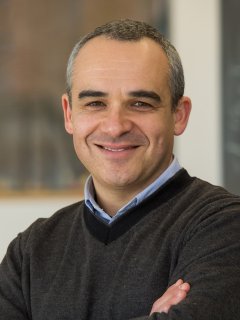
Stanislav Shvartsman
Senior Research Scientist, Center for Computational Biology
Bringing people and ideas together to fund, conduct, and share transformative science.
Our grants advance knowledge and strengthen connections between science and society.
Discover the latest news, research, and updates.
We convene scientists, mathematicians, and thinkers to share ideas and explore new questions.
Founded by Jim and Marilyn Simons, we’re a private philanthropy advancing mathematics and basic science.
Work with us on the frontier of basic science research.
The Flatiron Institute is a research center that uses computational science to advance fields like physics, biology, and astronomy.
Search
Senior Research Scientist, Center for Computational Biology
The Flatiron Institute is pleased to announce that bioengineer Stanislav Shvartsman will lead a new research group within the Center for Computational Biology. The new Developmental Dynamics group will combine experiments, theory and computing to study the contributions of encoded genomic instructions and self-organizing physical mechanisms to embryo development.
Shvartsman is a professor of chemical and biological engineering at Princeton University. He was born in Odessa, Ukraine, and studied physical chemistry and chemical engineering at Moscow State University, the Technion-Israel Institute of Technology, and Princeton University. After postdoctoral work at the Massachusetts Institute of Technology, he founded his own lab at Princeton that focuses on quantitative biology of developing tissues.
The Developmental Dynamics group will build on Shvartsman’s previous research. The group’s theoretical and computational work will integrate and abstract rapidly accumulating heterogeneous datasets, propose critical tests of multiscale regulatory mechanisms, and guide the group’s own genetic and imaging experiments.
The group will focus on three main themes: the mechanistic modeling of pattern formation and morphogenesis; the synthesis and decomposition of developmental trajectories; and the modeling of human developmental defects.
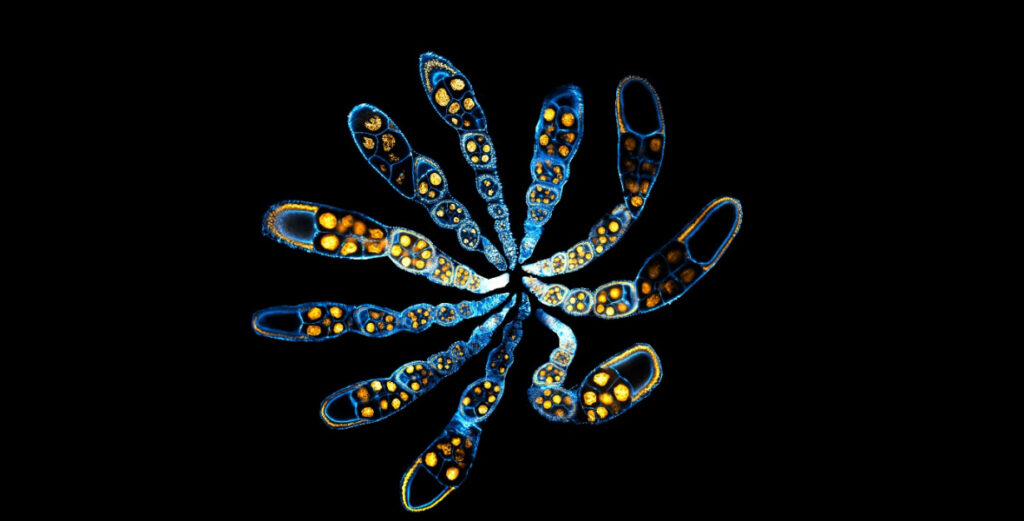
Initial projects include the study of small cell clusters (motivated by Shvartsman’s work on early embryos and animal germline development), graph dynamics in rearranging cell networks (motivated by problems of epithelial morphogenesis), and the effects of activating mutations in signaling enzymes (motivated by Shvartsman’s work on a large class of human developmental abnormalities).

