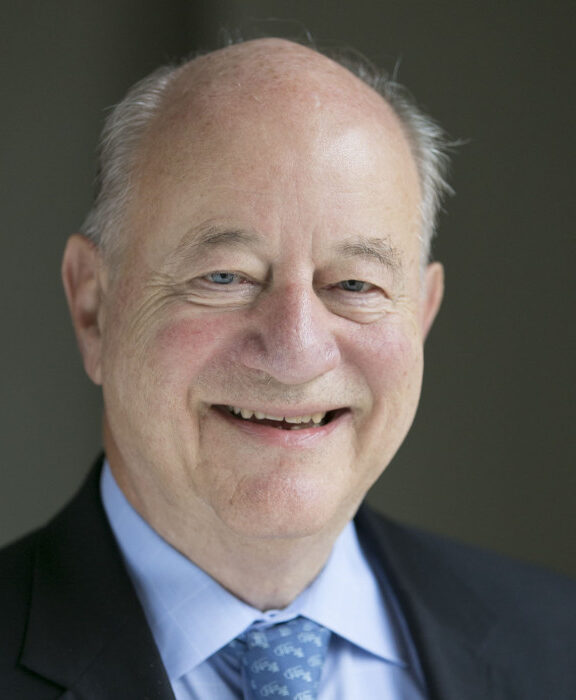
Gerald D. Fischbach, M.D.
Emeritus Trustee
Bringing people and ideas together to fund, conduct, and share transformative science.
Our grants advance knowledge and strengthen connections between science and society.
Discover the latest news, research, and updates.
We convene scientists, mathematicians, and thinkers to share ideas and explore new questions.
Founded by Jim and Marilyn Simons, we’re a private philanthropy advancing mathematics and basic science.
Work with us on the frontier of basic science research.
The Flatiron Institute is a research center that uses computational science to advance fields like physics, biology, and astronomy.
Search
Emeritus Trustee
Gerald Fischbach was the founding director of the Simons Foundation Autism Research Initiative, serving in that capacity from 2006 to 2013. Formerly, he was dean of the faculty of health sciences and of medicine at Columbia University, and director of the National Institute of Neurological Disorders and Stroke at the National Institutes of Health (NIH) from 1998 to 2001.
Fischbach received his M.D. in 1965 from Cornell University Medical School and interned at the University of Washington Hospital in Seattle. He began his research career at the NIH, where he worked from 1966 to 1973. He subsequently served on the faculty of Harvard Medical School, first as associate professor of pharmacology from 1973–1978 and then as professor until 1981. From 1981 to 1990, Fischbach was the Edison Professor of Neurobiology and head of the anatomy and neurobiology department at Washington University School of Medicine. In 1990, he returned to Harvard Medical School, where he was the Nathan Marsh Pusey Professor of Neurobiology and chairman of the neurobiology departments of Harvard Medical School and Massachusetts General Hospital until 1998.
Throughout his career, Fischbach studied the formation and maintenance of synapses, the junctions between nerve cells and their targets, through which information is transferred in the nervous system. He pioneered the use of nerve cell cultures to study the electrophysiology, morphology and biochemistry of developing nerve-muscle and interneuronal synapses.