From Fungi to Qubits, Pivot Fellows Share Findings in Their New Fields
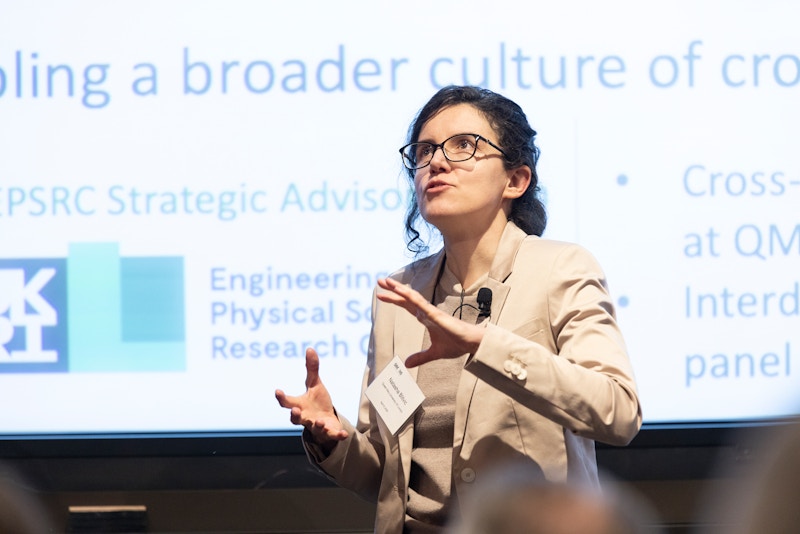
What do carbon sequestration in wetlands, quantum computing and fungi have in common? They are all research areas discussed by the Simons Foundation’s second class of Pivot Fellows, who gathered for their annual meeting this April.
The Pivot Fellowship, launched in 2022, enables a cohort of scientists who are well respected in their own fields to embark on a new research topic in a different field of mathematics or the natural sciences. Fellows are provided with one year of mentorship from an expert in the field they choose to pivot to.
Pivoting from one scientific field to another can enable surprising new breakthroughs. But it can also be difficult. Scientists need to master their new area of study, and research has found that their publications are cited less frequently after their shift. Funding for a pivot can also be hard to secure. The Pivot Fellowship offers researchers the opportunity to pivot by providing financial support for salary, research, travel and professional development. At the end of the yearlong fellowship, the fellows can apply for an additional five-year research award in their new field.
“Pivoting is a bold and risky endeavor, so having the Simons Foundation behind the work gives much-needed credibility to pursue something so ambitious,” says Pivot Fellow Evgueni Filipov.
Read on for a few highlights of recent studies shared by the second class of Pivot Fellows.
Constructing Buildings With Fungi
While transportation using fossil fuels takes most of the blame for climate change, one of the largest emitters of greenhouse gases is building construction. Filipov, a Pivot Fellow based at the University of Michigan, hopes that highly carbon-intensive materials like concrete can someday be replaced with fungi. Shifting from studying origami-inspired structures, Filipov began investigating biomaterials made from mycelium, the rootlike mass of a fungus that can form massive underground networks.
“I have grown concerned about climate change and the sustainability of the built environment, so I wanted my work to directly address these problems,” says Filipov. “I think mycelium-based materials have such exciting potential for architecture and civil infrastructure.”
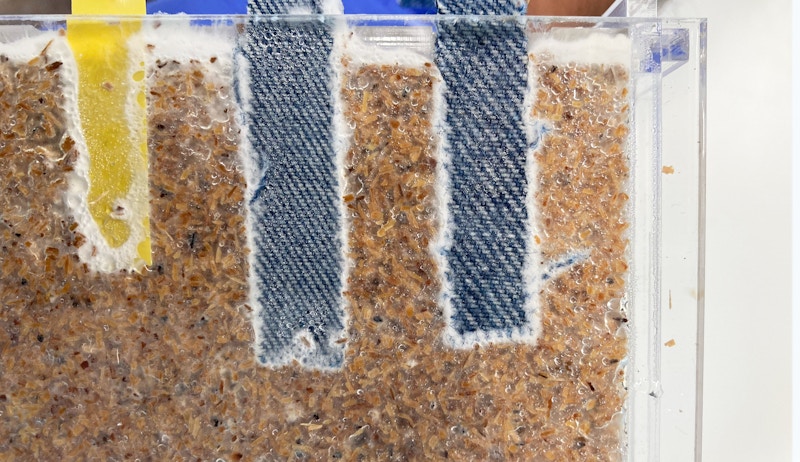
Mycelium has previously been used to make packaging materials, insulation, and even clothing and cosmetics, and there is increasing interest in using it for construction materials. In tests of mycelium grown on various materials, Filipov studied the bonds between the fungi and the growing substrate to explore methods of increasing the end material’s stiffness and strength.
“Our early results are showing that mycelium can bond well with a variety of different materials, especially with textiles, even if no special treatment is applied to encourage the growth or adhesion of the mycelium,” says Filipov. “We ultimately could have mycelium become a robust and versatile bonding agent that can be adapted for a broad range of material applications.”
Advancing Quantum Computing
Quantum computers, which represent the next stage in computation, are currently impeded by environmental sensitivities that limit their accuracy. Materials scientist and Pivot Fellow Jian Shi and his Pivot mentor Andrew Cleland were able to improve the performance of qubits, the basic unit of information used in quantum computing, with a new design.
The work focused on understanding and reducing energy loss in superconducting qubits. The new design developed by Shi significantly improved a factor that quantifies the rate of a qubit’s energy loss. His research suggests that there might even be an unidentified mechanism driving energy loss.
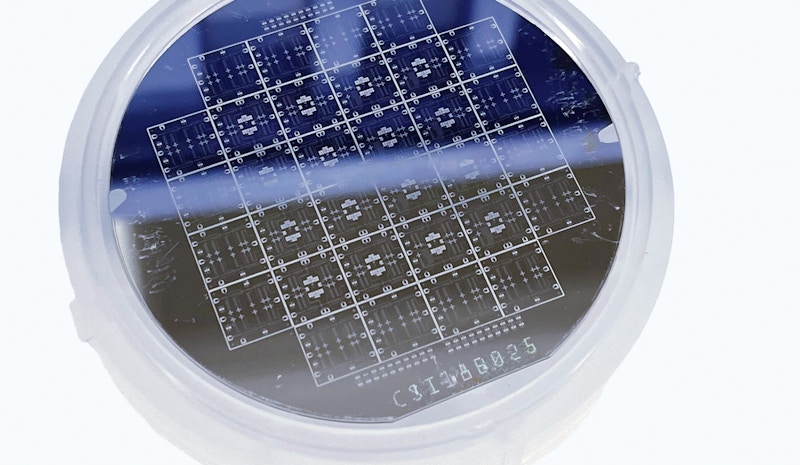
Shi believes he can further reduce energy loss in a type of qubit with tunable properties. However, the work won’t end there. Other factors that have yet to be studied may limit qubit accuracy, his research found.
“The most exciting aspect is that these findings challenge current understandings and open up new directions for both experimental and theoretical investigation,” says Shi.
Death of a Molecule
Oxygen-carrying molecules called hemes are an essential part of red blood cells in mammals, but they can become toxic at high levels. Mammals have enzymes and proteins that traffic and recycle hemes, but some organisms, such as the malaria parasite, interrupt this process, causing hemes to form toxic hemozoin crystals.
Katherine de Villiers, a Pivot Fellow from Stellenbosch University, pivoted from the chemistry of hemes to their biological roles. During her fellowship, she studied the recycling pathways of hemes in mammals and the important role of the heme transporter protein, HRG1.
De Villiers’ mentor at the University of Maryland School of Medicine, Iqbal Hamza, previously found that when HRG1 is removed in mice, hemozoin builds up in tissues that are responsible for heme recycling. De Villiers studied how heme is recycled in the body and what conditions in a cell might lead to a buildup of hemozoin. This work could one day be applicable in the study of human diseases where high levels of free heme occur.
“As a chemist, I had no experience with biological model systems but was fascinated to immerse myself in this new field and work with members of my mentor’s lab to better understand mammalian hemozoin formation,” says de Villiers. “With the training in cellular biology and genetics that I have acquired through this Pivot Fellowship, I will now be able to legitimately collaborate and work at the interface of chemistry and biology.”
Microbial Math
Pivot Fellow Natasha Blitvic, a mathematician at Queen Mary University of London, used her expertise in probability theory to study marine microbes. In three distinct projects, Blitvic developed statistical tools and methods to study microbes’ interactions and growth patterns and to improve tests of microbes’ movements due to environmental changes.
Blitvic’s work focused on randomness in biological and ecological systems. Previous models of such systems have tended to include randomness only in limited ways and ones not tailored to the oceanic setting.
“But we are finding in many of the systems with which we have been working, randomness is intrinsic,” Blitvic says. “Its specifics matter to the system outcome, and it needs to be taken into account.”
By leveraging probability and statistics, Blitvic has been able to more accurately model a range of phenomena in microbial ecology, enabling new insights into these systems. Through this work, Blitvic aims to better integrate mathematics with experimental science, in hopes of furthering interdisciplinary collaborations.
“Being a Pivot Fellow is a huge kick-start and catalyst, and in that sense, it is career-changing,” says Blitvic. “But the hard work is now beginning.”