Simons Foundation Announces Fourth Class of Pivot Fellows
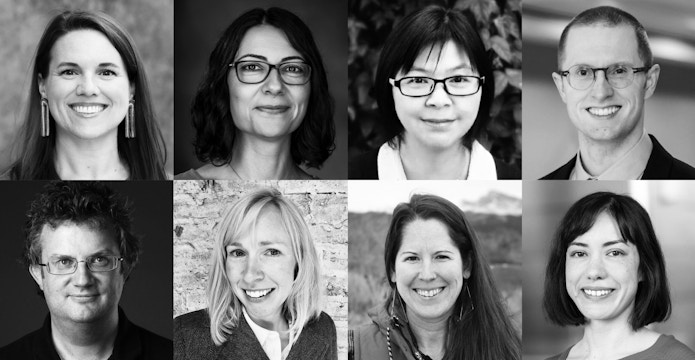
The Simons Foundation is pleased to announce its 2025 class of Pivot Fellows. These leading researchers will receive support from the Simons Foundation to apply their skills and expertise to a new area of research.
Launched in 2022, the Pivot Fellowship is open to faculty in the natural sciences, mathematics, engineering, data science and computer science at academic institutions or equivalent positions elsewhere. Fellows receive support for one year of mentored training in their new discipline.
The fellowships provide salary support, as well as funding for research, travel and professional development. Each mentor also receives a $50,000 research fund to support training their fellow. At the end of the fellowship year, fellows are invited to apply for a research award in the new field for up to $1.5 million over three years.
The 2025 Pivot Fellows are listed below.
Sarah Davies
Sarah W. Davies is an associate professor in the Department of Biology at Boston University. She leads the Davies Marine Population Genomics Lab, which explores the ecology and evolution of coral–algal symbiosis. As an integrative organismal biologist, Davies investigates how the symbiosis between reef-building corals and their photosynthetic algae is established, maintained and lost across multiple scales of organization — from genes to populations. Her research combines field experiments, environmental monitoring, physiological assays, and large-scale genomic and transcriptomic approaches to understand how adaptation, acclimation and dispersal interact to shape coral resilience in response to rapid global change. Current projects in her lab focus on the role of environmental history in determining coral plasticity and survival, the molecular pathways governing immune regulation and symbiosis stability, and how host and algal symbiont genetic diversity influence thermal tolerance. By linking molecular and ecological processes, Davies’ work provides critical insight into how coral symbioses respond to environmental stress and informs strategies for reef conservation and restoration. For her fellowship year, Davies will work with Xingchen Tony Wang, a biogeochemist at Boston College, to bridge coral genomics and reef biogeochemistry to uncover how environmental change shapes coral resilience and reef health.
Veronica Dexheimer
Veronica Dexheimer obtained her bachelor’s and master’s degrees from the U FRGS Federal University in Brazil, followed by her Ph.D. in 2009 from the Goethe University Frankfurt in Germany. She is a professor of physics at Kent State University and the director of the Kent State Center for Nuclear Research. She is also a member of the MUSES, NP3M, and FRIB Theory Alliance collaborations. Dexheimer is a theoretical nuclear physicist who specializes in the study of dense and hot matter. In this context, “dense” means several times the density of a nucleus, only achievable in the core of neutron stars, and “hot” means 1011–1012 Kelvin, only achievable in the laboratory in relativistic collisions of nuclei. The research group she leads studies the intersection between the properties of dense and hot matter created in the mergers of neutron stars and collisions of heavy nuclei, to determine which new phases of matter and extreme magnetic field configurations can be formed, how they differ, and how the strong nuclear force changes in these environments. This consists of developing mathematical models to describe how hadrons and quarks interact under the strong nuclear force, which cannot be determined from first-principle theory for dense matter. For her fellowship year, Dexheimer will be working with Glenn Starkman of Case Western on understanding the universe starting from the largest scales instead of the smallest.
Yu Huang
Yu Huang is the Traugott and Dorothea Frederking Endowed Engineering Chair and a professor in the Department of Materials Science and Engineering as well as by courtesy in the Department of Chemistry and Biochemistry at the University of California, Los Angeles (UCLA). She is a Clarivate Highly Cited Researcher and an elected Fellow of both the Materials Research Society (MRS) and the Royal Society of Chemistry (RSC). She earned her B.S. in chemistry from the University of Science and Technology of China (USTC) and her Ph.D. in physical chemistry, as well as her M.A. in chemistry, from Harvard University. Before starting her career at UCLA, Huang received the Lawrence Fellowship and completed a joint postdoctoral position at the Lawrence Livermore National Laboratory (LLNL) and the Massachusetts Institute of Technology (MIT). With mentorship from Jeffery Miller of the University of California, Los Angeles, Huang will pursue innovative research into the electrochemical physiology and controllability of microbiota, applying foundational principles from her work in materials science to the biological domain.
Tyler Josephson
Tyler R. Josephson is an assistant professor in chemical, biochemical and environmental engineering at the University of Maryland, Baltimore County (UMBC). He received his B.S. in chemical engineering from the University of Minnesota in 2011 and his Ph.D. in chemical engineering from the University of Delaware in 2017. Following his Ph.D., he served as a postdoctoral associate in the University of Minnesota’s chemistry department until 2020. In 2018, he spent time as a visiting scientist in the Mathematics of AI department at IBM Research. At UMBC, he leads the AI & Theory-Oriented Molecular Science (ATOMS) Lab, developing computational methods for molecular simulation and automated discovery of scientific theories. Techniques used in the ATOMS Lab include quantum chemistry, Monte Carlo, symbolic regression and formal theorem proving using Lean. Josephson received the NSF Graduate Research Fellowship and is the 35th Laird Fellow at the University of Delaware. His research is supported by the National Science Foundation and the Department of Energy, including the NSF CAREER Award for “Automated Reasoning to Advance Chemical Theory” and the Army HBCU/MSI Early Career Award for “Simulation methods for reactive adsorption of emerging water pollutants.” As a Simons Foundation Pivot Fellow, Josephson aims to bring formal theorem proving into science and engineering. He will join Jeremy Avigad at Carnegie Mellon University to study formal methods and mathematics in order to deepen his understanding of proofs and the Lean programming language. He plans to formalize statistical thermodynamics derivations in Lean, develop computational workflows for auto-formalizing science using AI and build molecular simulation software integrated with formal proofs of mathematical correctness.
Michael Orger
Michael Orger is a senior group leader at the Champalimaud Centre for the Unknown in Lisbon, where he leads the Vision to Action laboratory. His research focuses on how neural circuits generate behavior, using larval zebrafish as a model system. With its capacity for brain-wide imaging and systematic analysis of behavior, this model enables the tackling of a central challenge in neuroscience: understanding how distributed neural dynamics across the brain give rise to coherent actions. The Orger lab combines quantitative behavioral analysis with optical imaging and the development of genetic tools to map and manipulate neural activity during behavior. His group has pioneered approaches for dissecting the behavioral repertoire of zebrafish and for recording whole-brain activity at single-cell resolution. Recent work from the team has revealed low-dimensional population dynamics underlying visuomotor behavior, shown how early-life social experience shapes social responses and developed an AI-based toolbox for large-scale behavioral analysis. Orger plans to use the fellowship to gain expertise in dynamical systems analysis and control theory and to apply these approaches to behavioral and neural data from his lab. He will be mentored by Guillaume Hennequin at the University of Cambridge.
Stacy Rosenbaum
Stacy Rosenbaum is an associate professor of biological anthropology at the University of Michigan. Her research focuses on the causes and consequences of sociality in primates, including humans. She answers questions about how primates develop and maintain relationships, what implications these relationships have for participants, how relationships and physiology interact with one another, and how such interactions ultimately affect health, longevity and reproduction. As a field biologist, she uses decades of data collected on wild primate populations — specifically, mountain gorillas living in Rwanda and savannah baboons in southern Kenya — to try to understand the ways in which our closest living relatives resemble us, and the ways in which Homo sapiens are unique. As a Pivot Fellow, Rosenbaum will bring her expertise in biological anthropology to her mentor Marlene Cohen’s lab at the University of Chicago. Their goal is to generate new insights into how hormones affect brains and behavior by using the toolkit of systems and computational neuroscience.
Elizabeth Trower
Lizzy Trower is an associate professor in the Department of Geological Sciences at the University of Colorado Boulder, where she has been on the faculty since 2018. Before moving to Colorado, she earned her B.S. in geology from the California Institute of Technology (Caltech) in 2009 and her Ph.D. in geological and environmental sciences from Stanford University in 2014. She was an Agouron Geobiology Postdoctoral Fellow at Caltech from 2015 to 2017. Trower’s research spans the fields of process sedimentology — studying how sediments form — and geobiology — studying the coevolution of Earth’s biosphere and environment across many temporal and spatial scales — using approaches ranging from computational modeling, lab experiments, observational and experimental studies in modern field sites, and applications of new tools to the geological record. She was selected as a Sloan Research Fellow in 2022 and received an NSF CAREER award in 2023. As a Pivot Fellow, Trower will focus on future-focused climate solutions using tools and approaches from environmental microbiology under the guidance of mentor John Spear at the Colorado School of Mines.
Adelle Wright
Adelle Wright is currently an assistant professor in the Department of Nuclear Engineering and Engineering Physics at the University of Wisconsin–Madison. Her research combines high-performance scientific computing, multiscale physics modeling and applied mathematics to understand and predict the macroscopic properties of magnetically confined plasmas. Wright’s lab is a multidisciplinary research team whose work spans plasma physics, nonlinear dynamics, advanced computing and high-fidelity simulation, and explores issues of nuclear energy technology design and deployment at the science-society interface. During her fellowship Wright will explore eigenvalue problems for asymptotically periodic differential or difference operators on unbounded domains. These appear in a variety of physical problems including in models of crystal lattices with material defects, understanding the properties of semiconductors and designing novel materials. Wright aims to develop and implement a numerical solver for such problems and perform a rigorous error analysis to determine the impact of periodic approximations and rationalization. She will be mentored by David Bindel at Cornell University.