AI Will Be Top of Mind at ICM, Math’s Biggest Conference
Artificial intelligence is rapidly reshaping the landscape of mathematics. Recently, for instance, a 23-year-old used ChatGPT to concisely solve Erdős Problem #1196 — a challenge that had gone unsolved for 60 years — in just over 80 minutes.
It’s no surprise, then, that AI will be top of mind for many of the thousands of mathematicians who will gather in Philadelphia this July for the world’s most prestigious math conference. At the International Congress of Mathematicians (ICM), established in 1897 and held every four years, the world’s leading mathematicians discuss the field’s hottest topics during talks, workshops and casual hallway conversations.
This year, AI will be discussed in public lectures, special lectures and research talks. Some of the buzz comes from projects that enable mathematicians to write and formalize proofs using machine-verifiable code. Other conversations will focus on how AI is changing math education and how it can help preserve and encourage the beautiful, creative human efforts of mathematics.
Preserving the Human Element
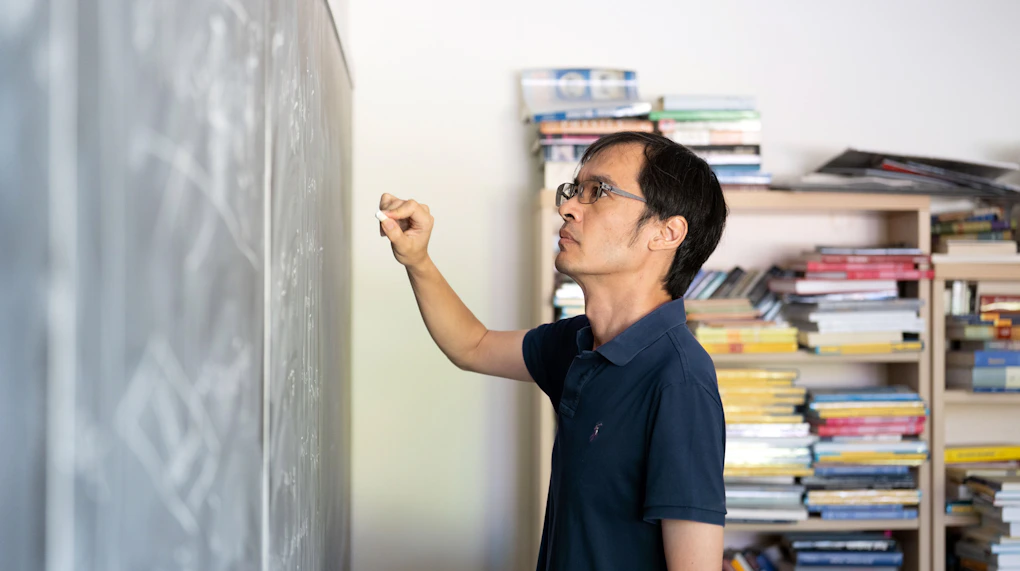
Terence Tao of the University of California, Los Angeles will give a public lecture, “Mathematics in the Age of AI,” that exemplifies that ethos. Tao will explain how AI and formalization will change mathematical research and education while focusing on what makes mathematics a human endeavor.
“I’ll be talking about … why it is important that the distinctively human features of our profession are not lost in this transformation, and that we are more explicitly aware of all the broader goals of mathematics, not just the ones that can be efficiently resolved by computers,” says Tao, who won the prestigious Fields Medal at the 2006 ICM.
One broad goal over the past century or so has been interdisciplinary work: either finding a ‘grand theory’ of mathematics or connecting math to other sciences. For instance, in 2024, mathematician Robert Ghrist asked an AI agent where he could apply a particular abstraction, and it suggested financial networks. Ghrist then spent a year learning about that field and published a paper in it.
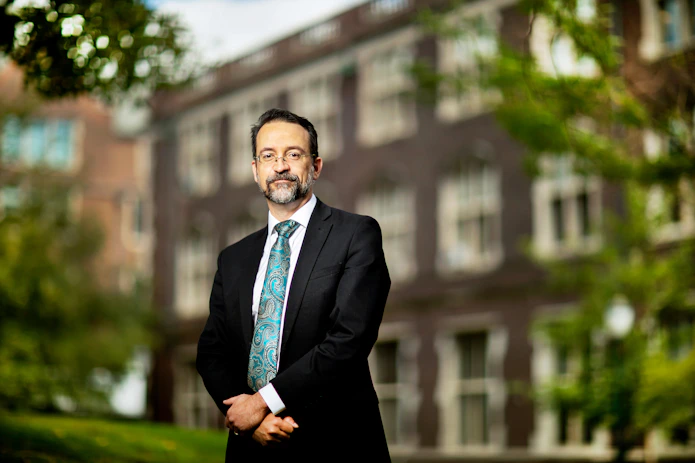
“This is normally very difficult to do, because mathematicians and scientists often speak very different languages,” says Ghrist, an associate dean at the University of Pennsylvania. “AI is potentially going to lead to a real renaissance in applied math, where pure mathematicians who are domain experts are now going to have the perfect conversation partner to be able to take their ideas and connect them with real-world things.”
AI Assistants for Discovery
Formalization is another, more recent goal. In a full-circle moment, Rutgers University mathematician Alex Kontorovich will use his ICM plenary lecture to address auto-formalization, in which AI formalizes canonical math knowledge, was popularized at the 2022 ICM. The sooner AI and humans formalize known math, Kontorovich says, the sooner a broader set of researchers can use AI to assist with mathematical discovery. Evangelists such as Kontorovich — who serves on the strategic advisory board for the proof assistant Lean — have already begun integrating AI into their work at a basic level.
“My starting point was some complicated bit of algebra,” Kontorovich says of his motivations for exploring AI. “I can do it by hand on paper, and there’s a good chance I’ll make a mistake. So I’ll do it five times until I get the same answer twice. Or I can stick it into [software], and it just verifies that one of those calculations is the right one. I’m never wasting my time again rechecking this calculation.”
Besides contributing to a formalized library of mathematical knowledge, AI increasingly serves as a reference librarian. Brandeis University graduate student Vasiliy Neckrasov, who will deliver a short talk at the ICM, uses AI regularly in his research.
“Intuitively, it looked like it should be true and it should be known,” Neckrasov says of a fact he needed for his research but did not know himself. “If you write the prompt in a detailed enough way, pretty often, AI will give you more than just [searching] — it will give you some lemmas formulated maybe in a different way, statements that you do not expect to find just by keywords, but which answer exactly what you need.”
Supporting Education
AI also eases the everyday bureaucracy of teaching: Neckrasov uses it to generate different versions of problem sets or tests that yield ‘nice’ numbers. More broadly, AI has already affected several aspects of mathematics education, including tutoring, personalizing learning and providing calculation assistance. A roundtable on “Mathematics Education in the AI Era” will include panelist Florence Gabriel. Gabriel, a math education expert, says that while AI products and tools are helpful, she wants to focus more on the “deeply human skills” involved in math.
“What is particularly new and promising is the growing recognition that AI can be designed to support students’ emotional experiences as they learn,” says Gabriel, a senior research fellow at the Centre for Change and Complexity in Learning at Adelaide University in Australia. “Our recent work shows how AI could help address challenges such as mathematics anxiety by using students’ inputs to identify signs of frustration or disengagement during learning and respond in more supportive ways.”
The ‘deeply human’ element of learning and researching math is precisely why, despite the rise of digital tools, the physical gathering in Philadelphia remains so vital. Kontorovich remarks that attending daily department tea sessions catalyzes research and that mathematicians forge fruitful connections at conferences like the ICM.
“It’s those spontaneous interactions that would never happen in an orchestrated way that make [research] unlock,” explains Kontorovich, who will give a plenary lecture on the future of AI and math. “It’s a completely different experience to randomly bump into people and have synapses firing in all kinds of strange directions. That is exactly why we all need to be there in person to exchange mathematical ideas.”


