Solved, Unsolved and Unsolvable: The Status of Hilbert’s 23 Problems in Mathematics
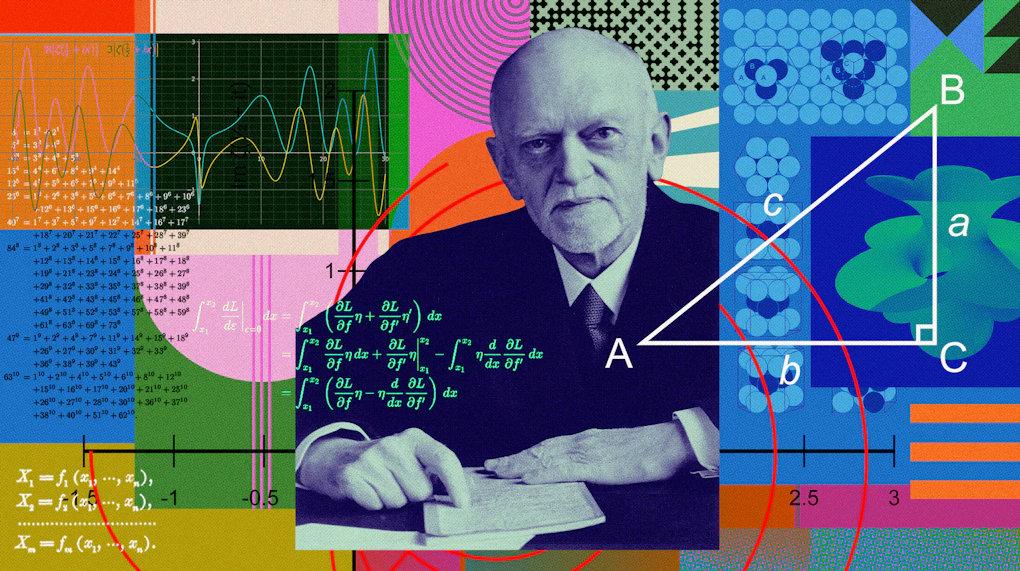
In 1900, prominent mathematician David Hilbert presented a list of 23 mathematical challenges for the next century to the International Congress of Mathematicians. These problems have become milestones in the field’s progress. Lectures at the 2026 ICM in Philadelphia will present exciting new research into two of these questions, the first and the sixth.
Hilbert’s problems aren’t so much finish lines at the end of a race as they are cracked doors inviting mathematicians to see what’s in the next room. For many of the problems, it is difficult to say definitively whether they are resolved or still open. Often, a question is resolved in one context but remains open in others. Sometimes a resolution opens the door to asking the same question in a different mathematical setting. This open-endedness is part of the problems’ ongoing appeal to mathematicians.
1. The continuum hypothesis. This is the question of whether there are sizes of infinity between the infinity of the counting (whole) numbers and the infinity of the real numbers. From the work of Kurt Gödel and Paul Cohen, mathematicians know that the continuum hypothesis is independent of the usual axioms for set theory, but different axiomatic viewpoints still leave room for further work. At the 2026 ICM, David Aspero and Ralf Schindler will present their recent work on the problem. Status: It’s complicated
2. The compatibility of the axioms of arithmetic. Hilbert wished to situate the rules of arithmetic in an airtight axiomatic system that does not permit contradictions. Again, Gödel burst his bubble. His incompleteness theorems proved that Peano arithmetic, a common axiomatic basis for arithmetic, cannot be proved consistent using only its own axioms. There is some debate about whether this is an adequate resolution of the problem. Status: It’s complicated
3. Equidecomposability. Given any two polyhedra of the same volume, can one be cut into a finite number of pieces and reassembled to be congruent to the other? This relationship is sometimes called scissors congruence. The analogous problem in two dimensions is possible, but it turns out not to be possible in three. This was the first Hilbert problem to fall. In 1900 (before the written version of Hilbert’s lecture had even been published), Hilbert’s student Max Dehn produced a counterexample. Status: Resolved
4. The straight line as the shortest distance between two points. This question deals with exotic geometries in which the straight line is the shortest distance between two points but other properties of standard Euclidean geometry do not hold. This question is now considered too vague to have a clear resolution, but it has inspired investigation. Status: Too vague
5. Lie groups. These groups are algebraic objects that describe continuous transformations. In his original formulation, Norwegian mathematician Sophus Lie assumed that these transformations were also differentiable: that is, that the continuous transformations they described could be analyzed using the tools of calculus. Hilbert wondered whether differentiability was a necessary assumption or whether it could be proved from the other properties of Lie groups. In the early 1950s, Andrew Gleason, Deane Montgomery and Leo Zippin showed that the differentiability assumption is not necessary. (A different, more general interpretation of the problem is still unresolved.) Status: Resolved for some cases
6. The axiomatization of physics. Deriving solid mathematical foundations for physics will probably be a never-ending quest. Various fields have been axiomatized, from classical mechanics in 1903 to fluid dynamics in 2025 by Yu Deng, Zaher Hani and Xiao Ma. Status: Resolved for some cases
7. The transcendence of certain numbers. Most numbers are transcendental, meaning that they cannot be the solution to a polynomial equation, but proving any specific number to be transcendental is usually not an easy task. Hilbert wanted to show that ab must be transcendental when a is an algebraic number other than 0 and 1 and b is an irrational algebraic number. The proof was provided independently in 1934 by Aleksandr Gelfond and Theodor Schneider. Status: Resolved
8. Problems of prime numbers. The celebrated Riemann hypothesis, which concerns the locations of the zeroes of a certain complex function, has important implications for the distribution of prime numbers. Hilbert included other prime-number-related questions in this problem as well. The Riemann hypothesis is still considered one of the most important open problems in mathematics. Status: Unresolved
9. A generalized reciprocity law. This problem is about generalizing the notion of quadratic reciprocity, which gives conditions for solving certain quadratic equations modulo prime numbers, to more exotic number fields. A great deal of progress has been made on this and the closely related 12th problem over the years, but neither is completely resolved. Status: It’s complicated
10. Diophantine equations. A Diophantine equation is a polynomial equation with integer coefficients in one or more variables, such as x2 + y2 = 5 or 3xy = z3. Classically, only integer solutions are sought, and Hilbert wanted to know whether there is a general algorithm that could determine whether a Diophantine has integer solutions or not. In 1970, Soviet mathematician Yuri Matiyasevich proved that no such algorithm can exist. Related questions about certain classes of Diophantine equations continue to be a lively subject of study. Status: Resolved
11. Arbitrary quadratic forms. Quadratic forms are polynomials such as x2 + 4xy + y2 in which every term has total degree 2. Different numbers can be represented by different quadratic forms. The 11th problem asks how to tell when two quadratic forms represent the same sets of numbers. Helmut Hasse solved the problem in one context, but work has continued in others. Status: Resolved for some cases
12. Extension of Kronecker’s theorem on Abelian fields to any algebraic realm of rationality. Like the ninth problem, this question deals with extensions of the rational numbers by certain irrational or complex numbers. Hilbert’s statement of the problem included some mistakes that probably delayed progress, but it gave rise to class field theory, a branch of algebraic number theory. Only a few of these extensions are completely understood. Status: Unresolved
13. Seventh-degree polynomials. This much more concrete problem asks whether all seventh-degree polynomials can be solved using addition, subtraction, multiplication, division and algebraic functions of at most two variables. Vladimir Arnold and Andrey Kolmogorov solved the question in one sense in 1957, but mathematicians recently noticed hints in Arnold’s work suggesting that they believed that Hilbert’s true aim was more general, renewing inquiry into the question. Status: Resolved for some cases
14. The finiteness of systems of invariants. One of Hilbert’s first mathematical interests was invariant theory, a branch of algebra concerned with the action of groups on other mathematical objects. He had previously shown that certain types of algebraic rings must be composed of a finite number of building blocks. The 14th problem asks whether the same was true of a broader class of rings. A counterexample was produced in 1959 by Masayoshi Nagata. Status: Resolved
15. Schubert calculus. Hilbert’s 15th problem calls for mathematicians to put Schubert’s enumerative calculus, a branch of mathematics dealing with counting problems in geometry, on a rigorous footing. There is no consensus in the field about whether 2020 work by Haibao Duan and Xuezhi Zhao fully resolves the question. Status: It’s complicated
16. The topology of curves. An equation of the form ax + by = c is a line; an equation with squared terms is a conic section of some type — parabola, ellipse or hyperbola. In the 16th problem, Hilbert sought a more general theory of the shapes that higher-degree polynomials could have. So far, the question is unresolved, even for polynomials with the relatively small degree of 8. Status: Unresolved
17. Functions as sums of squares. Some functions — such as y = x2 — take only non-negative values when the inputs are real numbers. Hilbert asked whether all such functions could be written as the sum of squares of rational functions. Emil Artin showed in 1927 that they could. Status: Resolved
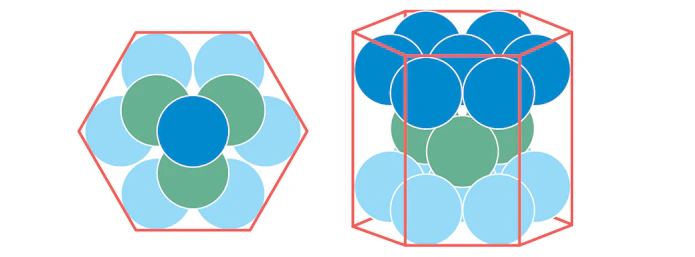
18. Congruent polyhedra, fundamental domains and sphere packings. The 18th problem is a bit of a grab bag of questions in Euclidean geometry. The first, about symmetries in n-dimensional space, was resolved in 1910 by Ludwig Bieberbach. The second, about tilings in three-dimensional space, was resolved in 1928 by Karl Reinhardt. The last, about the packing of spheres in three-dimensional space, was resolved in 1998 by Thomas Hales, although full formalization and verification of the proof took an additional two decades. Status: Resolved
19, 20, 23. Calculus of variations. The calculus of variations is the study of optimization problems using functions known as functionals. One of its classical examples is the brachistochrone problem, the question of finding the curve down which a marble would roll most quickly under the influence of gravity. That question was solved in 1696 by Johann Bernoulli, and the field had continued to develop since then. In his address, Hilbert stated that recent breakthroughs in the field had not been sufficiently appreciated and that he hoped that by including it in the list, he could spur a deeper appreciation. In his 19th and 20th problems, Hilbert asked whether certain classes of problems in the calculus of variations have solutions (20th) and, if so, whether those solutions are particularly smooth (19th). The 23rd problem is simply “further development of the methods of the calculus of variations.” The question does not have a defined endpoint or goal, but Hilbert and others made rapid progress in the area in the first decades of the 20th century, and that has continued ever since. Status: It’s complicated
21. Linear differential equations with prescribed monodromy. Hilbert’s 21st problem is about the existence of certain systems of differential equations with given singular points and the systems’ behavior around those points, called monodromy. Josip Plemelj published what was believed to be a solution in 1908, though in 1990 Andrei Bolibrukh found a counterexample to Plemelj’s work, showing that such systems of equations do not have to exist. Status: Resolved
22. Uniformization. Uniformization is the representation of a mathematical curve or surface as a single-valued parametrized function. The 1907 uniformization theorems of Poincaré and Koebe resolve the problem in one context, but as Lipman Bers wrote for the 1974 Hilbert problem symposium, “each generation of mathematicians… rethinks and reworks solutions discovered by their predecessors and fits these solutions into the current conceptual and notational framework.” Work continues on the 22nd problem. Status: Resolved for some cases
To learn more about the history and impact of Hilbert’s 23 problems, read our in-depth feature here.


