- Speaker
-
 Arnold J. Levine, Ph.D.Systems Biology Professor Emeritus, Institute for Advanced Study
Presidential Lectures are a series of free public colloquia spotlighting groundbreaking research across four themes: neuroscience and autism science, physics, biology, and mathematics and computer science. These curated, high-level scientific talks feature leading scientists and mathematicians and are designed to foster discussion and drive discovery within the New York City research community. We invite those interested in these topics to join us for this weekly lecture series.
In the 1960s, Lewis Thomas postulated that cancer cells in the body expressed foreign antigens. The human immune system, he proposed, recognized these antigens and killed the cancer cells. The next forty years saw a largely fruitless search for cancer-produced antigens recognized by killer T cells. Finally, researchers discovered that although cancer cells are recognized by the immune system, the cells acquired a set of proteins that protected against killer T cells. In these cases, tumors exhibit a “self-tolerance.” Certain antibodies can block the functionality of these self-tolerizing proteins, permitting T cells to kill the tumor cells. As potential therapies using this technique were explored, a number of complicated problems arose. This therapy worked with some tumor types, but not others. Even for the same tumor type, some cancers responded to this therapy, while others did not.
In this lecture, Arnold Levine will discuss how recent studies have illuminated a great deal about the human immune system and its complexities. Methods for sequencing T cell receptors and quantifying their diversity have been developed. Antigens recognized by these T cell receptors can be identified by matching amino acid sequences to mutations in the DNA sequences of cancers and the microbiome. Algorithms are being developed to identify responders and non-responders, identify tumor antigens and explore the vitality and functionality of the immune system.
These studies have elucidated a great deal about the complexities of the human immune system, but this area of research has just begun.
About the Speaker
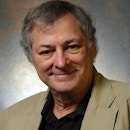
Arnold Levine is an acclaimed leader in cancer research. In 1979, Levine and others discovered the p53 tumor suppressor protein, a molecule that inhibits tumor development. He established the Simons Center for Systems Biology at the Institute for Advanced Study in Princeton, New Jersey, which concentrates on research at the interface of molecular biology and the physical sciences. Such focuses include genetics and genomics; polymorphisms and molecular aspects of evolution; signal transduction pathways and networks; stress responses; and pharmacogenomics in cancer biology.