- Speaker
-
 Lawrence R. Frank, Ph.D.Co-Director, National Skeletal Muscle Research Center, University of California, San Diego
Professor of Radiology, the Director of the Center for Scientific Computation in Imaging, the Associate Director for Biomedical Applications
Presidential Lectures are a series of free public colloquia spotlighting groundbreaking research across four themes: neuroscience and autism science, physics, biology, and mathematics and computer science. These curated, high-level scientific talks feature leading scientists and mathematicians and are designed to foster discussion and drive discovery within the New York City research community. We invite those interested in these topics to join us for this weekly lecture series.
What could be the relationship between the human brain and a tornado? Yet, remarkably, data from both these exceedingly complex physical systems, measured by completely different state-of-the-art imaging systems, can be analyzed with the same general framework. This framework was developed at the Center for Scientific Computation in Imaging at the University of California, San Diego, under the leadership of Lawrence Frank.
That general approach for detecting and characterizing the dynamics of highly non-linear multi-variate multi-scale systems provides a link between the complex spatiotemporal variations in the time-dependent volumetric imaging data and the specific and quite different physics that govern these systems.
In this lecture, Frank will focus on two specific applications that involve major unsolved scientific questions that also have significant social impact. The first is the characterization of brain electrical activity from EEG and its application to the study of autism. The second is the analysis of meteorological radar and satellite data and its use in the characterization and prediction of severe weather events, including violent tornadoes and massively destructive atmospheric rivers. The talk will highlight the tight link between physics and modern imaging systems that can illuminate the extraordinary beauty and complexity of the natural world.
About the Speaker
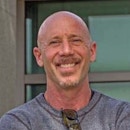
Frank is the founder and director of the Center for Scientific Computation in Imaging (CSCI) at the University of California, San Diego, and the associate director of biomedical applications at the university’s Center for Functional MRI. He received his Ph.D. in Physics from MIT. His research group works on computational physics, neuroimaging, musculoskeletal imaging, evolutionary biology and severe weather. He is an avid storm chaser and former semi-professional baseball player.