- Speaker
-
 Mark Zylka, Ph.D.California Institute of Technology
Presidential Lectures are a series of free public colloquia spotlighting groundbreaking research across four themes: neuroscience and autism science, physics, biology, and mathematics and computer science. These curated, high-level scientific talks feature leading scientists and mathematicians and are designed to foster discussion and drive discovery within the New York City research community. We invite those interested in these topics to join us for this weekly lecture series.
Our inability to identify environmental threats to the brain early — before they cause disease — represents one of the major challenges of our time. This challenge is particularly relevant to autism, which affects 1 in 68 individuals. Heritability studies indicate that environmental factors contribute to autism risk.
In this lecture, Mark Zylka will describe how candidate environmental risk factors for autism can be identified rationally, by pinpointing chemicals that interfere with the same molecular pathways that are affected in individuals with autism. His research focuses on identifying environmental-use chemicals that target autism-linked molecular pathways, using environmental sampling data to assess the exposure threat to people, and validating risk potential in animal models.
About the Speaker
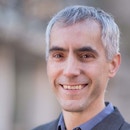
Mark Zylka received his B.S. in biochemistry from Virginia Polytechnic Institute and State University, and his Ph.D. in neurobiology from Harvard University. While at Harvard, he identified several of the core circadian-clock genes and determined how these genes contribute to circadian rhythms in mammals. As a postdoctoral fellow at the California Institute of Technology, he identified a large family of receptors that regulate pain and itch. Zylka’s lab at the University of North Carolina at Chapel Hill focuses on pain research and studying genetic and environmental risks for autism.