- Speaker
-
 Scott Sheffield, Ph.D.Leighton Family Professor of Mathematics, Massachusetts Institute of Technology
Presidential Lectures are a series of free public colloquia spotlighting groundbreaking research across four themes: neuroscience and autism science, physics, biology, and mathematics and computer science. These curated, high-level scientific talks feature leading scientists and mathematicians and are designed to foster discussion and drive discovery within the New York City research community. We invite those interested in these topics to join us for this weekly lecture series.
In 2000, the Clay Institute offered $1 million for a mathematical construction of 4D Yang–Mills gauge theory. That problem remains unsolved, but there has been spectacular progress in recent years on many related 2D and 4D problems.
In this Presidential Lecture, Scott Sheffield will survey these developments. It all begins with 1+1=2, which implies that two non-parallel lines in the plane (co-dimension 1) meet at a point (co-dimension 2). Less trivially, any two paths through a square (one top to bottom, one left to right) intersect somewhere.
Similarly, 2+2=4 implies that two fully non-parallel 2D planes in 4D meet at a point (interpret one dimension as time and imagine moving lines in 3D colliding like light sabers) and that knotted loops in 3D cannot be disentangled without tearing the rope.
Further implications include the self-duality of 1-forms (in 2D) and 2-forms (in 4D), the conformal invariance of certain Gaussian fields, and the self-duality of cellular spanning trees, along with many deep and exciting results about random curves and surfaces, spin systems and connections. But how will this help with our remaining open problems?
About the Speaker
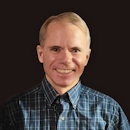
Sheffield is the Leighton Family Professor of Mathematics at the Massachusetts Institute of Technology. He received bachelor’s and master’s degrees from Harvard University in 1998 and a Ph.D. from Stanford in 2003. He is the recipient of a Rollo Davidson Prize, the Sloan Research Fellowship, the Presidential Early Career Award, the Loève Prize, the Clay Research Award, the Leonard Eisenbud Prize, the Frontiers in Science Award and the Henri Poincaré Prize. He has spoken twice at the International Congress of Mathematicians (including a plenary lecture). He is a member of the National Academy of Sciences and the American Academy of Arts and Sciences. He also received an MIT Teaching with Digital Technology Award for his use of AI music to teach introductory probability. He is currently the director of an international Simons Collaboration on Probabilistic Paths to Quantum Field Theory.