- Speaker
-
 Stephen Liberles, Ph.D.Professor of Cell Biology, Harvard Medical School
Presidential Lectures are a series of free public colloquia spotlighting groundbreaking research across four themes: neuroscience and autism science, physics, biology, and mathematics and computer science. These curated, high-level scientific talks feature leading scientists and mathematicians and are designed to foster discussion and drive discovery within the New York City research community. We invite those interested in these topics to join us for this weekly lecture series.
The brain listens to the needs of the body in order to carefully orchestrate our behavior and physiology. The vagus nerve is a major instrument of the body-brain axis, receiving vital signals from the body’s respiratory, cardiovascular and digestive systems. Yet, how the vagus nerve detects bodily stimuli at a molecular level has long remained mysterious.
In this Presidential Lecture, Stephen Liberles will discuss his lab’s efforts to elucidate the workings of the vagus nerve. He built genetic approaches to study the vagus nerve in mice and charted a striking diversity of sensory neurons in the heart, lungs and gastrointestinal tract. He discovered novel body-brain reflexes, sensory receptors, and mechanisms underlying classical reflexes, as well as key features of how bodily signals are organized in the brain. Defining body-brain communication pathways and underlying signaling mechanisms has revealed basic principles of neurophysiology and may provide new ways to treat autonomic diseases.
About the Speaker
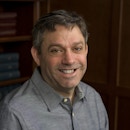
Liberles is a professor and HHMI Investigator in the Cell Biology Department at Harvard Medical School. His research focuses on the molecular neuroscience of sensory systems, including mechanisms of body-brain communication and olfaction. Liberles received an undergraduate degree in chemistry from Harvard in 1994 and a Ph.D. in chemistry and chemical biology from Harvard in 1999, working in the lab of Stuart Schreiber. He then performed post-doctoral work in the lab of Linda Buck, first at Harvard Medical School and then at the Fred Hutchinson Cancer Research Center in Seattle.