March 7, 2014: Perspectives on Big Data in Biology
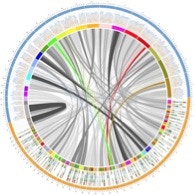
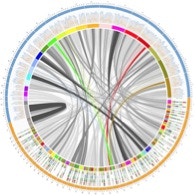
This Biotech Symposium will focus on perspectives on big data in biology from leading practitioners in the field.
This Biotech Symposium will focus on perspectives on big data in biology from leading practitioners in the field.
This Biotech Symposium will focus on perspectives on big data in biology from leading practitioners in the field.
March 9 – 15, 2014 Organizers: Elchanan Mossel, UC Berkeley Ryan O'Donnell, Carnegie Mellon University Krzysztof Oleszkiewicz, University of Warsaw The Simons Symposium on Discrete Analysis: Beyond the Boolean Cube was the second symposium organized on this topic. The first was held in 2012 and was called Analysis of Boolean Functions. This most recent meeting...
Learning Using Privileged Information (LUPI) is a new paradigm that uses an intelligent agent (a ‘nontrivial teacher’) to supplement standard training data in the context of supervised learning algorithms. Rather than using standard, brute-force methods to address the general problem of inference and the construction of intelligent machines, the LUPI learning model allows the teacher to add additional (privileged) information to the training examples.
Learning Using Privileged Information (LUPI) is a new paradigm that uses an intelligent agent (a ‘nontrivial teacher’) to supplement standard training data in the context of supervised learning algorithms. Rather than using standard, brute-force methods to address the general problem of inference and the construction of intelligent machines, the LUPI learning model allows the teacher to add additional (privileged) information to the training examples.
March 23 - 29, 2014 Organizers: Andrew Benson, Carnegie Observatories Juna Kollmeier, Carnegie Observatories The goal of this symposium was to bring together leading experts in the theory and observation of galactic superwinds — outflows of mass, momentum and energy from galaxies thought to be driven by radiation and winds from stars, and by supernova...
Advances in molecular genetics have implicated a variety of genetic variations in autism, yet understanding of what these variations mean is still limited. Advances in classification of diseases have made autism among the most reliably diagnosed neurodevelopmental or neuropsychiatric disorders. But symptoms used to define autism are likely outcomes of earlier disruptions in normative social and communication development rather than causally linked to genetic perturbations.
Advances in molecular genetics have implicated a variety of genetic variations in autism, yet understanding of what these variations mean is still limited. Advances in classification of diseases have made autism among the most reliably diagnosed neurodevelopmental or neuropsychiatric disorders. But symptoms used to define autism are likely outcomes of earlier disruptions in normative social and communication development rather than causally linked to genetic perturbations.
Depression is a common, chronic, and debilitating disease. Although many patients benefit from antidepressant medications or other therapies, only about half show complete remission. Factors that precipitate depression, such as stress, are incompletely understood. We have used chronic social defeat stress as an animal model of depression. Prolonged exposure to an aggressor induces lasting changes in behavior such as social avoidance and anhedonia-like symptoms, which are reversed by chronic (but not acute) treatment with available antidepressants.
This day-long conference will highlight areas where theoretical ideas are having an impact on the life sciences, and will be of interest to established researchers, postdoctoral fellows and graduate students working in the life sciences and allied fields.
In this lecture, Gerald Joyce focuses on the perpetuation of genetic information as a defining characteristic of life. He draws a connection between digital computers (von Neumann machines), especially those with the capacity to self-reproduce, and molecular Darwinian systems that maintain heritable ‘bits’ of information, which are refined through evolution.
In this lecture, Gerald Joyce focuses on the perpetuation of genetic information as a defining characteristic of life. He draws a connection between digital computers (von Neumann machines), especially those with the capacity to self-reproduce, and molecular Darwinian systems that maintain heritable ‘bits’ of information, which are refined through evolution.
In this lecture, Gerald Joyce focuses on the perpetuation of genetic information as a defining characteristic of life. He draws a connection between digital computers (von Neumann machines), especially those with the capacity to self-reproduce, and molecular Darwinian systems that maintain heritable ‘bits’ of information, which are refined through evolution.
A central goal in neuroscience is determining the genetic basis of neurological disorders — from autism to brain tumors. Many of these pathological states result from defects in gene regulatory programs that are fundamental to all cell types but lead to dysfunction specifically within the nervous system. Gail Mandel investigates the basis of this phenomenon and has identified cell-cell interactions between neurons and glia involved in pathological states of brain development. Mandel has ameliorated the neuropathology of one autism spectrum disorder, Rett syndrome, by genetically replacing the defective MeCP2 gene with a good copy of the gene in astrocytes – glia cells in the brain. She is now exploring the underlying mechanisms crucial for neuronal signaling.
A central goal in neuroscience is determining the genetic basis of neurological disorders — from autism to brain tumors. Many of these pathological states result from defects in gene regulatory programs that are fundamental to all cell types but lead to dysfunction specifically within the nervous system. Gail Mandel investigates the basis of this phenomenon and has identified cell-cell interactions between neurons and glia involved in pathological states of brain development. Mandel has ameliorated the neuropathology of one autism spectrum disorder, Rett syndrome, by genetically replacing the defective MeCP2 gene with a good copy of the gene in astrocytes – glia cells in the brain. She is now exploring the underlying mechanisms crucial for neuronal signaling.