Archives: Events Archives: Events

Views Navigation

Event Views Navigation

Today

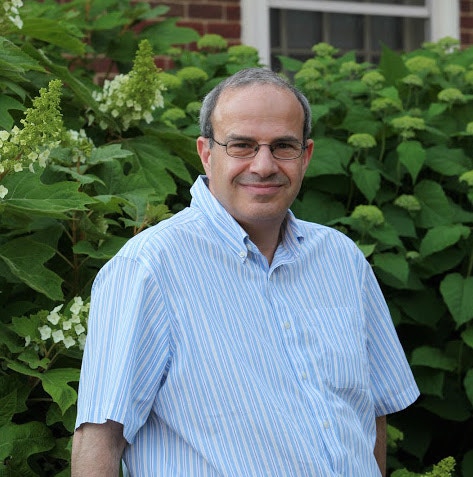
April 30, 2014: Where is Fundamental Physics Heading?

In recent decades, physicists and astronomers have discovered two beautiful standard models, one for the quantum world of extremely short distances and one for the universe as a whole. Both models have had spectacular success, but there are also strong arguments for new physics beyond these models.
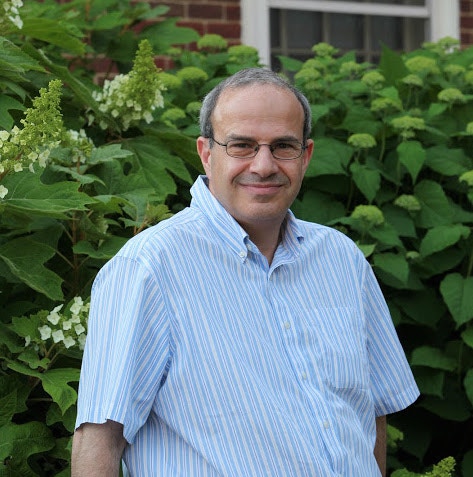

Where is Fundamental Physics Heading?

Gerald D. Fischbach Auditorium 160 5th Avenue, New York, NY, United States

In recent decades, physicists and astronomers have discovered two beautiful standard models, one for the quantum world of extremely short distances and one for the universe as a whole. Both models have had spectacular success, but there are also strong arguments for new physics beyond these models.
Big Data Analytics and a Path to Enhancing Our Understanding of Human Disease

Dr. Schadt provides an overview of how his team organizes very large scale data across many different types, and then integrates these data using sophisticated mathematical algorithms to construct predictive network models of disease, and discusses the application of this type of modeling in the cancer arena.

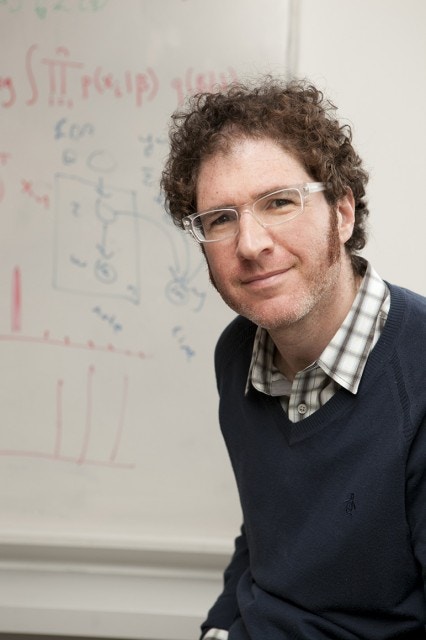
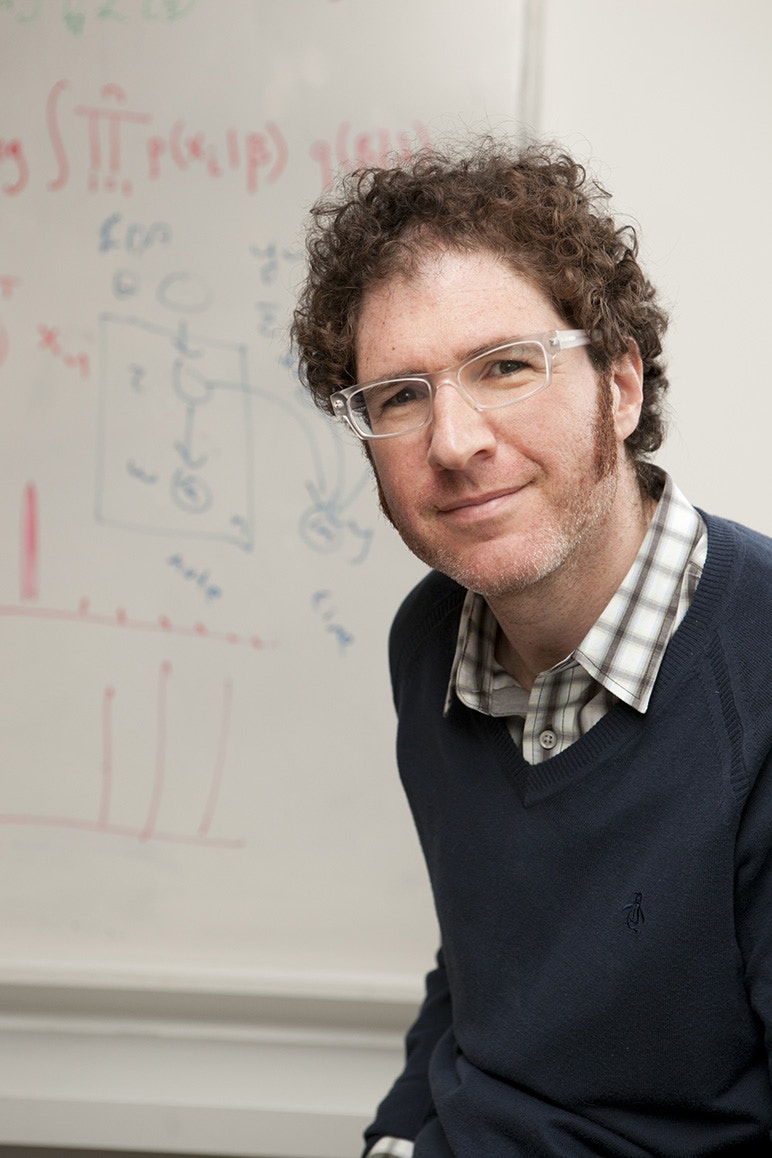
May 21, 2014: Probabilistic Topic Models of Text and Users

Probabilistic topic models provide a suite of tools for analyzing large collections of electronic documents. A traditional topic model analyzes a collection of documents to discover its hidden themes.  These themes can be used to organize, visualize, summarize and navigate the collection. Many collections are associated with corresponding reader behavior data, which is useful both for making predictions about readers (such as which articles they will like) and in understanding patterns in how they read.


Probabilistic Topic Models of Text and Users

Gerald D. Fischbach Auditorium 160 5th Avenue, New York, NY, United States

Probabilistic topic models provide a suite of tools for analyzing large collections of electronic documents. A traditional topic model analyzes a collection of documents to discover its hidden themes.  These themes can be used to organize, visualize, summarize and navigate the collection. Many collections are associated with corresponding reader behavior data, which is useful both for making predictions about readers (such as which articles they will like) and in understanding patterns in how they read.

May 28, 2014: Keeping Your Brain in Balance: Do Defects in Neuronal Homeostasis Contribute to Autism Spectrum Disorders?

Although most people regularly tune up their cars, you probably haven’t needed to bring your brain in for a tune-up, despite the fact that the human brain is far more complex than the internal combustion engine. What’s more, unlike most machines, your brain is constantly changing in order to store memories and adapt to a fluid environment. Our brains are faced with a fundamental challenge: They must preserve the integrity of the neural circuits that subserve behaviors over the lifetime of an organism, while at the same time allowing plastic mechanisms to shape and fine-tune their function.

Keeping Your Brain in Balance: Do Defects in Neuronal Homeostasis Contribute to Autism Spectrum Disorders?

Gerald D. Fischbach Auditorium 160 5th Avenue, New York, NY, United States

Although most people regularly tune up their cars, you probably haven’t needed to bring your brain in for a tune-up, despite the fact that the human brain is far more complex than the internal combustion engine. What’s more, unlike most machines, your brain is constantly changing in order to store memories and adapt to a fluid environment. Our brains are faced with a fundamental challenge: They must preserve the integrity of the neural circuits that subserve behaviors over the lifetime of an organism, while at the same time allowing plastic mechanisms to shape and fine-tune their function.

Symposium on Evidence in the Natural Sciences

FRIDAY, MAY 30, 2014 Scientific Program: 8:00 AM - 3:15 PM Evening Program: 4:30 - 7:45 PM Gerald D. Fischbach Auditorium 160 5th Avenue, New York, New York, 10010 What...


privacy consent banner

Privacy preference

We use cookies to provide you with the best online experience. By clicking "Accept All," you help us understand how our site is used and enhance its performance. You can change your choice at any time here. To learn more, please visit our Privacy Policy.
Advancing Research in Basic Science and MathematicsSubscribe to our newsletters to receive news & updates

privacy consent banner

Privacy preference

We use cookies to provide you with the best online experience. By clicking "Accept All," you help us understand how our site is used and enhance its performance. You can change your choice at any time here. To learn more, please visit our Privacy Policy.