Archives: Events | Page 3 Archives: Events | Page 3

Views Navigation

Event Views Navigation

Today

Other Earths and the Origins of Life

Gerald D. Fischbach Auditorium 160 5th Avenue, New York, NY, United States

New evidence of exoplanets reveals a higher-than-expected occurrence of potentially habitable worlds in our galactic neighborhood. What does this evidence tell us about life on other planets? How can we search for signs of life on other planets?

Robust Integral Equation Methods for Forward and Inverse Scattering

Integral equation methods play an important role in the numerical simulation of electromagnetic scattering. They are easy to employ in complex geometry and impose the desired radiation conditions at infinity without the need for artificial numerical boundaries. Two of the obstacles faced by current forward simulation tools are “low-frequency breakdown” and the lack of easy to use high order quadrature rules for complicated surfaces. In this talk, I will review the relevant background material, discuss a new mathematical formalism for scattering from perfect conductors and briefly describe a new quadrature technique that yields easily implementable high order rules for singular and weakly singular integrals. The scheme, denoted QBX (quadrature by expansion) is compatible with fast hierarchical algorithms such as the fast multipole method.

Quantum Physics Beyond Simple Systems (2014)

St. Regis Bahia Beach Resort State Road 187 kilometer 4.2, Río Grande, Puerto Rico

Organizers: Boris Altshuler, Columbia University Vladimir Falko, Lancaster University Charles Marcus, Neils Bohr Institute   The Simons Symposium on Quantum Physics Beyond Simple Systems was the second symposium organized on this topic, the first having been held in 2012. It offered another opportunity for researchers to discuss the fast-evolving themes of modern quantum complex systems....

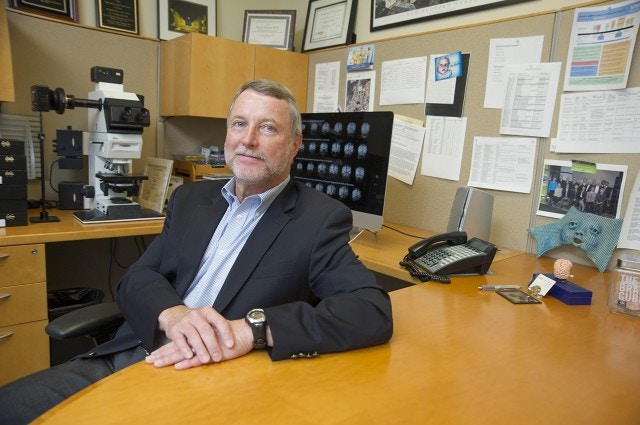
February 26, 2014: Neuroimaging Contributions to the Understanding of Brain Development in Autism

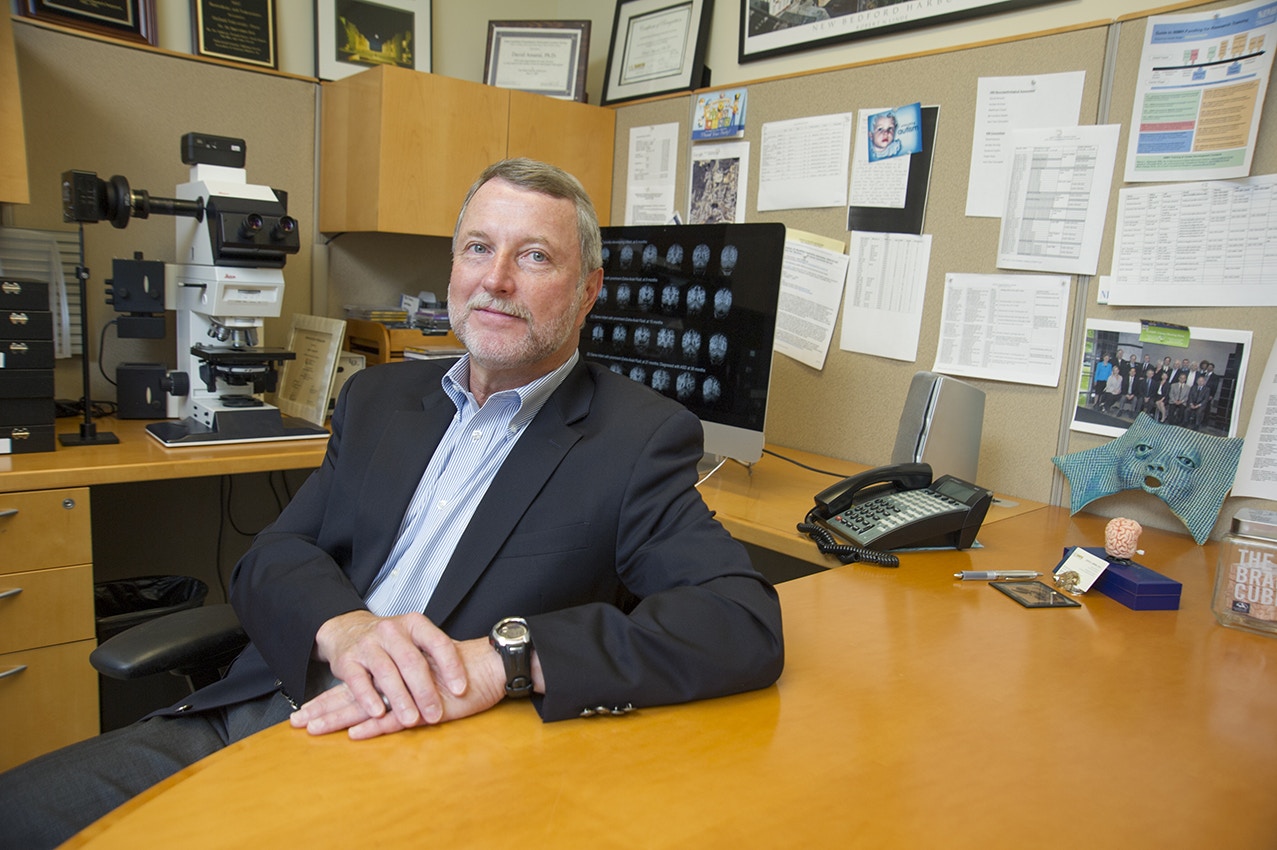
While autism clearly involves altered function of the central nervous system, the neuropathology of the disorder remains controversial. This is due in part,to the enormous complexity of the disorder, which likely has many causes and many biological trajectories. It is also due to the fact that few neuroimaging studies involve very young children or severely affected individuals. This lack of information is compounded by the fact that findings at the magnetic resonance imaging (MRI) level of analysis cannot be confirmed and extended to the cellular level due to a lack of postmortem brains.

Neuroimaging Contributions to the Understanding of Brain Development in Autism

Gerald D. Fischbach Auditorium 160 5th Avenue, New York, NY, United States

While autism clearly involves altered function of the central nervous system, the neuropathology of the disorder remains controversial. This is due in part,to the enormous complexity of the disorder, which likely has many causes and many biological trajectories. It is also due to the fact that few neuroimaging studies involve very young children or severely affected individuals. This lack of information is compounded by the fact that findings at the magnetic resonance imaging (MRI) level of analysis cannot be confirmed and extended to the cellular level due to a lack of postmortem brains.

Genes That Regulate Sleep and Circadian Rhythms in Drosophila

Circadian (~24 hour) clocks are endogenous mechanisms that time the recurring, daily activities observed in most organisms. These clocks are genetically regulated, and generate biochemical oscillations within individual cells composing most tissues. Recently our laboratory has searched for and identified genes that affect the homeostatic regulation of sleep in Drosophila. This research has uncovered specific neurons whose activity promotes sleep.

Perspectives on Big Data in Biology

Gerald D. Fischbach Auditorium 160 5th Avenue, New York, NY, United States

This Biotech Symposium will focus on perspectives on big data in biology from leading practitioners in the field.

Discrete Analysis: Beyond the Boolean Cube (2014)

March 9 – 15, 2014 Organizers: Elchanan Mossel, UC Berkeley Ryan O'Donnell, Carnegie Mellon University Krzysztof Oleszkiewicz, University of Warsaw The Simons Symposium on Discrete Analysis: Beyond the Boolean Cube was the second symposium organized on this topic. The first was held in 2012 and was called Analysis of Boolean Functions. This most recent meeting...

March 12, 2014: Learning With a Nontrivial Teacher

Learning Using Privileged Information (LUPI) is a new paradigm that uses an intelligent agent (a ‘nontrivial teacher’) to supplement standard training data in the context of supervised learning algorithms. Rather than using standard, brute-force methods to address the general problem of inference and the construction of intelligent machines, the LUPI learning model allows the teacher to add additional (privileged) information to the training examples.


privacy consent banner

Privacy preference

We use cookies to provide you with the best online experience. By clicking "Accept All," you help us understand how our site is used and enhance its performance. You can change your choice at any time here. To learn more, please visit our Privacy Policy.
Advancing Research in Basic Science and MathematicsSubscribe to Flatiron Institute announcements and other foundation updates

privacy consent banner

Privacy preference

We use cookies to provide you with the best online experience. By clicking "Accept All," you help us understand how our site is used and enhance its performance. You can change your choice at any time here. To learn more, please visit our Privacy Policy.