Archives: Events | Page 6 Archives: Events | Page 6

Views Navigation

Event Views Navigation

Today

Keeping Your Brain in Balance: Do Defects in Neuronal Homeostasis Contribute to Autism Spectrum Disorders?

Gerald D. Fischbach Auditorium 160 5th Avenue, New York, NY, United States

Although most people regularly tune up their cars, you probably haven’t needed to bring your brain in for a tune-up, despite the fact that the human brain is far more complex than the internal combustion engine. What’s more, unlike most machines, your brain is constantly changing in order to store memories and adapt to a fluid environment. Our brains are faced with a fundamental challenge: They must preserve the integrity of the neural circuits that subserve behaviors over the lifetime of an organism, while at the same time allowing plastic mechanisms to shape and fine-tune their function.
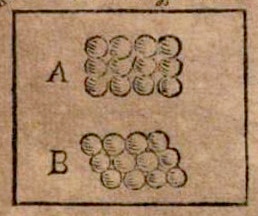
Symposium on Evidence in the Natural Sciences

FRIDAY, MAY 30, 2014 Scientific Program: 8:00 AM - 3:15 PM Evening Program: 4:30 - 7:45 PM Gerald D. Fischbach Auditorium 160 5th Avenue, New York, New York, 10010 What is the difference between evidence, fact, and proof? Can we quantify evidence; is something more evident than something else? What does it take to convince...

Complex Data Visualization: Approach and Application

Gerald D. Fischbach Auditorium 160 5th Avenue, New York, NY, United States

This Biotech Symposium will focus on the visualization and representation of analytic results from complex data sets.

Strategies to Prolong Vision in Inherited Forms of Blindness

In the disease retinitis pigmentosa (RP), disease genes directly cause the dysfunction and death of rod photoreceptors, the photoreceptor type that mediates vision in dim light, causing night blindness. Subsequently, the cone photoreceptors, which mediate color and daylight vision, also lose function and die. Dr. Cepko et al have suggested a model wherein cones are affected due to the dysregulated metabolism that follows rod death. They have begun to develop gene therapy to combat this, using adenovirus-associated vectors (AAV) to deliver genes that help cones fight oxidation and other forms of stress. Their progress in treating RP mice using such vectors will be presented.

The Social Brain: A Hypothesis Space for Understanding Autism

Gerald D. Fischbach Auditorium 160 5th Avenue, New York, NY, United States

In this talk, Nancy Kanwisher will consider the functional architecture of the social brain in typical subjects as an avenue for considering which functions are affected and which are preserved in autism.

Testing the Cortical Column Conjecture

Gerald D. Fischbach Auditorium 160 5th Avenue, New York, NY, United States

In his talk, Carey Priebe will present the conjecture that neurons in the neocortex are connected in a graph that exhibits motifs representing repeated processing modules.

Urban Social Science Au Naturel

Gerald D. Fischbach Auditorium 160 5th Avenue, New York, NY, United States

The enormous amount of information that is now available about cities and the people who live in them offers intriguing opportunities for better understanding human behavior. That understanding can be applied to optimize urban policy and operations. Steven Koonin will discuss examples of and prospects for gaining insight into human behavior within the context of work at...


Advancing Research in Basic Science and MathematicsSubscribe to our newsletters to receive news & updates