Fellows-to-Faculty Alum Tomasz Nowakowski Studies Human Cortical Development
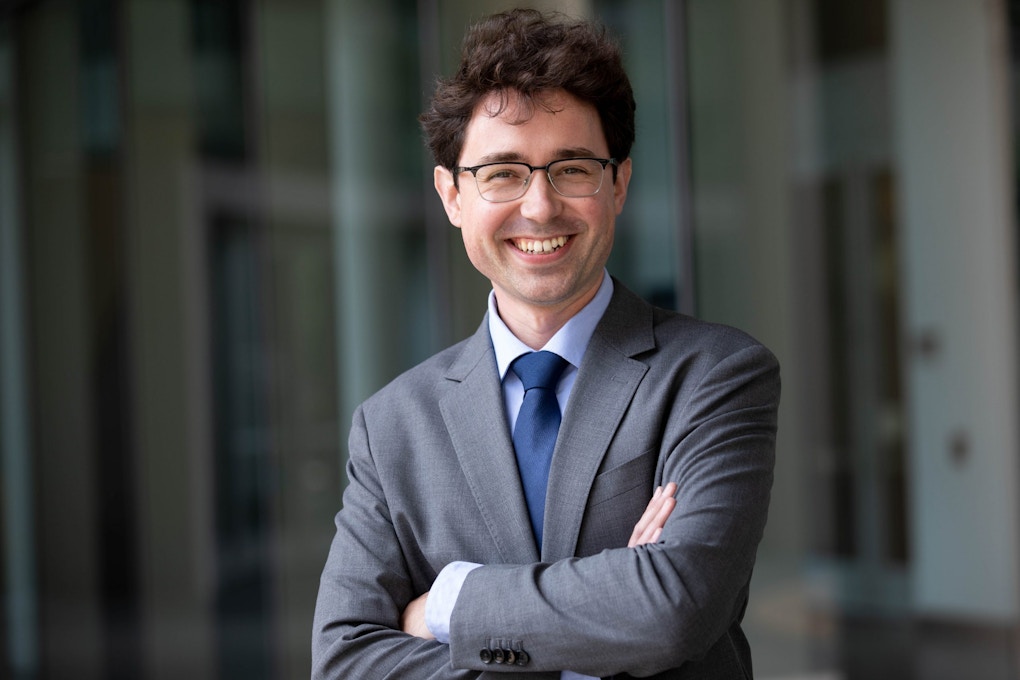
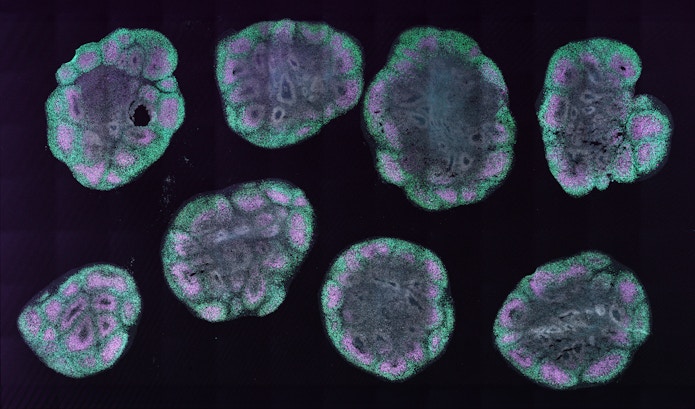
What goes awry in developing brains has been a question Tomasz Nowakowski has wanted to answer since high school. Now an associate professor at the University of California, San Francisco (UCSF), his lab combines optogenetics with brain organoid studies and single-cell RNA sequencing to understand how genes guide the growth of the human brain and the establishment of different nerve cell populations. As part of this work, he hopes to learn what leads to autism.
In 2018, Nowakowski received the Simons Foundation’s Fellows-to-Faculty Award (then called Bridge to Independence) to jumpstart his new independent lab at UCSF. His award aligns with the goals of the Simons Foundation Autism Research Initiative (SFARI), which aims to advance the basic science of autism and related neurodevelopmental disorders. We recently spoke with Nowakowski about his research, the Fellows-to-Faculty program and joining a community of autism experts.
How did you get interested in neuroscience?
My interest in science originated in a passion for understanding the fundamental principles that govern the world around us. Up until high school, I was convinced I wanted to become a physicist. But when I volunteered at a care facility and interacted with neuropsychiatric and neurological patients, I became fascinated by the complexities of the human mind and cognition. I progressively homed in on studies of developmental neuroscience as a scientific field that combines my desire to break down complex processes into fundamental principles with the goal of understanding the human brain. I came to UCSF to pursue postdoctoral training and subsequently launched my independent lab with the support of a Fellows-to-Faculty Award.
How is your lab studying brain development in autism?
We are taking three different approaches. First, we study brain tissue derived from individuals who had been diagnosed with autism and have either passed away or had a small piece of tissue removed surgically. These studies help us establish the ‘ground truth.’ Second, we study human brain tissue that was donated to research and engineer approaches to study how autism-linked genes are expressed and what their function is. Third, we introduce genetic variants identified in individuals with autism into pluripotent stem cells and then use stem cell-derived models to study how these variants interfere with protein complexes, cell and circuit development. While no one approach will provide us the complete set of answers, we can use these complementary approaches to better understand the causal mechanisms and identify points of convergence among the different genetic risk factors.
How did this award shape the overall trajectory of your lab’s research?
My participation in the Fellows-to-Faculty program was a career-defining experience. First, by attending the SFARI Investigator Meeting, I was able to get a glimpse of the complexity of research into autism causes and phenotypic diversity. From genes, to cells, to circuits, and to patients. Contextualizing my own research on brain development in the broader framework of autism research helped guide the majority of the research questions in my lab.
Second, I had the privilege to learn about the resources that the SFARI team has put together over the years, including genetic material, brain tissue, mouse and rat models, and even pluripotent stem cells. This helped me prepare much better grant applications because I understood what resources could be accessed.
Third, I was able to develop a network of colleagues and collaborators with complementary expertise with whom we can now tackle much broader problems than I could ever hope to tackle by myself.
What made you apply for the Fellows-to-Faculty Award?
I was very intrigued by research into autism and by the genetics of complex human neurodevelopmental disorders. What was known was that many of the high-risk autism genes are highly expressed during early brain development, but neither ‘the how’ nor ‘the why’ were well understood, particularly in humans. So, I thought, why not give it a try?
The Fellows-to-Faculty Award provides a three-year faculty research grant. How did you use that funding?
The amazing part about this fellowship is that it is awarded in the year when you pursue faculty positions. It helped me through my first period of grant writing, [as at first] I struggled to secure NIH grants. And its nature allowed me to try projects that my lab wouldn’t have attempted otherwise. For example, we were fortunate to be able to use the support to develop a novel molecular barcoding strategy to study how progenitors of the human brain give rise to different types of neurons. I also bought a freezer that was a little more expensive than I would have bought otherwise. Knowing that the primary human brain tissue specimens, which are just so precious, are secure and are well monitored for temperature was a real peace of mind.
What else did the fellowship provide?
Being able to come to New York every year to attend the investigator meeting, and the mentorship that I ultimately received from the SFARI science team taught me a lot. It was a little bit like being in school again where you just start soaking up knowledge about the latest exciting developments in exome sequencing, concepts around the convergence between common and rare variants in autism, all the way to cellular electrophysiology and circuit neuroscience. Every SFARI Investigator Meeting is a humbling experience. I established connections with people that I wouldn’t interact with otherwise. At one session, a plenary by a book writer, brought to me this kind of really eye-opening perspective on the broader spectrum of problems that individuals on an autism spectrum experience.
What do you think was the most valuable aspect of getting this fellowship?
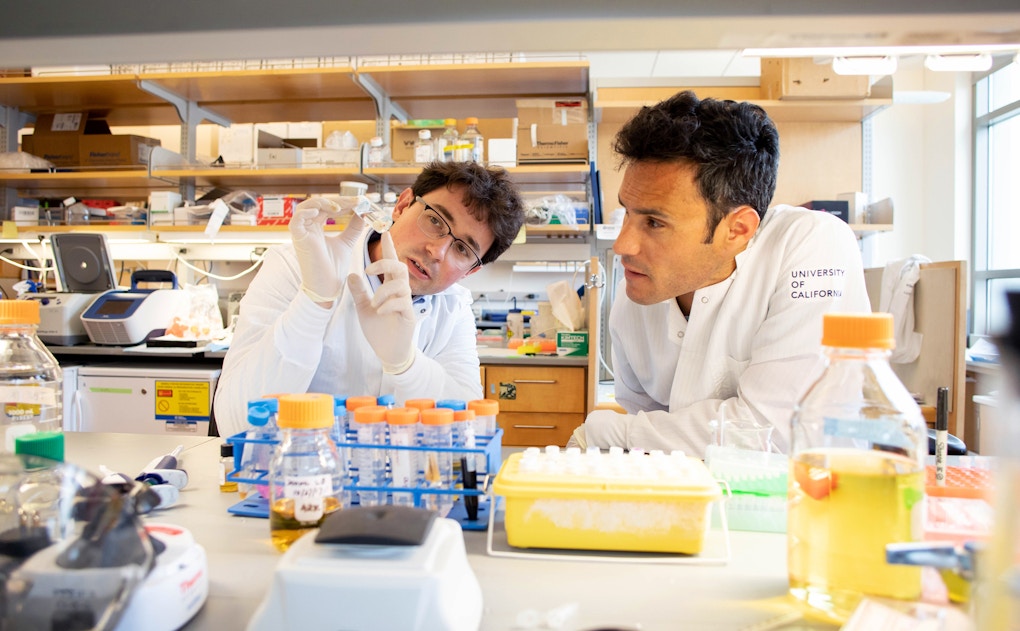
I think the opportunity to network, to connect, to learn. At least 60 percent, if not more, of my lab is working in collaboration with other Simons Investigators. For example, I collaborate with Stephan Sanders on analyses of human postmortem brain tissue profiling. I collaborate with Omer Bayraktar to further understand which cell types and brain regions coexpress autism-linked genes most prominently. Together with Evan Eichler, Aravinda Chakravarti and Huda Zoghbi, my lab investigates the molecular basis of sex differences in the developing brain, and my collaborations with Devanand Manoli and Vikaas Sohal seek to uncover autism-linked changes in subcortical structures such as the hypothalamus. It’s just been transformative to my career.
What advice would you give to someone who might be thinking about this fellowship?
Come into writing the fellowship application with an open mind and think about what you might be bringing that’s unique and how it intersects with what we understand broadly as autism spectrum disorders. But also, do not be afraid about not entirely fitting in. Instead, [consider] how this fellowship might position you to dedicate a substantial part of your future career to addressing the understanding of autism and its origins.
Looking back, how have you changed because of the fellowship?
I have to admit that my understanding of autism was very naïve when I applied for the fellowship. The Simons team was gracious enough to allow me to start attending the investigator meetings even before I started my lab to start learning from experts in the field. I thought that was absolutely a very wise idea because it helped me to start thinking and start being grounded even before I launched my lab. Joint projects and contributions to papers outside of my field of expertise have helped me to start asking even better questions because now I know a lot more about the key unmet needs in the field. That is where the fellowship came in so wonderfully and fulfilled its mission, at least for me.


