Superconductivity
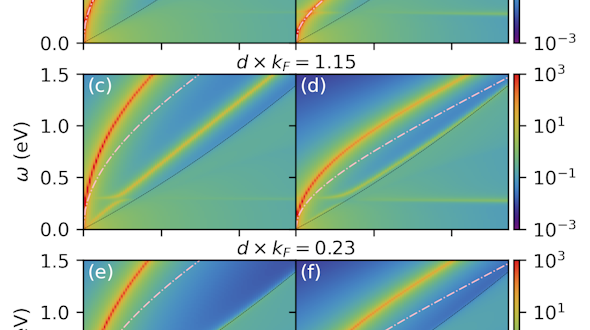
Superconductivity, the ability of certain materials held at low temperatures to conduct electricity with absolutely zero resistance and to expel magnetic fields, has fascinated scientists since its discovery by Heike Kamerlingh-Onnes in 1911. We would like to know what causes it, and how might we raise the critical temperature below which superconductivity occurs.
Of particular interest to CCQ is the plethora of unconventional superconducting states in quantum materials hosting strongly correlated electrons. Basic to our work is the construction (Phys Rev B111, 035135; JOSS 06297) of compressed, low-dimensional representations of quantum data that make calculations tractable.
CCQ scientists, along with the Simons Collaboration on Superconductivity [link] are investigating new mechanisms [2D Materials 10, 045031 (2023), Phys. Rev. B 110, 054509 (2024), Phys. Rev. Lett. 133, 146503] or calculating superconducting states and elucidating new classes of superconducting properties and (see the Quantum Monte Carlo group) studying the superconducting phase diagram of basic models such as the Hbbard model. We are also looking in detail at the physical origin and basic properties of the new kinds of superconductivity observed in quantum materials ranging from Sr2RuO4 and the high transition temperature copper-oxide materials to twisted multilayer systems including multilayer graphene and transition metal dicalcogenides.
Project Leader: Andrew Millis
Project Scientists: Antoine Georges, Shiwei Zhang, Olivier Gingras, Samuele Giuli, Christopher Roth