Machine Learning; Neural Quantum States
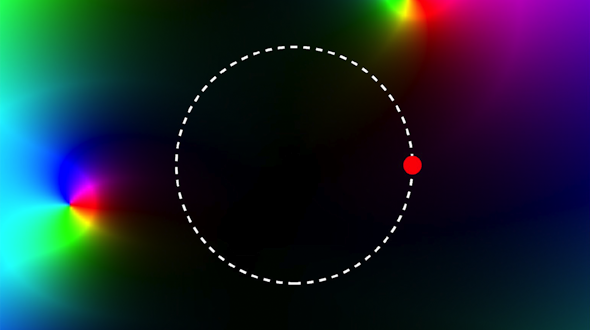
Machine learning techniques can be used to grasp, reduce, and ultimately better understand the inherent complexity of many-body physical systems. A promising route for applying machine learning ideas to physics is by using artificial neural networks to describe quantum wave functions, which allows one to simulate interacting quantum models that would otherwise be very challenging.
The goal of this CCQ project is to develop new variational wave functions as well as to understand their training, interpretation, and applications, with a special focus on fermionic strong correlation effects. Current work focuses both on lattice models, like the Hubbard model and its generalizations, and on continuum space models, like 2D electron gas and moiré systems. CCQ is also using and developing Machine Learning methods for data-driven tasks, especially in connection to quantum simulators.
Project Leader: Anirvan Sengupta (joint with CCM)
Project Scientists: Antoine Georges, Miguel Morales, Alev Orfi, Christopher Roth, Connor Smith, Agnes Valenti, Roland Wiersema, Shiwei Zhang, Riccardo Rende