Rachel Collin, Ph.D.
Staff Scientist , Smithsonian Tropical Research InstituteDirector, Bocas del Toro Research Station
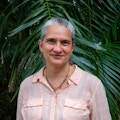
As a marine biologist with expertise in aquatic invertebrates, Rachel Collin focuses on documenting tropical biodiversity and understanding how environmental conditions and climate change impact the reproduction, development and survival of diverse animals. Collin’s research with snails, sea urchins and corals shows how current environmental conditions on tropical reefs and in seagrass meadows may be stressful for their inhabitants. Marine heat waves, hypoxic events and even normal seasonal changes can impact animals’ ability to function. Stressors shape the distribution of each species, and early developmental stages may be particularly vulnerable. Collin has used her specialist knowledge to show that surveys of marine invertebrate larvae reveal biodiversity not recorded during surveys of adult animals. In addition, she is the taxonomic expert on a family of snails (the Calytraeidae) and has described and named a dozen species in this group.
As a Simons Foundation Pivot Fellow, Collin will learn how to study ecosystem processes in coastal wetlands, and their role in global systems and climate change. This will move her focus from animals to plants, soils and microorganisms; from individuals to whole ecosystems and the global climate system; and from low-tech to high-tech instruments and methods. Understanding the biogeochemical processes and the role microbes play in preserving carbon in wetlands and in producing greenhouse gases, such as methane, is vital to understanding the net influence of the ecosystem on our planet’s climate.