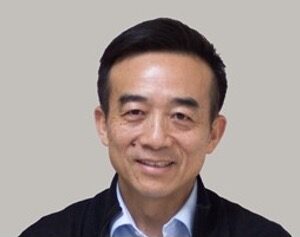
Yuhai Tu joined the Center for Computational Biology with a joint position at the Center for Computational Neuroscience in May 2025 as a Senior Research Scientist. His work focuses on Statistical Physics, Molecular/Cellular Biology, Neuroscience, and Machine Learning. His pioneering work on collective phenomena in active systems (flocking dynamics) in the 1990s won him (together with John Toner and Tamas Vicsek) the APS Lars Onsager Prize in 2020. Since 2000, his research interests have shifted to biological physics. He has made seminal contributions in many areas of biological physics, including algorithm development and statistical analysis for high throughput transcriptome data (microarray analysis); quantitative modeling of signal transduction and motility in bacterial chemotaxis; and thermodynamics of nonequilibrium biochemical networks. His recent work focuses on three directions: (1) dynamics of biological networks — biochemical networks for signal transduction and neural networks for coding and computation; (2) thermodynamics of information processing in biological systems; (3) statistical physics of machine learning.
Tu graduated from the School of Gifted Young at University of Science and Technology of China in 1987. He came to the U.S. under the CASPEA program and got his Ph.D. in theoretical physics from the University of California, San Diego in 1991. After three years as the Division Prize Fellow at Caltech, he joined the IBM T. J. Watson Research Center from 1994 to 2025 and served as head of the theory group from 2002 to 2014. Tu joined Flatiron Institute in 2025. He is an American Physical Society (APS) fellow (elected 2004), and an American Association for the Advancement of Science (AAAS) fellow (elected 2020). He served as vice-chair/chair of APS Division of Biological Physics (DBIO) from 2016 to 2018.