Why We Need Computation to Understand the Brain

Nearly 15 years ago, a handful of neuroscientists had a radical idea: to combine mathematical theory, computation and experimentation in the quest to understand the brain. They presented their concept to Jim and Marilyn Simons at the Buttermilk Falls Inn in Milton, New York, where the couple had gathered 18 researchers in 2012 to discuss potential new scientific projects. Jim Simons was immediately intrigued. He had always wanted to better understand the underpinnings of the brain — what was literally happening in his own brain when he was pondering a math problem? What neural activity made that kind of cognition possible?
The scientists’ proposal was based on an idea championed by Bill Newsome, a professor of neuroscience at Stanford University School of Medicine, to move beyond the traditional one-neuron-at-a-time method of studying neural activity and instead study collections of neurons together. The field is called ‘systems neuroscience,’ but at the time, Jim Simons proposed a different term to describe this project: the global brain.
In 2014, the Simons Collaboration on the Global Brain (SCGB) launched as the Simons Foundation’s first collaborative neuroscience research effort. 2025 was the collaboration’s last year of funding. Over the years, the SCGB brought together more than 100 investigators and many more students and fellows funded through the program, all striving to understand how different neurons and parts of the brain work together to enable complex cognition. SCGB scientists study the brains of a variety of animals, from fruit flies to mice to nonhuman primates.
“This was part of the transition from studies of single neurons to studies of populations of neurons,” says Larry Abbott, a theoretical neuroscientist at Columbia University and an SCGB investigator who has been involved with the collaboration since its inception. “Things have changed so quickly that this sounds like ancient history, but partly that’s because of the SCGB. It really fostered this change.”
The shift from studying one cell at a time to studying multiple neurons in concert necessitated the development of improved computational and mathematical tools to analyze neuroscience data. New technologies on the scene — such as Neuropixels, thin silicon probes that measure activity from hundreds of neurons at once — were suddenly generating hundreds or thousands of times more data than previous neural activity studies ever had. Experimental scientists needed mathematicians to help them sift through it all and theorists to help them make sense of it.
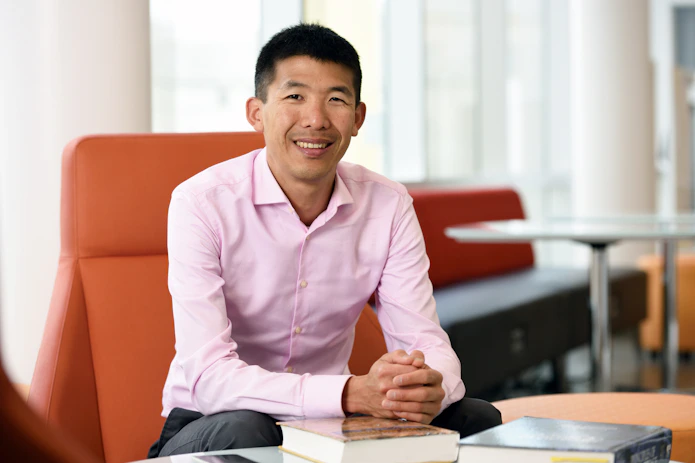
“At the time, there were only a handful of initiatives focusing on computational neuroscience work,” says Alyssa Picchini Schaffer, vice president and senior scientific officer of the Simons Foundation’s neuroscience collaborations. “There was this realization that deeply grounding the theory in biology and, on the flip side, having experimental neuroscientists really dig in and understand the computational approaches, that was the special sauce.”
It was quickly apparent that uncovering the patterns of neural activity that underlie cognition requires studying many regions of the brain at once, and that meant large-scale science, in terms of both the amount of data generated and the number of investigators with different areas of expertise involved. Perhaps most emblematic of the SCGB’s big, collaborative science ethos is the International Brain Laboratory (IBL), an SCGB-funded consortium of 22 neuroscience labs that came together in 2017 to map neural activity across the entire mouse brain as animals engaged in a single task.
Their brainwide map of neural activity from 300,000 neurons, finished in 2023, required new computational tools for storage and analysis, developed by a dedicated team of 12 engineers who support the IBL. This large dataset of neural activity, a first of its kind, has been made openly available for exploration and insight generation to the broader neuroscience community. Computational neuroscientists working in the IBL have also developed approaches based on their data that could have broad applications across systems neuroscience.
The thorny problem of big data analysis has reached many corners of neuroscience. Byron Yu, a neuroscience and engineering professor at Carnegie Mellon University and an SCGB investigator, has been working for more than 10 years on a collaborative effort to understand how different parts of the brain interact to enable vision and interpretation of what we see. That effort requires tracking neural activity from hundreds of neurons across those different parts of the brain in one experiment. In traditional neuroscience studies that measured the activity of only a few neurons at a time, scientists typically studied the activity of each neuron individually or that of pairs of neurons. But for these large, more complex datasets, Yu and his colleagues needed to apply multivariate statistical methods (a process known as ‘dimensionality reduction’), which make it possible to study how larger numbers of neurons coordinate their activity together. As datasets get larger across systems neuroscience, this statistical approach is becoming more and more common.

Yu specializes in data analysis and statistics, while his collaborators — Adam Kohn, chair of neuroscience at Albert Einstein College of Medicine, and Christian Machens, a neuroscientist at the Champalimaud Foundation — lead the project’s laboratory experiments and modeling efforts, respectively.
“Experimentation, modeling and analysis are like three corners of a triangle. Each one has its own value, but when you put the three together, that’s where the power comes from,” Yu says. “The meeting point is really interesting, where the data meet the model and we can compare and contrast.”
The SCGB has also invested in training the next generation of neuroscientists. The collaboration funds fellowships for postdoctoral fellows and those transitioning to academic independence. Laura Driscoll, now a scientist at the Allen Institute for Neural Dynamics, received one of those fellowships to support her research and transition, building on her postdoctoral work with David Sussillo and the late Krishna Shenoy at Stanford University.
One clear problem in machine learning is the difference between our brains and artificial neural networks in how they adapt to variations. Our brains are very good at learning new skills by making inferences from skills we already know, but computers are less readily adaptable in this way. Driscoll’s project studied how an artificial neural network trained to complete multiple tasks used sections of its activity patterns repetitively to accomplish those tasks, the way a dancer might use the same basic dance moves in different choreographed routines. Understanding how an artificial network is able to complete multiple tasks that it has been trained on is the first step toward building networks that can flexibly learn new skills.

“The work I was doing wouldn’t have been possible if it weren’t for the Simons Foundation, because there weren’t many other funding mechanisms for people who are doing simulations in artificial neural networks,” Driscoll says. “I feel a lot of gratitude toward the SCGB for being able to have the career that I’ve had so far.”
The SCGB brought together all its investigators and fellows for a regular annual meeting, and several SCGB scientists say that meeting was the highlight of their year — and even helped change the course of their careers.
“I don’t think I’ve ever been in a group of such distinguished scientists as at the yearly meeting,” says Sussillo. “In terms of what they set out to do, it worked. Those ways of thinking have now become mainstream, thanks to the Simons Foundation. What an honor to be a part of it.”