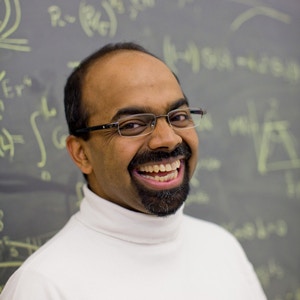
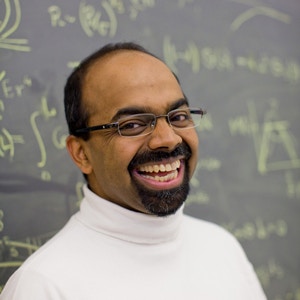
October 9, 2013: Neural Codes for Representation and Memory
In this talk, Ila Fiete will argue that it is time to develop and apply information-theoretic principles specific to coding in the noisy brain.
In this talk, Ila Fiete will argue that it is time to develop and apply information-theoretic principles specific to coding in the noisy brain.
In this talk, Ila Fiete will argue that it is time to develop and apply information-theoretic principles specific to coding in the noisy brain.
The inaugural Annual Meeting was an opportunity for awardees to get to know each other and their work.
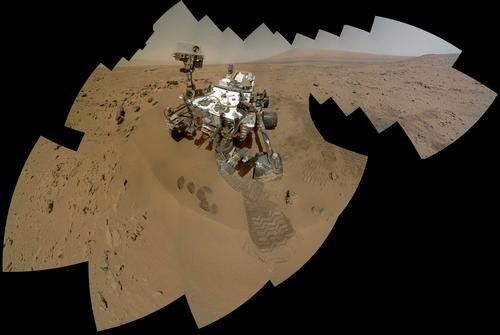
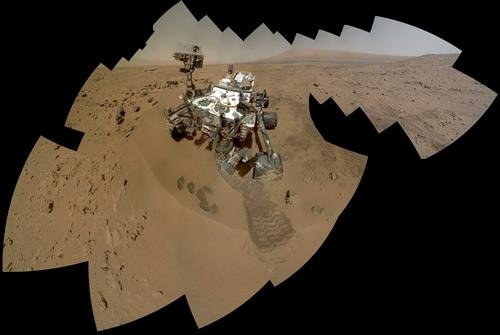
In this talk, Roger E. Summons outlines approaches to seeking evidence of life in Earth’s oldest sedimentary rocks and shows, by analogy, how the Mars Science Laboratory mission is designed to investigate Mars’ capacity for supporting a biosphere.
No one knows when life first colonized planet Earth, nor if or when Mars ever supported life. We see numerous, unequivocal lines of evidence for life on Earth from some 3.5 billion years ago to the present day. But the further back in time we look, the more clues about our earliest ancestors are clouded by doubts, uncertainties and controversies.
No one knows when life first colonized planet Earth, nor if or when Mars ever supported life. We see numerous, unequivocal lines of evidence for life on Earth from some 3.5 billion years ago to the present day. But the further back in time we look, the more clues about our earliest ancestors are clouded by doubts, uncertainties and controversies.
In this talk, Mike Shelley discusses problems in fluid-structure interaction ranging from the macroscopic, i.e. flapping of flags and bending of tree leaves, to the micro – collective behaviors of micro-organisms and the transport of subcellular structures.
Autism and epilepsy are often comorbid disorders with overlapping epidemiology, genetics, clinical features, neuroanatomic abnormalities and neurophysiological mechanisms. Defining the genetics and clinical features of individuals with comorbid autism and epilepsy is ongoing, and development of genotype-phenotype correlations has just begun. Understanding shared and distinct mechanisms underlying autism and epilepsy is likely to improve prognosis, therapy and prevention.
Autism and epilepsy are often comorbid disorders with overlapping epidemiology, genetics, clinical features, neuroanatomic abnormalities and neurophysiological mechanisms. Defining the genetics and clinical features of individuals with comorbid autism and epilepsy is ongoing, and development of genotype-phenotype correlations has just begun. Understanding shared and distinct mechanisms underlying autism and epilepsy is likely to improve prognosis, therapy and prevention.
On November 1, 2013, the Simons Foundation hosted the sixth annual New York Computer Science and Economics (NYCE) day.
Burgeoning evidence shows that in typical development, the ability to structure actions according to intentions emerges during infancy. And recent evidence reveals that infancy is a period of rapid change and development in this ability. Early social knowledge depends critically on infants’ active engagement with the physical and social world.
Burgeoning evidence shows that in typical development, the ability to structure actions according to intentions emerges during infancy. And recent evidence reveals that infancy is a period of rapid change and development in this ability. Early social knowledge depends critically on infants’ active engagement with the physical and social world.
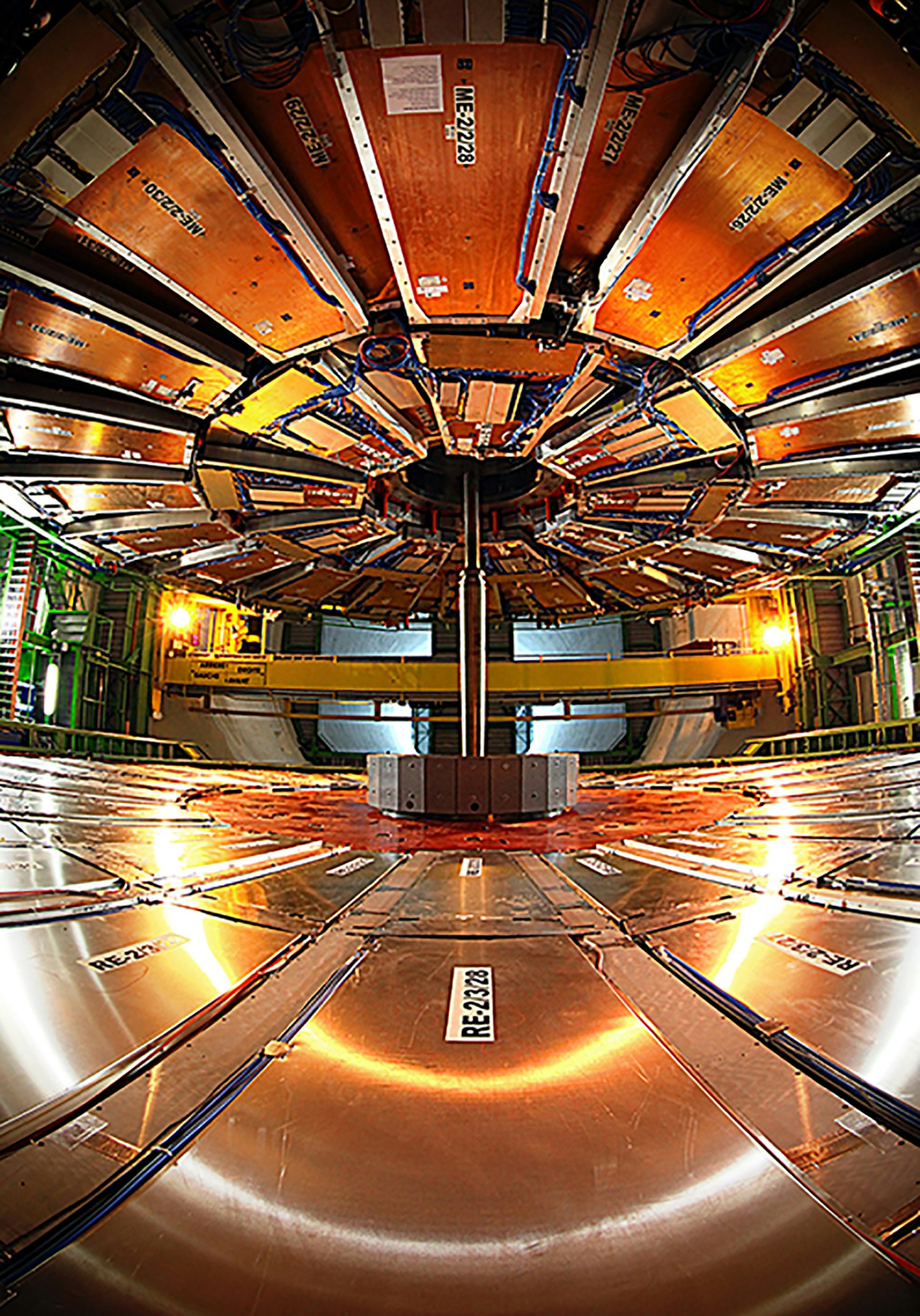
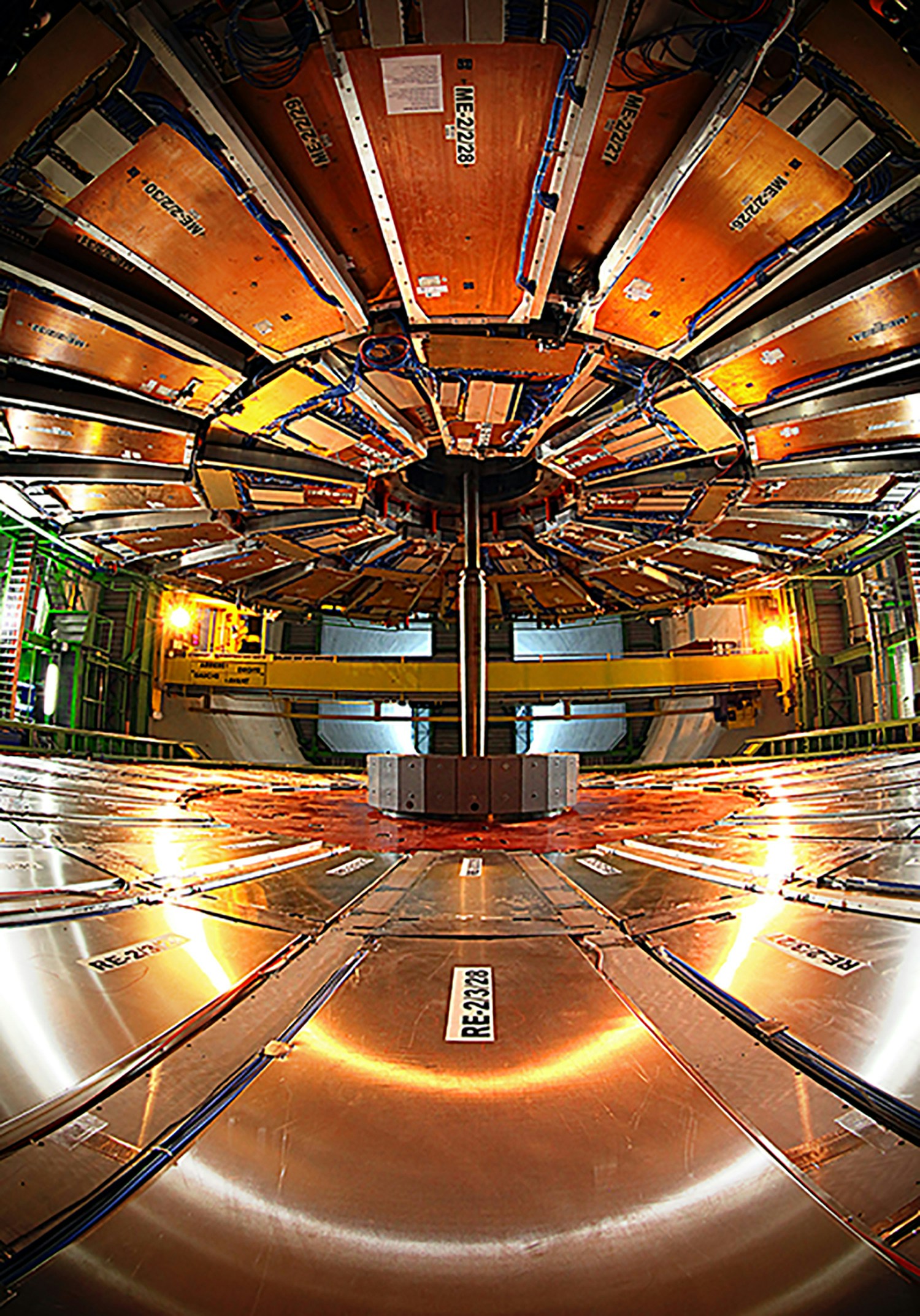
The Large Hadron Collider (LHC) at the European Organization for Nuclear Research (CERN) near Geneva, Switzerland has performed spectacularly well in its first major running period: from December 2009 through February 2013. Data of unprecedented quality and quantity have been recorded for proton-proton collisions at energies of 7 and 8 trillion electron volts — the highest energies ever obtained.
In this talk, Joe Incandela will present an overview of the LHC physics program, including highlights from the discovery of a Higgs boson and a summary of more recent studies that incorporate more data. He will briefly discuss expectations for future results in years to come.
In this talk, Joe Incandela will present an overview of the LHC physics program, including highlights from the discovery of a Higgs boson and a summary of more recent studies that incorporate more data. He will briefly discuss expectations for future results in years to come.
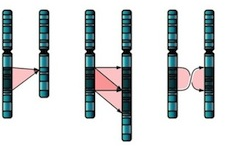
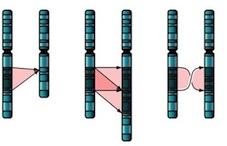
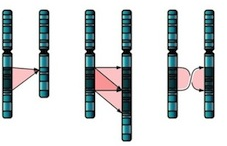
This Biotech Symposium will focus on computational methods for detecting structural variants, which include large chromosomal insertions, deletions, inversions and translocations.
This Biotech Symposium will focus on computational methods for detecting structural variants, which include large chromosomal insertions, deletions, inversions and translocations.
This Biotech Symposium will focus on computational methods for detecting structural variants, which include large chromosomal insertions, deletions, inversions and translocations.
Thought experiments have played an important role in figuring out the laws of physics. For the unification of quantum mechanics and gravity, where the phenomena take place in extreme regimes, they are even more crucial. Hawking’s 1976 paper “Breakdown of Predictability in Gravitational Collapse” presented one of the great thought experiments in the history of physics, arguing that black holes destroy information in a way that requires a modification of the laws of quantum mechanics. Skeptics for years failed to poke holes in Hawking’s argument, but concluded that if quantum mechanics is to be saved then our understanding of spacetime must break down in a radical way.
L. Mahadevan will explain how a combination of biological and physical experiments, together with mathematical models and computations, begin to unravel the physical basis for morphogenesis. He will go on to explore how these pan-disciplinary problems enrich the origins of this topic, creating new questions in mathematics, physics and biology.
L. Mahadevan will explain how a combination of biological and physical experiments, together with mathematical models and computations, begin to unravel the physical basis for morphogenesis. He will go on to explore how these pan-disciplinary problems enrich the origins of this topic, creating new questions in mathematics, physics and biology.
L. Mahadevan will explain how a combination of biological and physical experiments, together with mathematical models and computations, begin to unravel the physical basis for morphogenesis. He will go on to explore how these pan-disciplinary problems enrich the origins of this topic, creating new questions in mathematics, physics and biology.
In biological systems, there are striking examples where complicated structures (i.e., the bacterial ribosome) can spontaneously assemble, driven by specific interactions between the components. But how can systems be designed to have this property? Recent technological advances have created the opportunity for making technologically relevant systems that self assemble, using strands of DNA or objects coated with DNA. We will use these systems as inspiration to formulate theoretical models to understand how self assembly works in these systems, through theory, numerical simulation and experiment — and start to speculate as to whether resulting principles might be useful for unravelling the rules of biological self-assembly.
January 26 – February 1, 2014 Organizers: Werner Mueller, University of Bonn Sug Woo Shin, Massachussets Institute of Technology Nicolas Templier, Princeton University The Simons Symposium on Families of Automorphic Forms and the Trace Formula provided an opportunity for researchers to study families of automorphic representations of higher rank groups. During the symposium participants investigated...