Archives: Events Archives: Events

Views Navigation

Event Views Navigation

Today

The Energetic Ear

As the gateway to human communication, the sense of hearing is of enormous importance in our lives.  Research on hearing has recently been revolutionized by the demonstration that the ear is not simply a passive receiver for sound, but also an amplifier that augments, filters, and compresses its inputs.

September 20, 2013: Diffusion Tensor Imaging

The first Neuroimaging Symposium focuses on diffusion tensor imaging — a magnetic resonance imaging technique used to study brain tissue design, especially white tracts, in both normal and diseased states.

This lecture has already taken place. To view slides from the lecture, visit the lecture page.

Diffusion Tensor Imaging

Gerald D. Fischbach Auditorium 160 5th Avenue, New York, NY, United States

The first Neuroimaging Symposium focuses on diffusion tensor imaging — a magnetic resonance imaging technique used to study brain tissue design, especially white tracts, in both normal and diseased states.

September 26, 2013: Evolving Perspectives on Autism

Tremendous progress has been made in our understanding of autism, with major contributions coming from a variety of research fields, including genetics, neuroscience and psychology. Other changes afoot include a revamping of the clinical definition of autism in the fifth edition of the Diagnostic and Statistical Manual of Mental Disorders. Such evolutions in conceptual views of autism in turn affect the future of autism research, and the development of interventions.

Evolving Perspectives on Autism

Gerald D. Fischbach Auditorium 160 5th Avenue, New York, NY, United States

Tremendous progress has been made in our understanding of autism, with major contributions coming from a variety of research fields, including genetics, neuroscience and psychology. Other changes afoot include a revamping of the clinical definition of autism in the fifth edition of the Diagnostic and Statistical Manual of Mental Disorders. Such evolutions in conceptual views of autism in turn affect the future of autism research, and the development of interventions.

Celebrating the Mathematics of Pierre Deligne: October 5, 2013

Gerald D. Fischbach Auditorium 160 5th Avenue, New York, NY, United States

Deligne, of the Institute for Advanced Study in Princeton, New Jersey, has long been a leader in mathematics innovation and exploration. This year, the Norwegian Academy of Science and Letters recognized his pioneering contributions to algebraic geometry by awarding him the Abel Prize.

Neural Codes for Representation and Memory

Gerald D. Fischbach Auditorium 160 5th Avenue, New York, NY, United States

In this talk, Ila Fiete will argue that it is time to develop and apply information-theoretic principles specific to coding in the noisy brain.

Foundation Hosts First MPS Annual Meeting

Gerald D. Fischbach Auditorium 160 5th Ave, New York, NY, United States

The inaugural Annual Meeting was an opportunity for awardees to get to know each other and their work.

October 14, 2013: The Search for Early Life on Earth and Mars

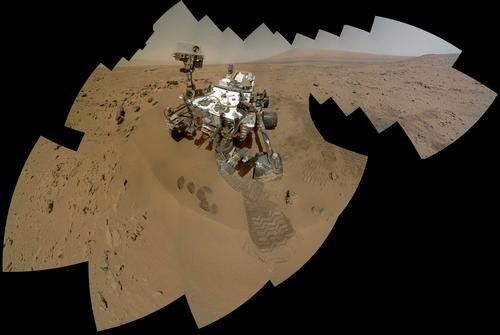
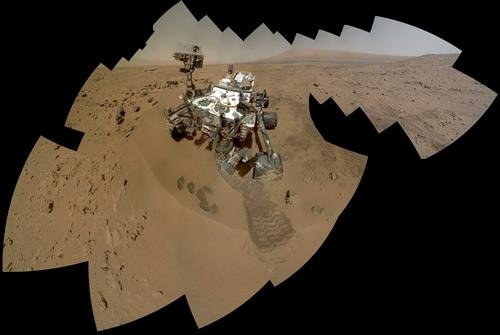
In this talk, Roger E. Summons outlines approaches to seeking evidence of life in Earth’s oldest sedimentary rocks and shows, by analogy, how the Mars Science Laboratory mission is designed to investigate Mars’ capacity for supporting a biosphere.

October 14, 2013: The Search for Early Life on Earth and Mars

No one knows when life first colonized planet Earth, nor if or when Mars ever supported life. We see numerous, unequivocal lines of evidence for life on Earth from some 3.5 billion years ago to the present day. But the further back in time we look, the more clues about our earliest ancestors are clouded by doubts, uncertainties and controversies.

The Search for Early Life on Earth and Mars

Gerald D. Fischbach Auditorium 160 5th Avenue, New York, NY, United States

No one knows when life first colonized planet Earth, nor if or when Mars ever supported life. We see numerous, unequivocal lines of evidence for life on Earth from some 3.5 billion years ago to the present day. But the further back in time we look, the more clues about our earliest ancestors are clouded by doubts, uncertainties and controversies.

Fluid-structure Interactions From the Large to the Very Small

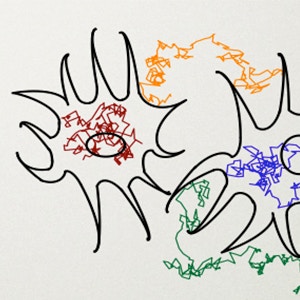
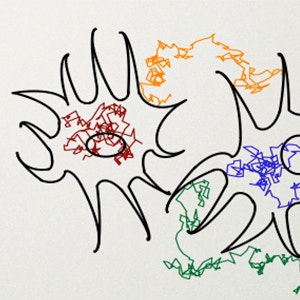
In this talk, Mike Shelley discusses problems in fluid-structure interaction ranging from the macroscopic, i.e. flapping of flags and bending of tree leaves, to the micro – collective behaviors of micro-organisms and the transport of subcellular structures.

October 23, 2013: Epilepsy and Autism: Comorbid Disorders with Shared Etiologies

Autism and epilepsy are often comorbid disorders with overlapping epidemiology, genetics, clinical features, neuroanatomic abnormalities and neurophysiological mechanisms. Defining the genetics and clinical features of individuals with comorbid autism and epilepsy is ongoing, and development of genotype-phenotype correlations has just begun. Understanding shared and distinct mechanisms underlying autism and epilepsy is likely to improve prognosis, therapy and prevention.

October 23, 2013: Epilepsy and Autism: Comorbid Disorders with Shared Etiologies

Gerald D. Fischbach Auditorium 160 5th Avenue, New York, NY, United States

Autism and epilepsy are often comorbid disorders with overlapping epidemiology, genetics, clinical features, neuroanatomic abnormalities and neurophysiological mechanisms. Defining the genetics and clinical features of individuals with comorbid autism and epilepsy is ongoing, and development of genotype-phenotype correlations has just begun. Understanding shared and distinct mechanisms underlying autism and epilepsy is likely to improve prognosis, therapy and prevention.

Infants’ Grasp of Others’ Intentions: The Development of Social Understanding

Gerald D. Fischbach Auditorium 160 5th Avenue, New York, NY, United States

Burgeoning evidence shows that in typical development, the ability to structure actions according to intentions emerges during infancy. And recent evidence reveals that infancy is a period of rapid change and development in this ability. Early social knowledge depends critically on infants’ active engagement with the physical and social world.

November 13, 2013: The Discovery and Study of a Higgs Boson at the Large Hadron Collider

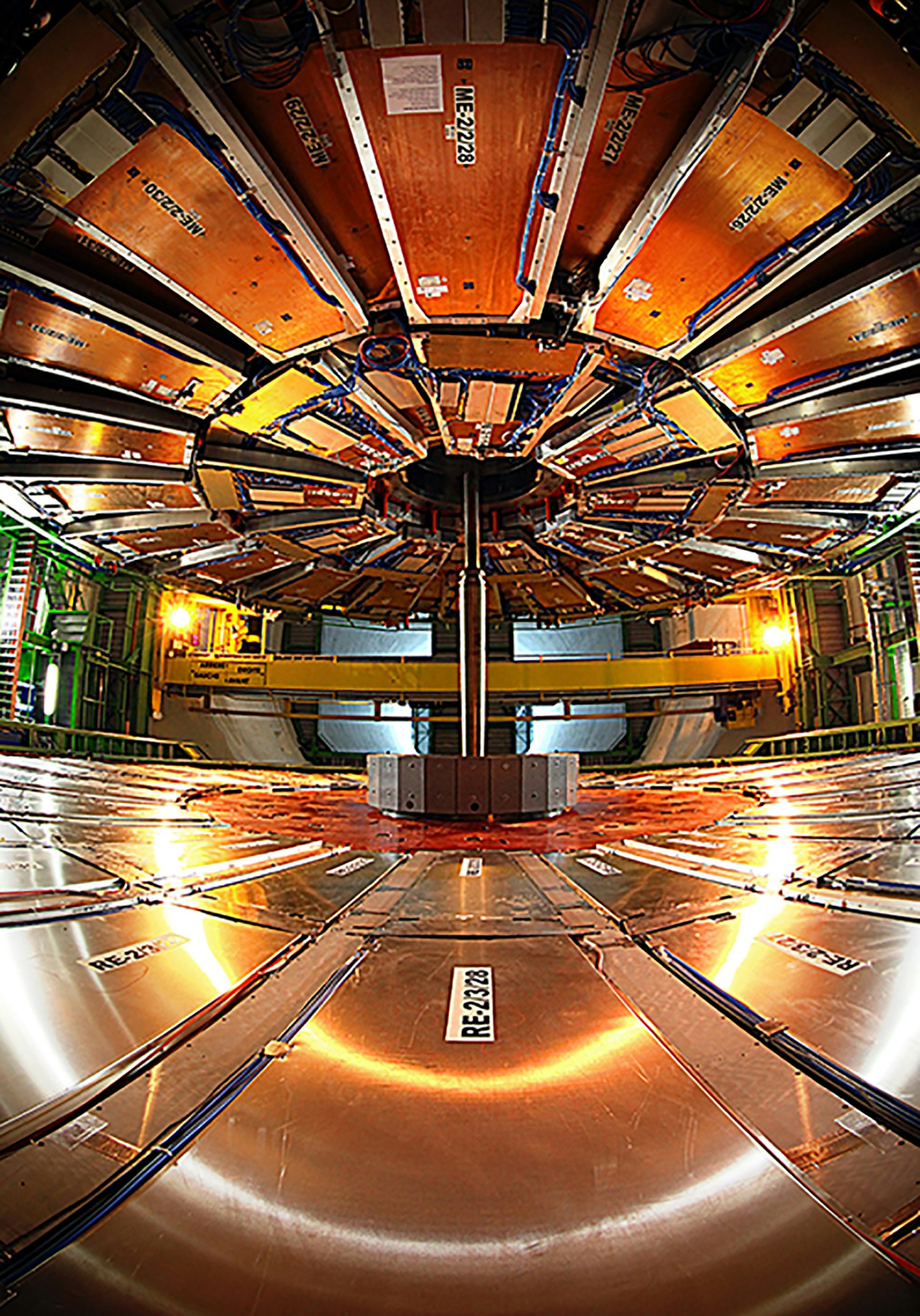
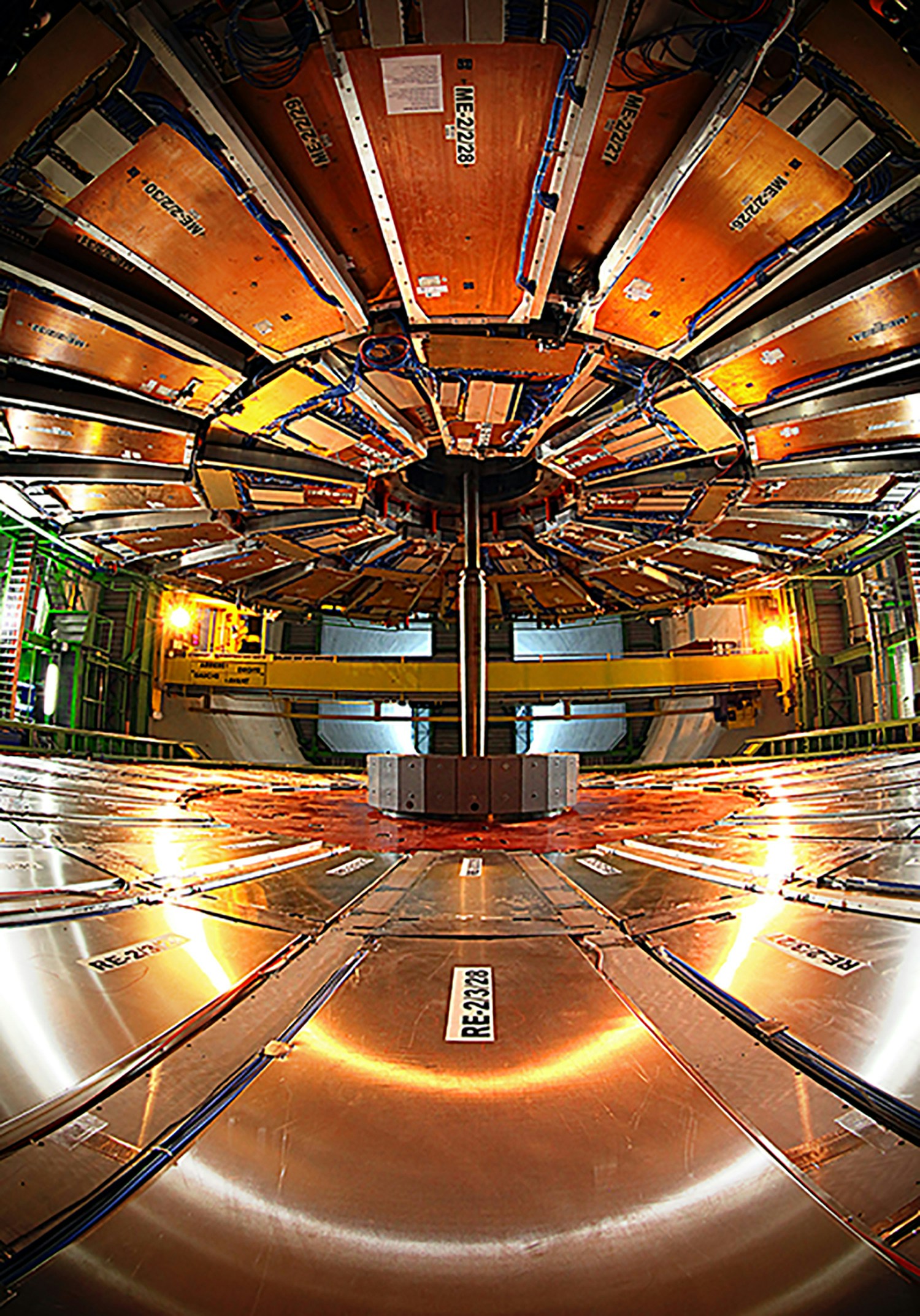
The Large Hadron Collider (LHC) at the European Organization for Nuclear Research (CERN) near Geneva, Switzerland has performed spectacularly well in its first major running period: from December 2009 through February 2013. Data of unprecedented quality and quantity have been recorded for proton-proton collisions at energies of 7 and 8 trillion electron volts — the highest energies ever obtained.

The Discovery and Study of a Higgs Boson at the Large Hadron Collider

Gerald D. Fischbach Auditorium 160 5th Avenue, New York, NY, United States

In this talk, Joe Incandela will present an overview of the LHC physics program, including highlights from the discovery of a Higgs boson and a summary of more recent studies that incorporate more data. He will briefly discuss expectations for future results in years to come.

November 15, 2013: Structural Variant Detection

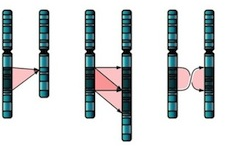
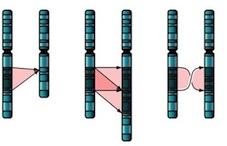
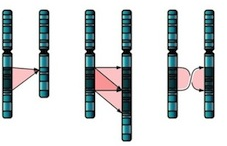
This Biotech Symposium will focus on computational methods for detecting structural variants, which include large chromosomal insertions, deletions, inversions and translocations.

November 15, 2013: Structural Variant Detection

This Biotech Symposium will focus on computational methods for detecting structural variants, which include large chromosomal insertions, deletions, inversions and translocations.

Structural Variant Detection

Gerald D. Fischbach Auditorium 160 5th Avenue, New York, NY, United States

This Biotech Symposium will focus on computational methods for detecting structural variants, which include large chromosomal insertions, deletions, inversions and translocations.

Black Holes, Quantum Mechanics and Firewalls

Thought experiments have played an important role in figuring out the laws of physics. For the unification of quantum mechanics and gravity, where the phenomena take place in extreme regimes, they are even more crucial. Hawking’s 1976 paper “Breakdown of Predictability in Gravitational Collapse” presented one of the great thought experiments in the history of physics, arguing that black holes destroy information in a way that requires a modification of the laws of quantum mechanics. Skeptics for years failed to poke holes in Hawking’s argument, but concluded that if quantum mechanics is to be saved then our understanding of spacetime must break down in a radical way.

December 4, 2013: On Growth and Form: Geometry, Physics and Biology

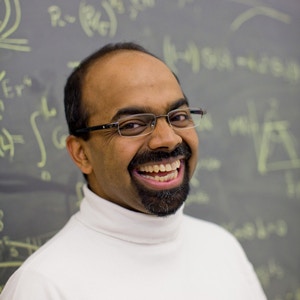
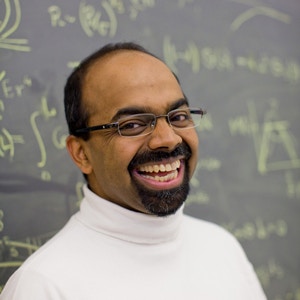
L. Mahadevan will explain how a combination of biological and physical experiments, together with mathematical models and computations, begin to unravel the physical basis for morphogenesis. He will go on to explore how these pan-disciplinary problems enrich the origins of this topic, creating new questions in mathematics, physics and biology.

December 4, 2013: On Growth and Form: Geometry, Physics and Biology

L. Mahadevan will explain how a combination of biological and physical experiments, together with mathematical models and computations, begin to unravel the physical basis for morphogenesis. He will go on to explore how these pan-disciplinary problems enrich the origins of this topic, creating new questions in mathematics, physics and biology.

On Growth and Form: Geometry, Physics and Biology

Gerald D. Fischbach Auditorium 160 5th Avenue, New York, NY, United States

L. Mahadevan will explain how a combination of biological and physical experiments, together with mathematical models and computations, begin to unravel the physical basis for morphogenesis. He will go on to explore how these pan-disciplinary problems enrich the origins of this topic, creating new questions in mathematics, physics and biology.

Identities About Self Assembly

In biological systems, there are striking examples where complicated structures (i.e., the bacterial ribosome) can spontaneously assemble, driven by specific interactions between the components. But how can systems be designed to have this property? Recent technological  advances have created the opportunity for making technologically relevant systems that self assemble, using strands of DNA or objects coated with DNA. We will use these systems as inspiration to formulate theoretical models to understand how self assembly works in these systems, through theory, numerical simulation and experiment — and start to speculate as to whether resulting principles might be useful for unravelling the rules of biological self-assembly.

Families of Automorphic Forms and the Trace Formula (2014)

January 26 – February 1, 2014 Organizers: Werner Mueller, University of Bonn Sug Woo Shin, Massachussets Institute of Technology Nicolas Templier, Princeton University The Simons Symposium on Families of Automorphic Forms and the Trace Formula provided an opportunity for researchers to study families of automorphic representations of higher rank groups. During the symposium participants investigated...

February 12, 2014: Other Earths and the Origins of Life

New evidence of exoplanets reveals a higher-than-expected occurrence of potentially habitable worlds in our galactic neighborhood. What does this evidence tell us about life on other planets? How can we search for signs of life on other planets?

February 12, 2014: Other Earths and the Origins of Life

New evidence of exoplanets reveals a higher-than-expected occurrence of potentially habitable worlds in our galactic neighborhood. What does this evidence tell us about life on other planets? How can we search for signs of life on other planets?

Other Earths and the Origins of Life

Gerald D. Fischbach Auditorium 160 5th Avenue, New York, NY, United States

New evidence of exoplanets reveals a higher-than-expected occurrence of potentially habitable worlds in our galactic neighborhood. What does this evidence tell us about life on other planets? How can we search for signs of life on other planets?

Robust Integral Equation Methods for Forward and Inverse Scattering

Integral equation methods play an important role in the numerical simulation of electromagnetic scattering. They are easy to employ in complex geometry and impose the desired radiation conditions at infinity without the need for artificial numerical boundaries. Two of the obstacles faced by current forward simulation tools are “low-frequency breakdown” and the lack of easy to use high order quadrature rules for complicated surfaces. In this talk, I will review the relevant background material, discuss a new mathematical formalism for scattering from perfect conductors and briefly describe a new quadrature technique that yields easily implementable high order rules for singular and weakly singular integrals. The scheme, denoted QBX (quadrature by expansion) is compatible with fast hierarchical algorithms such as the fast multipole method.

Quantum Physics Beyond Simple Systems (2014)

St. Regis Bahia Beach Resort State Road 187 kilometer 4.2, Río Grande, Puerto Rico

Organizers: Boris Altshuler, Columbia University Vladimir Falko, Lancaster University Charles Marcus, Neils Bohr Institute   The Simons Symposium on Quantum Physics Beyond Simple Systems was the second symposium organized on this topic, the first having been held in 2012. It offered another opportunity for researchers to discuss the fast-evolving themes of modern quantum complex systems....

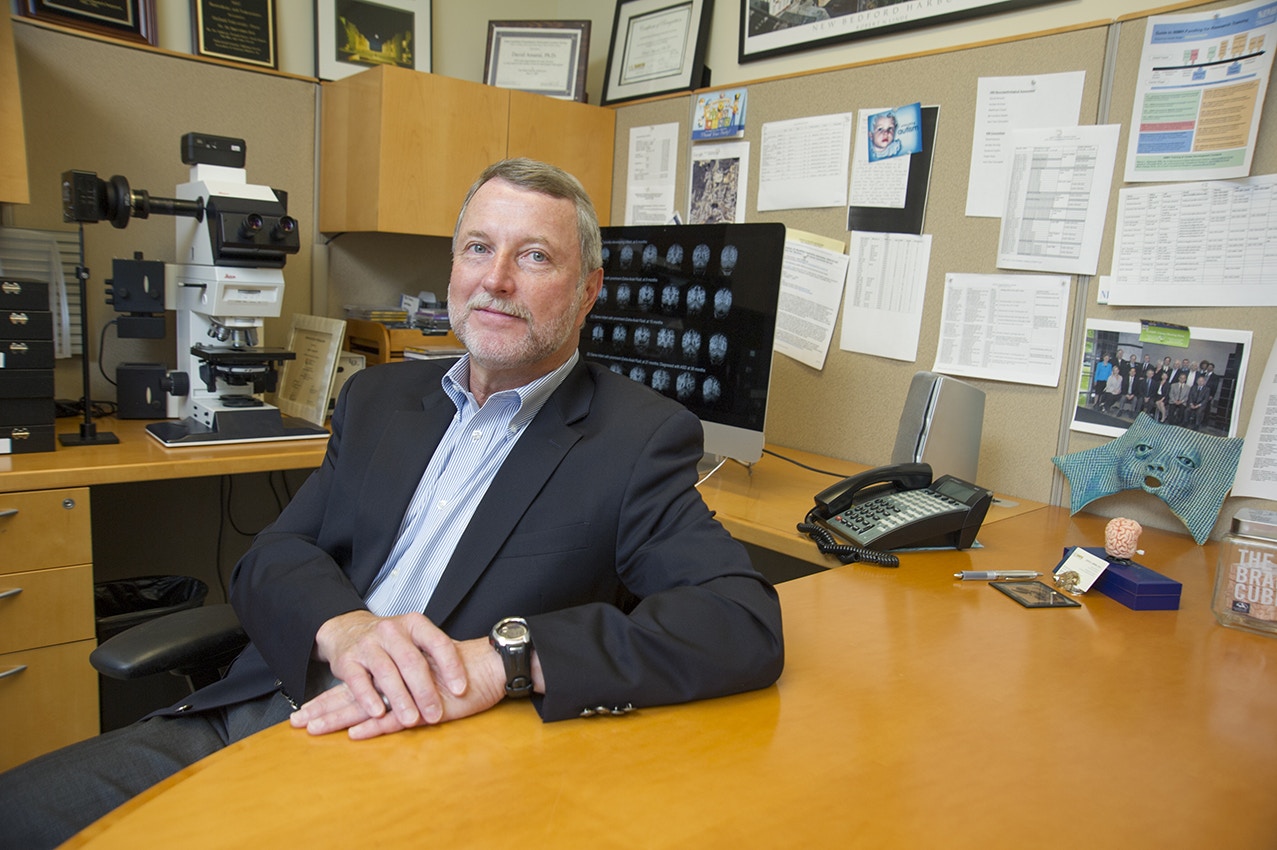
February 26, 2014: Neuroimaging Contributions to the Understanding of Brain Development in Autism

While autism clearly involves altered function of the central nervous system, the neuropathology of the disorder remains controversial. This is due in part,to the enormous complexity of the disorder, which likely has many causes and many biological trajectories. It is also due to the fact that few neuroimaging studies involve very young children or severely affected individuals. This lack of information is compounded by the fact that findings at the magnetic resonance imaging (MRI) level of analysis cannot be confirmed and extended to the cellular level due to a lack of postmortem brains.

Neuroimaging Contributions to the Understanding of Brain Development in Autism

Gerald D. Fischbach Auditorium 160 5th Avenue, New York, NY, United States

While autism clearly involves altered function of the central nervous system, the neuropathology of the disorder remains controversial. This is due in part,to the enormous complexity of the disorder, which likely has many causes and many biological trajectories. It is also due to the fact that few neuroimaging studies involve very young children or severely affected individuals. This lack of information is compounded by the fact that findings at the magnetic resonance imaging (MRI) level of analysis cannot be confirmed and extended to the cellular level due to a lack of postmortem brains.

Genes That Regulate Sleep and Circadian Rhythms in Drosophila

Circadian (~24 hour) clocks are endogenous mechanisms that time the recurring, daily activities observed in most organisms. These clocks are genetically regulated, and generate biochemical oscillations within individual cells composing most tissues. Recently our laboratory has searched for and identified genes that affect the homeostatic regulation of sleep in Drosophila. This research has uncovered specific neurons whose activity promotes sleep.

Perspectives on Big Data in Biology

Gerald D. Fischbach Auditorium 160 5th Avenue, New York, NY, United States

This Biotech Symposium will focus on perspectives on big data in biology from leading practitioners in the field.

Discrete Analysis: Beyond the Boolean Cube (2014)

March 9 – 15, 2014 Organizers: Elchanan Mossel, UC Berkeley Ryan O'Donnell, Carnegie Mellon University Krzysztof Oleszkiewicz, University of Warsaw The Simons Symposium on Discrete Analysis: Beyond the Boolean Cube was the second symposium organized on this topic. The first was held in 2012 and was called Analysis of Boolean Functions. This most recent meeting...

March 12, 2014: Learning With a Nontrivial Teacher

Learning Using Privileged Information (LUPI) is a new paradigm that uses an intelligent agent (a ‘nontrivial teacher’) to supplement standard training data in the context of supervised learning algorithms. Rather than using standard, brute-force methods to address the general problem of inference and the construction of intelligent machines, the LUPI learning model allows the teacher to add additional (privileged) information to the training examples.

Learning With a Nontrivial Teacher

Gerald D. Fischbach Auditorium 160 5th Avenue, New York, NY, United States

Learning Using Privileged Information (LUPI) is a new paradigm that uses an intelligent agent (a ‘nontrivial teacher’) to supplement standard training data in the context of supervised learning algorithms. Rather than using standard, brute-force methods to address the general problem of inference and the construction of intelligent machines, the LUPI learning model allows the teacher to add additional (privileged) information to the training examples.

Galactic Superwinds: Beyond Phenomenology (2014)

March 23 - 29, 2014 Organizers: Andrew Benson, Carnegie Observatories Juna Kollmeier, Carnegie Observatories The goal of this symposium was to bring together leading experts in the theory and observation of galactic superwinds — outflows of mass, momentum and energy from galaxies thought to be driven by radiation and winds from stars, and by supernova...

March 26, 2014: An Attempt at Redefining Autism for the Biological Sciences: Implications and Translational Opportunities

Advances in molecular genetics have implicated a variety of genetic variations in autism, yet understanding of what these variations mean is still limited. Advances in classification of diseases have made autism among the most reliably diagnosed neurodevelopmental or neuropsychiatric disorders. But symptoms used to define autism are likely outcomes of earlier disruptions in normative social and communication development rather than causally linked to genetic perturbations.

An Attempt at Redefining Autism for the Biological Sciences: Implications and Translational Opportunities

Gerald D. Fischbach Auditorium 160 5th Avenue, New York, NY, United States

Advances in molecular genetics have implicated a variety of genetic variations in autism, yet understanding of what these variations mean is still limited. Advances in classification of diseases have made autism among the most reliably diagnosed neurodevelopmental or neuropsychiatric disorders. But symptoms used to define autism are likely outcomes of earlier disruptions in normative social and communication development rather than causally linked to genetic perturbations.

Transcriptional and Epigenetic Mechanisms of Depression

Depression is a common, chronic, and debilitating disease. Although many patients benefit from antidepressant medications or other therapies, only about half show complete remission. Factors that precipitate depression, such as stress, are incompletely understood. We have used chronic social defeat stress as an animal model of depression. Prolonged exposure to an aggressor induces lasting changes in behavior such as social avoidance and anhedonia-like symptoms, which are reversed by chronic (but not acute) treatment with available antidepressants.

April 11, 2014: Conference on Theory & Biology

This day-long conference will highlight areas where theoretical ideas are having an impact on the life sciences, and will be of interest to established researchers, postdoctoral fellows and graduate students working in the life sciences and allied fields.

April 15, 2014: Von Neumann Machines and Molecular Darwinism

In this lecture, Gerald Joyce focuses on the perpetuation of genetic information as a defining characteristic of life. He draws a connection between digital computers (von Neumann machines), especially those with the capacity to self-reproduce, and molecular Darwinian systems that maintain heritable ‘bits’ of information, which are refined through evolution.

April 15, 2014: Von Neumann Machines and Molecular Darwinism

In this lecture, Gerald Joyce focuses on the perpetuation of genetic information as a defining characteristic of life. He draws a connection between digital computers (von Neumann machines), especially those with the capacity to self-reproduce, and molecular Darwinian systems that maintain heritable ‘bits’ of information, which are refined through evolution.

Von Neumann Machines and Molecular Darwinism

Gerald D. Fischbach Auditorium 160 5th Avenue, New York, NY, United States

In this lecture, Gerald Joyce focuses on the perpetuation of genetic information as a defining characteristic of life. He draws a connection between digital computers (von Neumann machines), especially those with the capacity to self-reproduce, and molecular Darwinian systems that maintain heritable ‘bits’ of information, which are refined through evolution.

April 23, 2014: New Insights and Approaches for Studying Rett Syndrome, an Autism-Associated Disorder

A central goal in neuroscience is determining the genetic basis of neurological disorders — from autism to brain tumors. Many of these pathological states result from defects in gene regulatory programs that are fundamental to all cell types but lead to dysfunction specifically within the nervous system. Gail Mandel investigates the basis of this phenomenon and has identified cell-cell interactions between neurons and glia involved in pathological states of brain development. Mandel has ameliorated the neuropathology of one autism spectrum disorder, Rett syndrome, by genetically replacing the defective MeCP2 gene with a good copy of the gene in astrocytes – glia cells in the brain. She is now exploring the underlying mechanisms crucial for neuronal signaling.

New Insights and Approaches for Studying Rett Syndrome, an Autism-Associated Disorder

Gerald D. Fischbach Auditorium 160 5th Avenue, New York, NY, United States

A central goal in neuroscience is determining the genetic basis of neurological disorders — from autism to brain tumors. Many of these pathological states result from defects in gene regulatory programs that are fundamental to all cell types but lead to dysfunction specifically within the nervous system. Gail Mandel investigates the basis of this phenomenon and has identified cell-cell interactions between neurons and glia involved in pathological states of brain development. Mandel has ameliorated the neuropathology of one autism spectrum disorder, Rett syndrome, by genetically replacing the defective MeCP2 gene with a good copy of the gene in astrocytes – glia cells in the brain. She is now exploring the underlying mechanisms crucial for neuronal signaling.

April 30, 2014: Where is Fundamental Physics Heading?

In recent decades, physicists and astronomers have discovered two beautiful standard models, one for the quantum world of extremely short distances and one for the universe as a whole. Both models have had spectacular success, but there are also strong arguments for new physics beyond these models.
Where is Fundamental Physics Heading?

Gerald D. Fischbach Auditorium 160 5th Avenue, New York, NY, United States

In recent decades, physicists and astronomers have discovered two beautiful standard models, one for the quantum world of extremely short distances and one for the universe as a whole. Both models have had spectacular success, but there are also strong arguments for new physics beyond these models.
Big Data Analytics and a Path to Enhancing Our Understanding of Human Disease

Dr. Schadt provides an overview of how his team organizes very large scale data across many different types, and then integrates these data using sophisticated mathematical algorithms to construct predictive network models of disease, and discusses the application of this type of modeling in the cancer arena.

May 21, 2014: Probabilistic Topic Models of Text and Users

Probabilistic topic models provide a suite of tools for analyzing large collections of electronic documents. A traditional topic model analyzes a collection of documents to discover its hidden themes.  These themes can be used to organize, visualize, summarize and navigate the collection. Many collections are associated with corresponding reader behavior data, which is useful both for making predictions about readers (such as which articles they will like) and in understanding patterns in how they read.

 

Probabilistic Topic Models of Text and Users

Gerald D. Fischbach Auditorium 160 5th Avenue, New York, NY, United States

Probabilistic topic models provide a suite of tools for analyzing large collections of electronic documents. A traditional topic model analyzes a collection of documents to discover its hidden themes.  These themes can be used to organize, visualize, summarize and navigate the collection. Many collections are associated with corresponding reader behavior data, which is useful both for making predictions about readers (such as which articles they will like) and in understanding patterns in how they read.

May 28, 2014: Keeping Your Brain in Balance: Do Defects in Neuronal Homeostasis Contribute to Autism Spectrum Disorders?

Although most people regularly tune up their cars, you probably haven’t needed to bring your brain in for a tune-up, despite the fact that the human brain is far more complex than the internal combustion engine. What’s more, unlike most machines, your brain is constantly changing in order to store memories and adapt to a fluid environment. Our brains are faced with a fundamental challenge: They must preserve the integrity of the neural circuits that subserve behaviors over the lifetime of an organism, while at the same time allowing plastic mechanisms to shape and fine-tune their function.

Keeping Your Brain in Balance: Do Defects in Neuronal Homeostasis Contribute to Autism Spectrum Disorders?

Gerald D. Fischbach Auditorium 160 5th Avenue, New York, NY, United States

Although most people regularly tune up their cars, you probably haven’t needed to bring your brain in for a tune-up, despite the fact that the human brain is far more complex than the internal combustion engine. What’s more, unlike most machines, your brain is constantly changing in order to store memories and adapt to a fluid environment. Our brains are faced with a fundamental challenge: They must preserve the integrity of the neural circuits that subserve behaviors over the lifetime of an organism, while at the same time allowing plastic mechanisms to shape and fine-tune their function.

Symposium on Evidence in the Natural Sciences

FRIDAY, MAY 30, 2014 Scientific Program: 8:00 AM - 3:15 PM Evening Program: 4:30 - 7:45 PM Gerald D. Fischbach Auditorium 160 5th Avenue, New York, New York, 10010 What is the difference between evidence, fact, and proof? Can we quantify evidence; is something more evident than something else? What does it take to convince...


privacy consent banner

Privacy preference

We use cookies to provide you with the best online experience. By clicking "Accept All," you help us understand how our site is used and enhance its performance. You can change your choice at any time here. To learn more, please visit our Privacy Policy.
Advancing Research in Basic Science and MathematicsSubscribe to our newsletters to receive news & updates

privacy consent banner

Privacy preference

We use cookies to provide you with the best online experience. By clicking "Accept All," you help us understand how our site is used and enhance its performance. You can change your choice at any time here. To learn more, please visit our Privacy Policy.