Simons Foundation
Advancing Research in Basic Science and Mathematics
Loading view.

Living with Uncertainty but Still Learning: Anti-Abortion Democrats, Jimmy Carter Republicans and the Missing Leap Day Babies
Gerald D. Fischbach Auditorium 160 5th Avenue, New York, NY, United StatesAndrew Gelman will illustrate this concept with various examples from his recent research and discuss more generally how statistical methods can help or hinder the scientific process.
Complex Data Visualization: Approach and Application
Gerald D. Fischbach Auditorium 160 5th Avenue, New York, NY, United StatesThis Biotech Symposium will focus on the visualization and representation of analytic results from complex data sets.

Strategies to Prolong Vision in Inherited Forms of Blindness
In the disease retinitis pigmentosa (RP), disease genes directly cause the dysfunction and death of rod photoreceptors, the photoreceptor type that mediates vision in dim light, causing night blindness. Subsequently, the cone photoreceptors, which mediate color and daylight vision, also lose function and die. Dr. Cepko et al have suggested a model wherein cones are affected due to the dysregulated metabolism that follows rod death. They have begun to develop gene therapy to combat this, using adenovirus-associated vectors (AAV) to deliver genes that help cones fight oxidation and other forms of stress. Their progress in treating RP mice using such vectors will be presented.
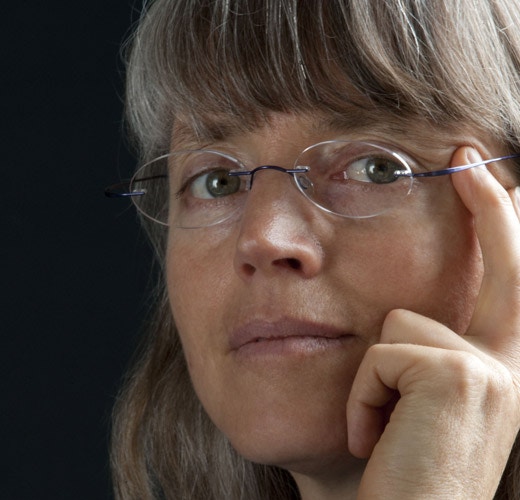
The Social Brain: A Hypothesis Space for Understanding Autism
Gerald D. Fischbach Auditorium 160 5th Avenue, New York, NY, United StatesIn this talk, Nancy Kanwisher will consider the functional architecture of the social brain in typical subjects as an avenue for considering which functions are affected and which are preserved in autism.
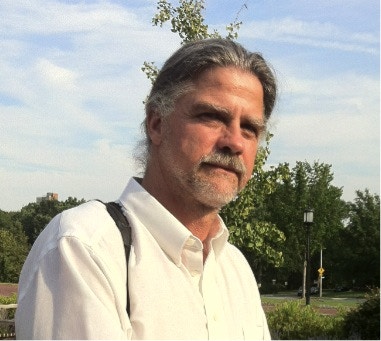
Testing the Cortical Column Conjecture
Gerald D. Fischbach Auditorium 160 5th Avenue, New York, NY, United StatesIn his talk, Carey Priebe will present the conjecture that neurons in the neocortex are connected in a graph that exhibits motifs representing repeated processing modules.
Urban Social Science Au Naturel
Gerald D. Fischbach Auditorium 160 5th Avenue, New York, NY, United StatesThe enormous amount of information that is now available about cities and the people who live in them offers intriguing opportunities for better understanding human behavior. That understanding can be applied...
Numerical Quantum Simulations of Realistic Materials
Simulating quantum mechanics on classical computers appears at first to require exponential computational resources, yet at the same time rapid progress is being made in accurate simulations of the quantum properties of realistic materials. How is this discrepancy resolved?

2014 MPS Annual Meeting
Thursday, October 23rd – Friday, October 24th, 2014 Download the 2014 Annual Meeting booklet (PDF). The Simons Foundation Division of Mathematics and Physical Sciences (MPS) held its second Annual Meeting...
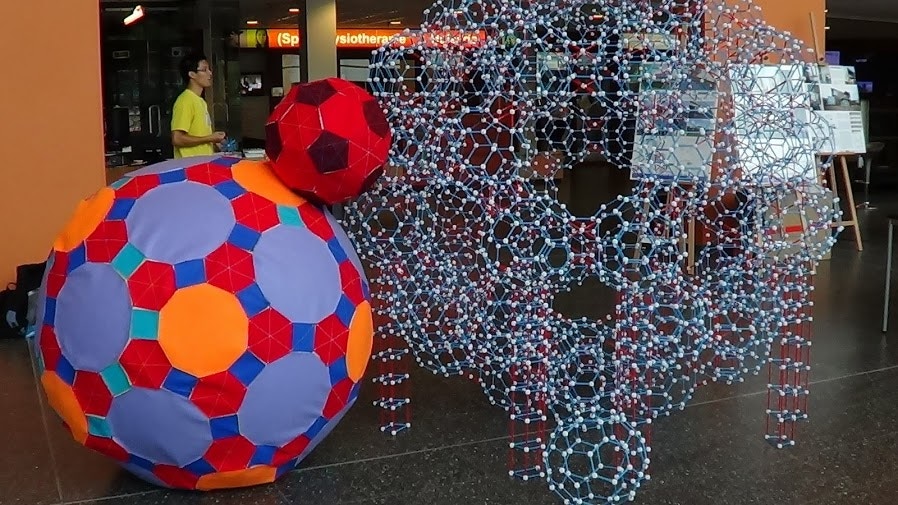
MoSAIC Math + Art Festival
Columbia University, Columbia Secondary School 425 W 123rd St between Amsterdam & Morningside Ave., New York, NY, United StatesThe MoSAIC Festival includes a variety of hands-on workshops, lectures, a mathematical art exhibit, short films and an area for informal exchange. It is designed to be easily accessible to audiences high-school age and up.

Dialogue of the Microbiota with the Host Immune System: Implications for Inflammatory Disease and Autism
Gerald D. Fischbach Auditorium 160 5th Avenue, New York, NY, United StatesIn this lecture, Dan Littman will describe how intestinal commensal bacteria shape functions of immune system cells that prevent invasion by pathogenic microbes but can also contribute to systemic inflammation.

Geometric and Multiscale Methods for Statistical Learning
Gerald D. Fischbach Auditorium 160 5th Avenue, New York, NY, United StatesIn this lecture, Mauro Maggioni will discuss a family of ideas, algorithms and results for learning from high-dimensional data.
MEG/EEG Part 1: Acquisition, Modeling and Localization
Gerald D. Fischbach Auditorium 160 5th Avenue, New York, NY, United StatesMEG and EEG Signals and Their Sources: Insights from Physics, Physiology and Anatomy Matti Hamalainen, Massachusetts General Hospital Understanding the biophysics and physiology underlying the generation of detectable extracranial magnetic fields...

Belief Propagation Algorithms with Applications to Cancer Genomics
Gerald D. Fischbach Auditorium 160 5th Avenue, New York, NY, United StatesIn this talk, Christian Borgs will give an introduction to belief propagation, discuss how the accuracy of belief propagation has been rigorously established, and present recent applications to systems biology.
Celebrating the Mathematics of Maxim Kontsevich
Gerald D. Fischbach Auditorium 160 5th Avenue, New York, NY, United StatesA day to explore Maxim Kontsevich's contributions to the field of mathematics.

Topology and Complexity
Topology, the "rubber sheet geometry", studies properties that do not change when objects are pulled and stretched. Accepting somewhat fuzzy input, it is the part of mathematics typically applied when qualitative conclusions are reached. However, it has a quantitative aspect important in understanding singularities, and potentially, high-dimensional noisy data and aspects of large-scale geometry of networks. Prof. Weinberger will discuss a variety of phenomena that arise or are illuminated by tracking of the complexity of geometric constructions.
December 3, 2014: Learning to Move
Basic motor skills such as looking, reaching and walking do not simply appear as the result of maturation. Rather, infants must learn to move. Learning entails discovering new forms of movements to suit the task at hand and using perceptual information to select and modify movements adaptively.
Learning to Move
Gerald D. Fischbach Auditorium 160 5th Avenue, New York, NY, United StatesBasic motor skills such as looking, reaching and walking do not simply appear as the result of maturation. Rather, infants must learn to move. Learning entails discovering new forms of movements to suit the task at hand and using perceptual information to select and modify movements adaptively.