Simons Foundation
Advancing Research in Basic Science and Mathematics
Loading view.

Human Neurodegenerative Disease: Insight from Drosophila
The Bonini laboratory focuses on applying the extraordinary power of a very simple model organism — the fruit fly Drosophila — to the complex problem of human neurodegenerative disease.
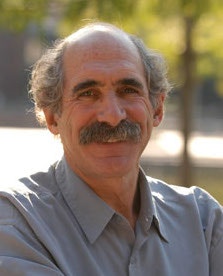
Climate Change and Sea Level Rise: Projecting, Reducing and Managing the Risk
Gerald D. Fischbach Auditorium 160 5th Avenue, New York, NY, United StatesIn this lecture, Michael Oppenheimer will describe the physical mechanisms causing observed increases in sea level.

Tracing the Unseen Majority: Insights Into the Critical Role Microbes Play in the Ocean
Gerald D. Fischbach Auditorium 160 5th Avenue, New York, NY, United StatesIn this lecture, Sonya Dyhrman will focus on photosynthetic microbes called phytoplankton, highlighting the critical and beneficial roles that phytoplankton play in marine systems.
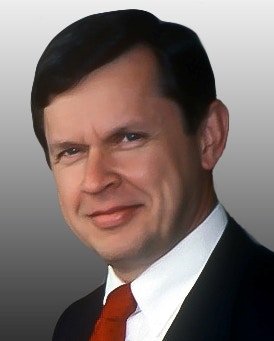
Bell Labs’ Role in Programming Languages and Algorithms
Gerald D. Fischbach Auditorium 160 5th Avenue, New York, NY, United StatesIn this lecture, Alfred V. Aho will discuss the role that software plays in the modern world.

Extra-Solar Planets: Search, Characterization and Population Inferences
Gerald D. Fischbach Auditorium 160 5th Avenue, New York, NY, United StatesDavid W. Hogg will explore how planets are discovered in the Kepler dataset, how the data are understood and how researchers can make inferences about the full population of planets in the galaxy.
Solving the 3-D Puzzle of Rotation Assignment in Single Particle Cryo-Electron Microscopy
Gerald D. Fischbach Auditorium 160 5th Avenue, New York, NY, United StatesThis lecture will explore algorithms for estimating the unknown pose parameters. The main focus will be on algorithms that are based on semidefinite programming relaxations that can be viewed as extensions to existing approximation algorithms to max-cut and unique games, two fundamental problems in theoretical computer science.

Visualizing Quantum Matter
Gerald D. Fischbach Auditorium 160 5th Avenue, New York, NY, United StatesEverything around us — everything each of us has ever experienced and virtually everything underpinning our technological society and economy — is governed by quantum mechanics. Yet this most fundamental physical theory of nature often feels like a set of somewhat eerie and counterintuitive ideas of no direct relevance to our lives. Why is this? One reason is that we cannot perceive the strangeness (and astonishing beauty) of the quantum mechanical phenomena all around us by using our own senses.
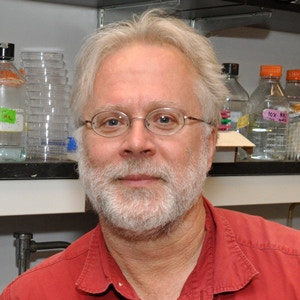
Harnessing Hippocampal Stem Cells to Improve Mood and Cognition
Recent studies have implicated adult-born hippocampal neurons in pattern separation, a process by which similar experiences or events are transformed into discrete non-overlapping representations. Impaired pattern separation, Dr. Hen proposes, underlies the overgeneralization often seen in age-related memory impairments and in anxiety disorders. Dr. Hen will present evidence that strategies aimed at stimulating hippocampal neurogenesis result in improved pattern separation.