Simons Foundation
Storming the Ivory Tower: How to Make Autism Interventions Work in Schools
Gerald D. Fischbach Auditorium 160 5th Avenue, New York, NY, United StatesIn this lecture, David S. Mandell will talk about why autism interventions rarely are implemented in community practice and why they fail to achieve the same outcomes as those observed in clinical trials.

Patterns in the Primes
Gerald D. Fischbach Auditorium 160 5th Avenue, New York, NY, United StatesPrime numbers have intrigued mathematicians, amateur and professional alike, for thousands of years. Some of the most pertinent questions today probably stem from classical times. In this lecture, Dr. Granville will discuss some well-known patterns in the primes and explain some of the latest progress.
Quarks, Flux Tubes and String Theory Without Calculus
The theory of strings started as an attempt to describe the forces holding quarks together. Important remnants of that idea survive in the form of the flux tubes of quantum chromodynamics and their description as “strings” in the gauge-string duality. Applications to quark-gluon plasmas have yielded some of the most quantitative comparisons of string theory with experimental data. For example,...
Atom-interferometry Limits on Dark Energy
Gerald D. Fischbach Auditorium 160 5th Avenue, New York, NY, United StatesIn this lecture, Dr. Holger Müller will explain recent experimental searches for certain models of dark energy. How can it be that dark energy, which is supposedly ubiquitous in the cosmos, has never been observed in experiments?
Making Up Your Mind: Interneurons in Development and Disease
Gerald D. Fischbach Auditorium 160 5th Avenue, New York, NY, United StatesIn this lecture, Gordon Fishell will describe his investigations of the developmental and genetic origins of interneuron development.
The Twisted Universe: The Cosmic Quest to Reveal Which End Is Up
In this lecture, Brian Keating will discuss the search for the polarization of the cosmic microwave background and measurements by the POLARBEAR telescope, which pave the way for the upcoming Simons Array.

Towards a Structural Basis of Complex Disorders of Heart, Muscle and Brain
In this lecture, Andrew Marks will present new data on the high-resolution structure of the mammalian RyR1/intracellular calcium-release channel obtained using cryogenic electron-microscopy.
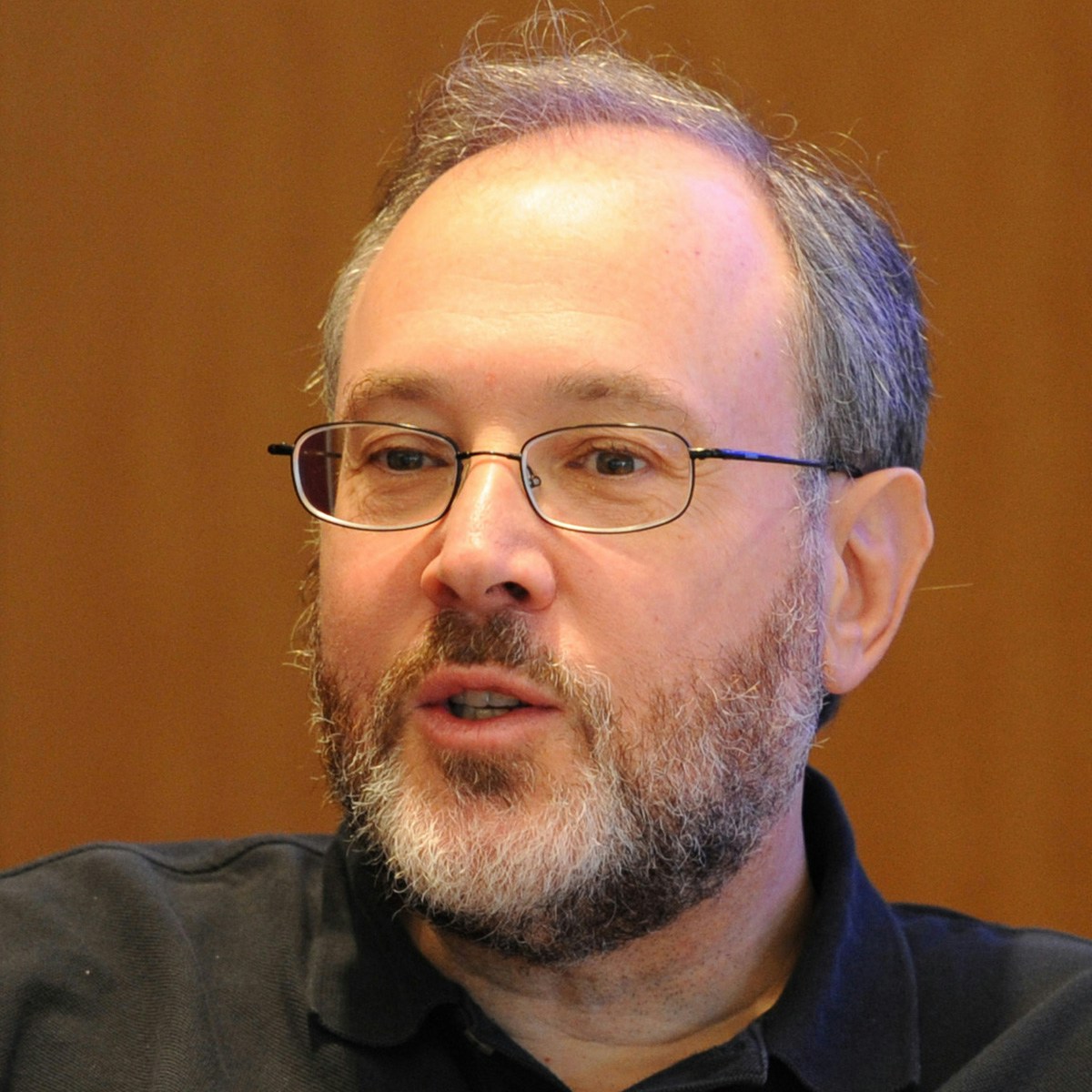
A Molecular Geneticist’s Approach to Understanding the Fly Brain
Gerald D. Fischbach Auditorium 160 5th Avenue, New York, NY, United StatesIn this lecture, Gerald Rubin will discuss efforts to develop and apply the tools that will be required for a comprehensive analysis of the anatomy and function of the fly brain at the level of individual cell types and circuits, using examples from his lab’s recent work on visual perception, as well as the mechanisms of learning and memory.