

Understanding the human brain is one of the greatest and most challenging scientific frontiers of our time. CCN’s mission is to develop models, principles and conceptual frameworks that deepen our knowledge of brain function — both in health and in disease.
Featured News

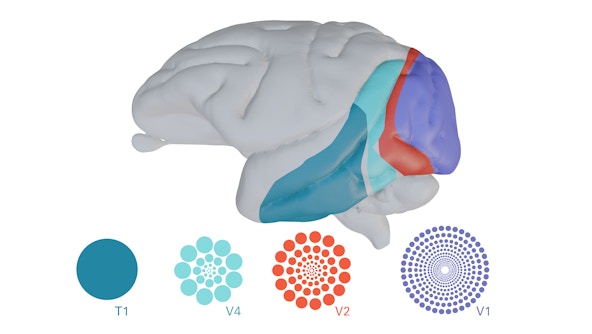
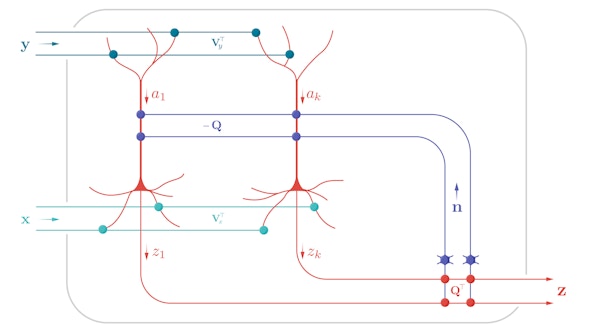
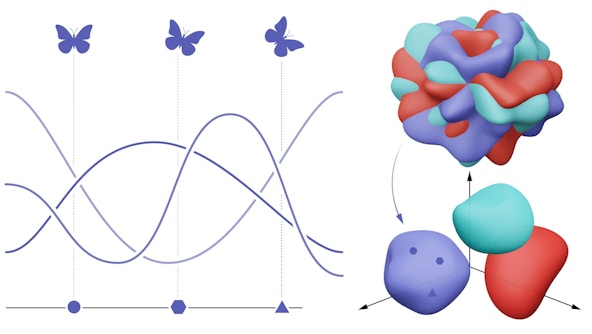
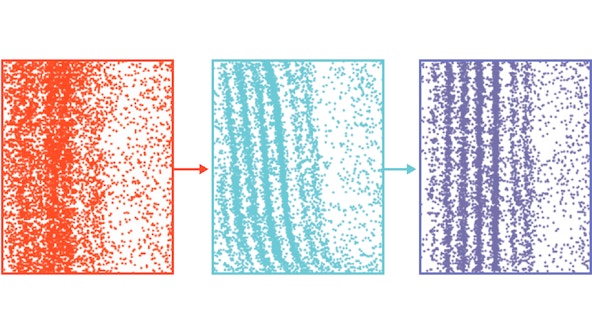
CCN takes a “systems" neuroscience approach, building models that are motivated by fundamental principles, that are constrained by properties of neural circuits and responses, and that provide insights into perception, cognition and behavior. This cross-disciplinary approach not only leads to the design of new model-driven scientific experiments, but also encapsulates current functional descriptions of the brain that can spur the development of new engineered computational systems, especially in the realm of machine learning. CCN currently has research groups in Computational Vision and Neural Circuits and Algorithms, and will launch research groups in NeuroAI and Geometry and Statistical Analysis of Neural Data in January 2022.
Research



Collaborative Work
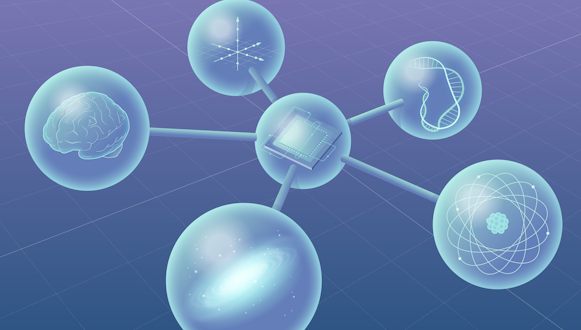
Machine Learning at the Flatiron Institute
Machine learning has become an indispensable tool for computational science, and it is an active and growing area of research throughout the Flatiron Institute.
- CCM
- CCN
- CCA
- CCB
- CCQ
Publications
Comprehensive characterization of human color discrimination thresholds
Fangfang Hong, Ruby Bouhassira, Jason Chow, Craig Sanders, Michael Shvartsman, Phillip Guan, A. Williams, D. H. Brainard
Color discrimination thresholds—the smallest detectable color differences—provide a benchmark for models of color vision, enable quantitative evaluation of eye diseases,…
eLifeFrom stuff to things: Responses of neurons in macaque V4 to textures and objects
Justin D. Lieber, T. D. Oleskiw , Laura Palmieri, E. P. Simoncelli, J. A. Movshon
Humans and monkeys can rapidly recognize objects in everyday scenes. It is not fully understood where this computation arises, but…
bioRxiv:2024.02.20.581273The Squealer: Sensification of model exploration and model misfit
A. Gelman, Andrew H. Jaffe, Eliot Carlson, P. Greengard
We introduce a method for visual and auditory feedback when exploring the fit of a model to data. Starting with…
arXiv:2606.29842Leadership



Software

CaImAn Python
Computational toolbox for large scale Calcium Imaging Analysis, including movie handling, motion correction, source extraction, spike deconvolution and result visualization.
NeMoS
A statistical modeling framework for systems neuroscience.
plenoptic
plenoptic is a python library for model-based stimulus synthesis.

PYthon Neural Analysis Package (Pynapple)
Pynapple is a light-weight python library for neurophysiological data analysis.