Mysteries of Fruit Fly Sperm Untangled by Mathematical Models

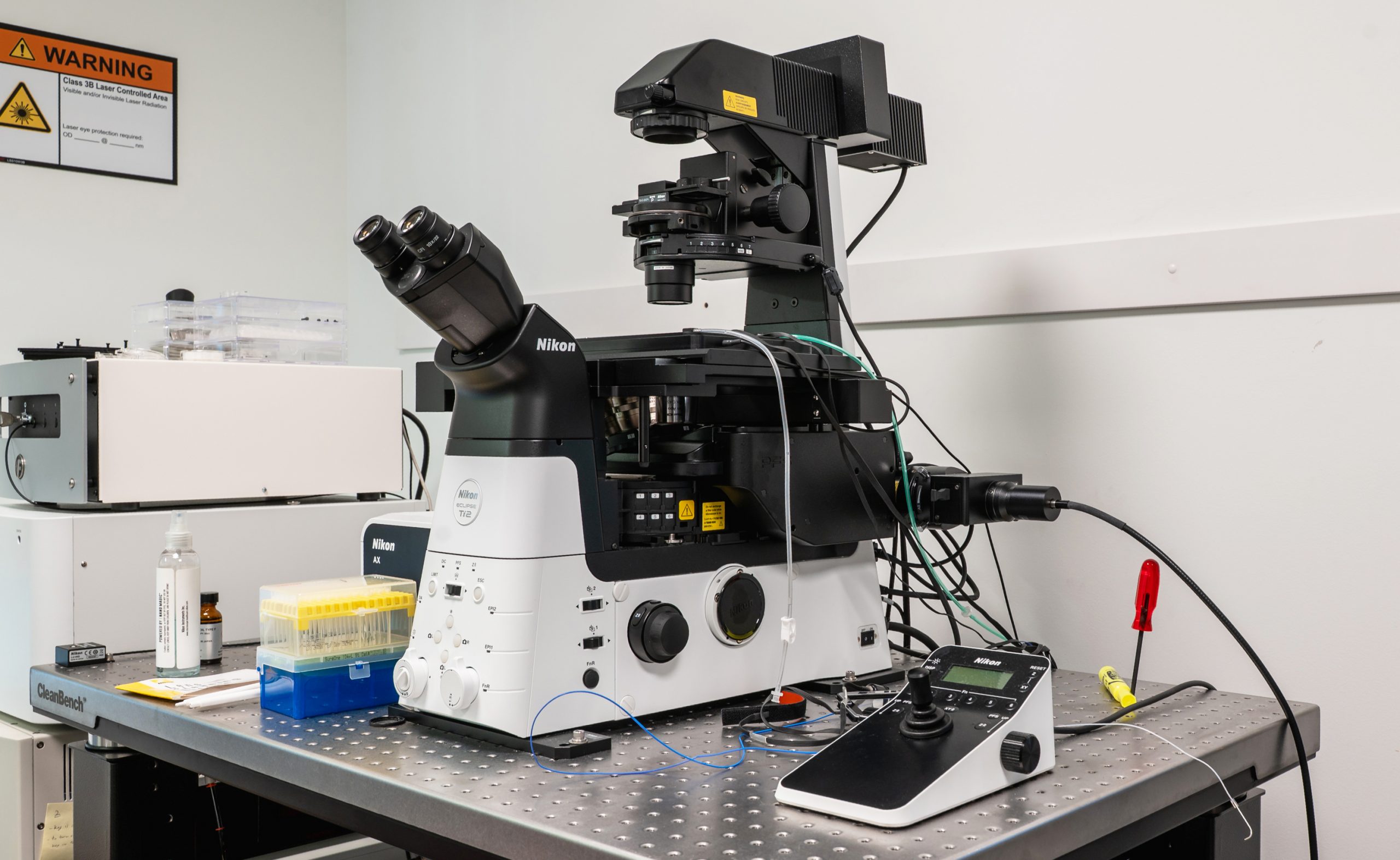
When Jasmin Imran Alsous peered down her microscope lens, she expected to see chaos — a mishmash of tangled cells. She was viewing the inside of a male fruit fly’s sperm storage organ, using a powerful microscope at the CCBScope Observatory, the experimental biology lab at the Center for Computational Biology (CCB) at the Simons Foundation’s Flatiron Institute in New York City.
Within the storage organ were thousands of sperm cells, their green-tagged tails trailing behind them. From past research, Imran Alsous knew that the heads of these sperm, which were labeled a fluorescent red, should all be darting one way or the other in organized lanes, like the headlights of cars on a freeway. But the tails were a different story.
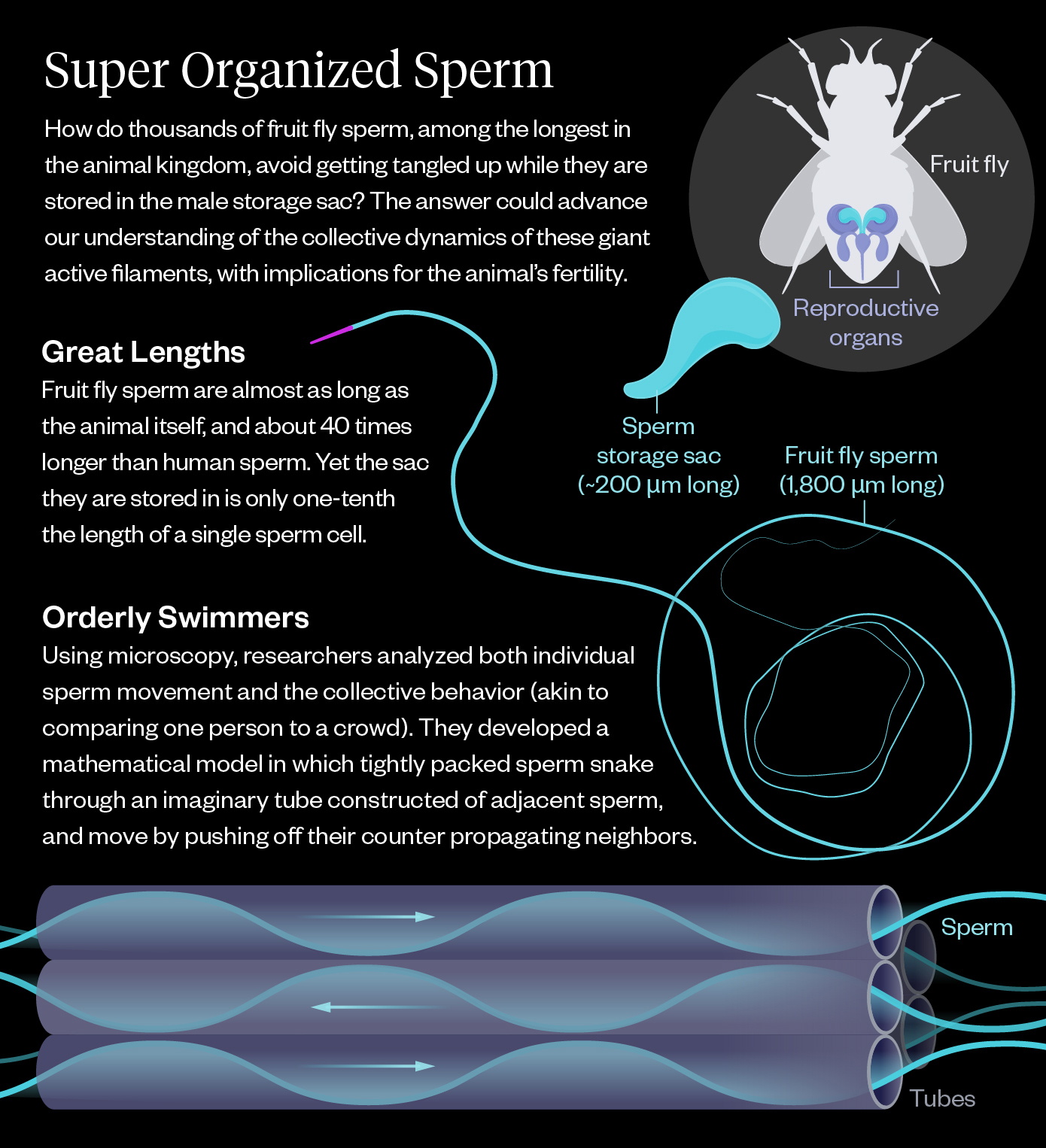
Fruit fly (Drosophila) sperm are some of the longest in the animal kingdom. Uncoiled, the tails of the sperm stretch to around 2,000 microns, nearly the same length as the animal itself. Yet the bean-shaped storage organ they congregate in is minute, only around one-tenth the length of a single sperm.
The question was, what were these long tails doing? Would they wrap around each other or tangle into knots, like hair clogging a drain?
What Imran Alsous saw on the screen in front of her was instead a highly aligned, orderly mass made of layers of the sperm cells’ colossal tails, which were being folded together over and over in smooth motions, as if by an old-school taffy puller.
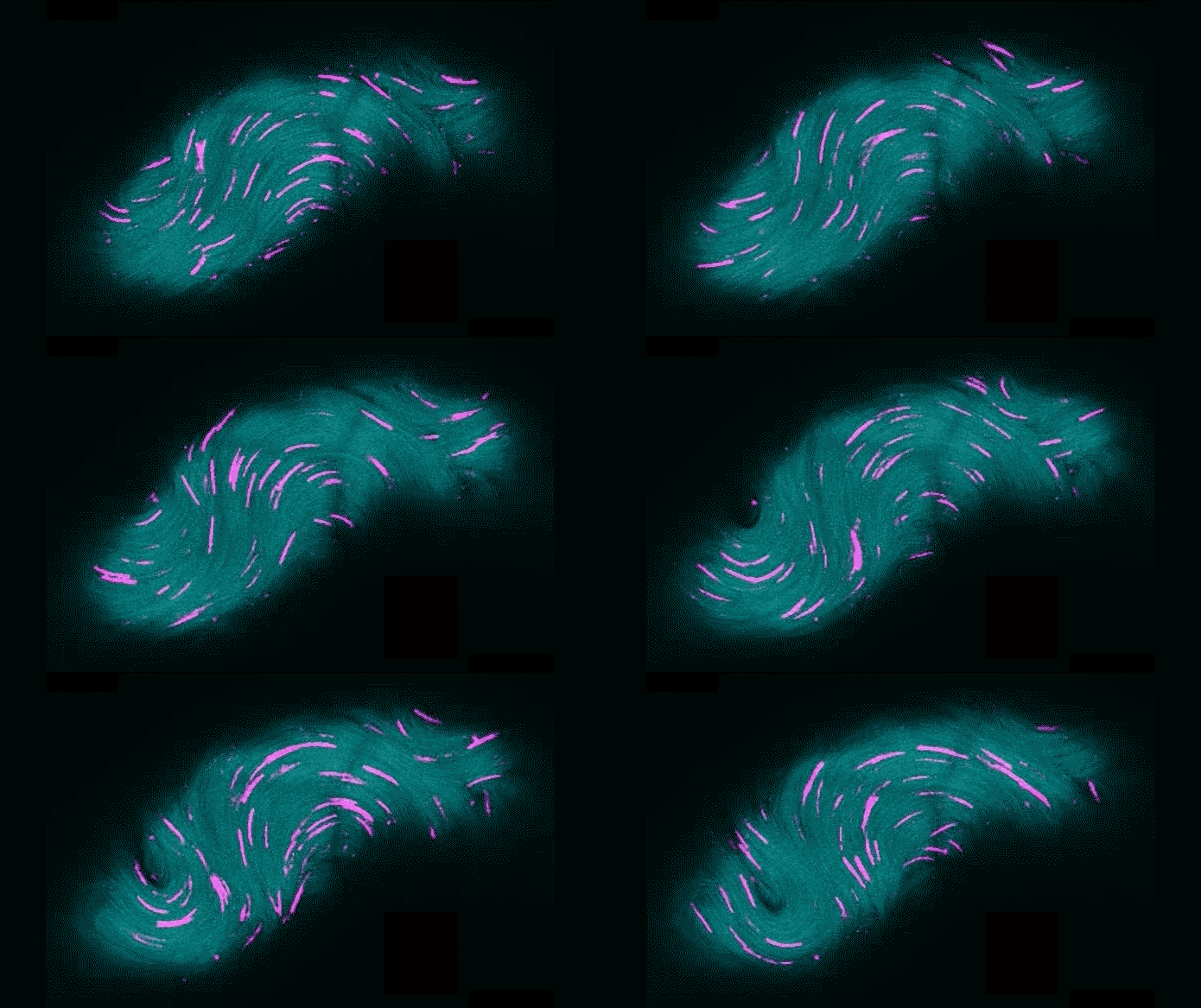
Each sperm head leads “this massive cargo, and they’re not getting entangled,” says Imran Alsous, a developmental biologist at the CCB who previously studied the way cells that are attached to the fruit fly egg “dump” their nutrients and organelles into the oocyte. “That’s what really blew my mind.”
Unlike the textbook image of sperm as heat-seeking missiles, isolated fruit fly sperm pulse aimlessly, meandering about their confines. They lack urgency, navigational skills or even a basic sense of direction. Yet somewhere in the transition from the individual to the collective inside the body, a higher order emerges.
Imran Alsous’ goal was to find out how this was possible. The fruit fly is one of the main invertebrate model organisms of biology, and what scientists learn from studying it helps them refine and control future experiments in this organism and others. In addition, by developing quantitative approaches to reproductive biology and better understanding the dynamics of fruit fly egg and sperm development, scientists may gain insights into mating systems in other species, as well as problems related to human fertility.
Where Experiment Meets Theory
To untangle the mystery of fruit fly sperm, Imran Alsous sought to work with other theoretical researchers, who could devise simplified theoretical models of the complex biological system to explain what she was seeing. Then, in an iterative process, she could use those models to guide and tweak her experiments, which in turn would produce new data to feed into the models.
What emerged is an example of the kind of theory-driven collaboration that the CCB seeks to foster. Researchers at the CCB already probe large datasets and develop quantitative tools and approaches to answer fundamental biological questions, like how nutrients flow through networks of veins, how organelles self-assemble within cells, and how embryos develop in utero.
The CCBScope Observatory is the in-house experimental arm of CCBx, a new initiative within the CCB. More broadly, CCBx helps build partnerships between CCB researchers and experimental researchers at partner labs to ensure that these kinds of experimental questions are guided by quantitative and predictive theory. Currently in its third year, the CCBx initiative includes seven universities and is still expanding.
CCBx and CCBScope have an ambitious goal, says Mike Shelley, an applied mathematician and director of the CCB: to model the future of biology by marrying quantitative observation with modern tools for mathematical modeling, computing and data analysis. Shelley says he hopes to lead the field in this new, multidisciplinary way of doing research. “This is how you’re going to reach a truly quantitative understanding of biology,” he says.
Historically, Shelley says, the field has moved forward largely on the strength of observations and experimentation. But underneath most biological questions — such as how sperm stay unentangled — are deeper theories. These theories are not always obvious. As Albert Einstein once said, “A theory can be proved by experiment; but no path leads from experiment to the birth of a theory.”
The power of the new approach is that the tools, models and techniques researchers develop can often be applied to other systems. Rather than simply making observations, these tools can make predictions and guide future experiments. Another CCBx project, which used models to explain how structures called spindles self-organize within the cells of roundworms (C. elegans), has already shed light on how spindles form in human cells.
Ideally, mathematical models allow researchers to probe a biological system, or at least part of it, in a controlled way and then apply the same principles to a complex reality. In doing so, researchers gain a deeper and more mechanistic understanding of living systems. “What we are doing is kind of reintroducing curiosity-driven research, but combined with thinking about the way things happen mechanistically,” Shelley says.
Distilling Order From Chaos
The partnerships that develop around CCBx and CCBScope allow experimental researchers to go beyond datasets they collect themselves. Together with their theoretical colleagues, they can stitch together multiple types of evidence to build a fuller understanding of a system.
The mystery of the fruit fly sperm started with two types of data, which recorded how each sperm was moving individually, and how sperm were moving collectively as a unit. After extracting the storage organ from the male’s abdomen, Imran Alsous captured thousands of high-speed confocal microscopy images of sperm set at a frame rate of roughly 30 frames per second — essentially, movies of thousands of sperm flowing together within the storage organ.
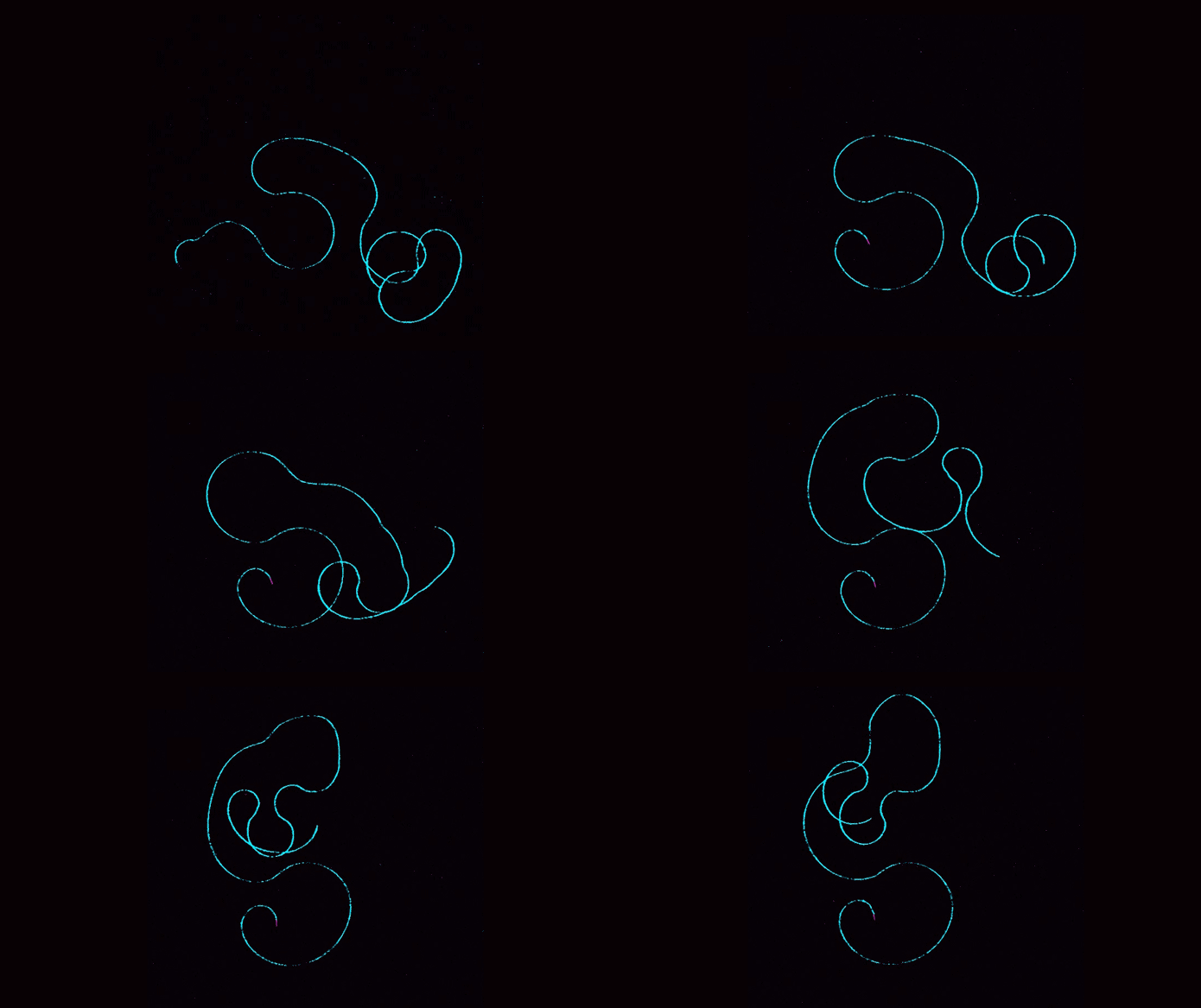
To find out how a single sperm might be moving in this packed crowd, Imran Alsous reached out to experimental researchers at New York University, who used 3D electron microscopy to obtain a high-resolution picture of the sperm’s organization within the storage organ. While these reconstructions couldn’t resolve motion, they were detailed enough to allow her to reconstruct individual sperm as they meandered through the organ.
But to answer the even larger question — how the movements of individual sperm gave rise to the collective dynamics seen in the microscope — she would need a particular kind of theorist to help model the data. That’s where Brato Chakrabarti came in.
Chakrabarti, a computational biologist working at the CCB at the time (now at the International Centre for Theoretical Sciences in Bengaluru), designs mathematical models that show how basic biomechanical principles give rise to complex dynamics, self-organizing properties and other emergent behaviors — the kind of dynamics you might see in a flock of birds, a school of fish or a petri dish of swarming bacteria. In other words, he had the technical tools and background to merge both data types — the individual and collective behaviors — into theoretical models.
In this case, the challenge Chakrabarti needed to explain, he says, was: “Why is it not getting jammed? We’re way above the typical threshold for jamming.” To him, the question was fascinating on multiple levels. “It’s an incredible system from the evolutionary perspective and from a mechanics perspective.”
The model Chakrabarti and Shelley developed predicted a scenario Imran Alsous might not have thought of on her own. In the storage sac, it suggested, sperm cells weren’t propelling themselves by propagating waves through fluid, as would be expected in human sperm; the surrounding fluid played a minor role here. Instead, the sperm were packed so tightly that they moved by pushing off their neighbors, who themselves were traveling in the opposite direction and moving by pushing back. These reciprocal interactions between individuals led to stress in the sperm assembly that generated the slow collective churn Imran Alsous had observed.
“Basically, sperm are swimming through a tube made of other sperm,” she said. And somehow, their interactions with other sperm and the fact that they are constantly moving allow them to stay orderly and unentangled. The researchers published their model-driven hypothesis about what drives these dynamics in Nature Physics on June 22, 2026.
An Evolutionary Paradox?
Biologists tend to think of sperm as the tiny gamete, pumped out in droves, and far less costly to produce than eggs, which, in humans, are around 35,000 times the size of a single sperm. The typical reproductive strategy in animals like humans, bulls and sea urchins is to release billions and hope that one makes it.
But zoom out to the rest of the animal kingdom, and you’ll see that other strategies abound. Giant sperm are hardly rare among insects, which make up around 80 percent of life on Earth. Slugs, snails, beetles and some crustaceans also produce massive sex cells in small quantities. The oldest fossilized sperm ever found belonged to a 17-million-year-old shrimp, with the sperm stretching more than the length of the crustacean.
In many of these cases, the sperm is instead a comparable size to the egg. Fruit fly sperm, however, are some of the most spectacular sexual “ornaments” in the animal kingdom. The longest, produced by the species D. bifurca, uncoil to about 6 centimeters — the equivalent of a human producing a 120-foot-long sperm.
This incongruity begs the question: What would cause fruit fly sperm to evolve to such lengths, when it seems against the evolutionary interest of the animal?
“It might be that understanding all of the variation in sperm throughout the animal kingdom is just males trying to keep up with the changes in females.”
Scott Pitnick
Scott Pitnick, a Syracuse University biologist, has been trying to answer that question for over three decades. The key was to move away from the tradition of looking at just the male side of things. Sperm length, Pitnick realized, has evolved hand in hand with the shape and length of the female reproductive tract — which has gone virtually unstudied.
Females appear to select for larger sperm for several reasons. For one thing, larger sperm seem better at holding their ground and displacing smaller sperm in the female storage organ. For another, the genes for sperm length and testis size are closely tied to those expressed in the brain and nervous system (this is known as the ‘good genes’ hypothesis).
While there is more to uncover, the idea that females are exerting the main evolutionary selection pressure “provides a general explanation for why sperm are so evolutionarily dynamic, why sperm are evolving constantly,” says Pitnick, who published his conclusions in Nature Ecology & Evolution in November 2024. “It might be that understanding all of the variation in sperm throughout the animal kingdom is just males trying to keep up with the changes in females.”
These larger evolutionary questions help give rise to the systems that researchers at the CCB are probing. Together, Chakrabarti and Imran Alsous are asking: Given that these sperm have evolved to be so large, what mechanisms has nature put into place to make sure they can still fertilize eggs properly?
By working with theoreticians from the beginning, Imran Alsous could look to the literature to see whether similar systems had already been described. In fact, mathematicians have studied systems in which a container was filled with filaments, like pieces of rope. But instead of the passive filaments, Imran Alsous was working with active sperm cells, with their massive wave-propagating tails, which added a whole new dimension to the problem.
Each time she came up with new experimental data, Chakrabarti could access the results immediately and use them to inform his theoretical models. Then the models predicted how the sperm’s way of swimming led to their spatial arrangement, which Imran Alsous could test through perturbation experiments. The theory drew inspiration from approaches used in nonequilibrium physics and active matter that describe how interactions between motile or active agents can give rise to larger-scale collective behaviors. “It gave us a framework to think about experimental observations,” she says. “It also gave us the vocabulary to describe what we were seeing.”
Next, they hope to investigate how the male storage organ gradually fills up with sperm in the first place, to figure out when sperm dynamics change to reflect the collective movement they have observed. Imran Alsous is also interested in exploring how sperm behaves in females and how females so efficiently utilize their stored sperm. (For every 800 or so sperm stored, female fruit flies will end up using 400 to 500 of them for fertilization, as opposed to humans, who use around one sperm in every 200 million to 300 million.)
The biological relevance, practicality and novelty of the fruit fly mating system makes these questions endlessly fascinating to Imran Alsous. “The fact that they’re so unlike what you are taught in your biology textbook is really amazing,” she says. “It just doesn’t really get old.”
Yet to her, this is about more than just understanding a reproductive oddity. It is an opportunity to understand the full repertoire of behaviors that animals can use to achieve reproductive success. The work could also inspire future models that can explain other natural systems. Sperm are, after all, one of nature’s most varied cells. “It’s a question of strategy,” she says. “How does nature get to be this way? How do you overcome these barriers?”