Bringing people and ideas together to fund, conduct, and share transformative science.
Our grants advance knowledge and strengthen connections between science and society.
Discover the latest news, research, and updates.
We convene scientists, mathematicians, and thinkers to share ideas and explore new questions.
Founded by Jim and Marilyn Simons, we’re a private philanthropy advancing mathematics and basic science.
Work with us on the frontier of basic science research.
The Flatiron Institute is a research center that uses computational science to advance fields like physics, biology, and astronomy.
Search
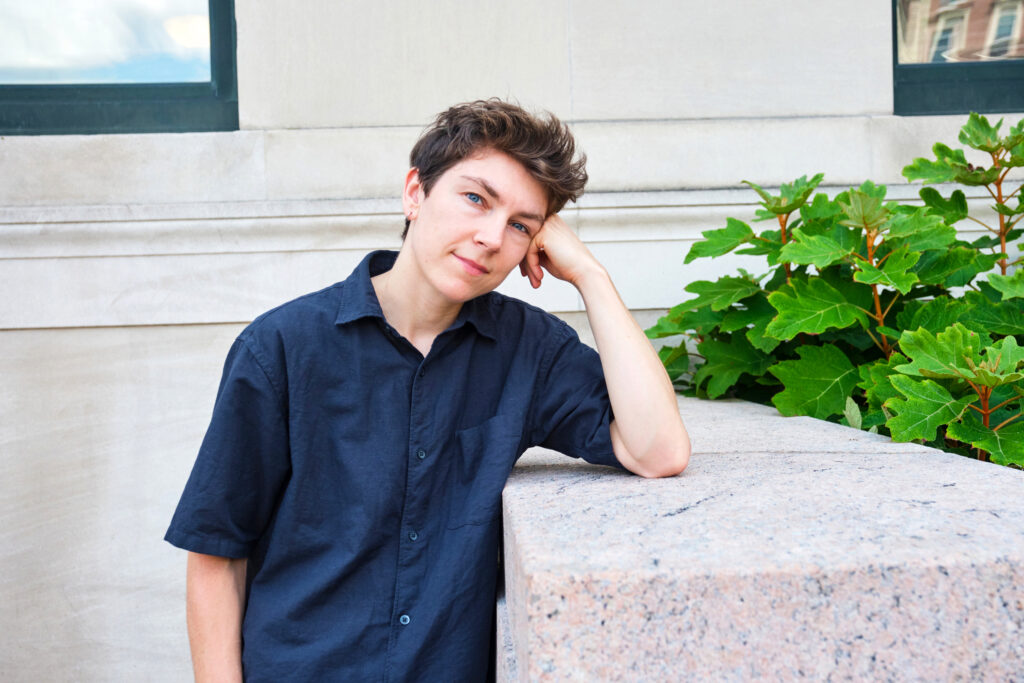
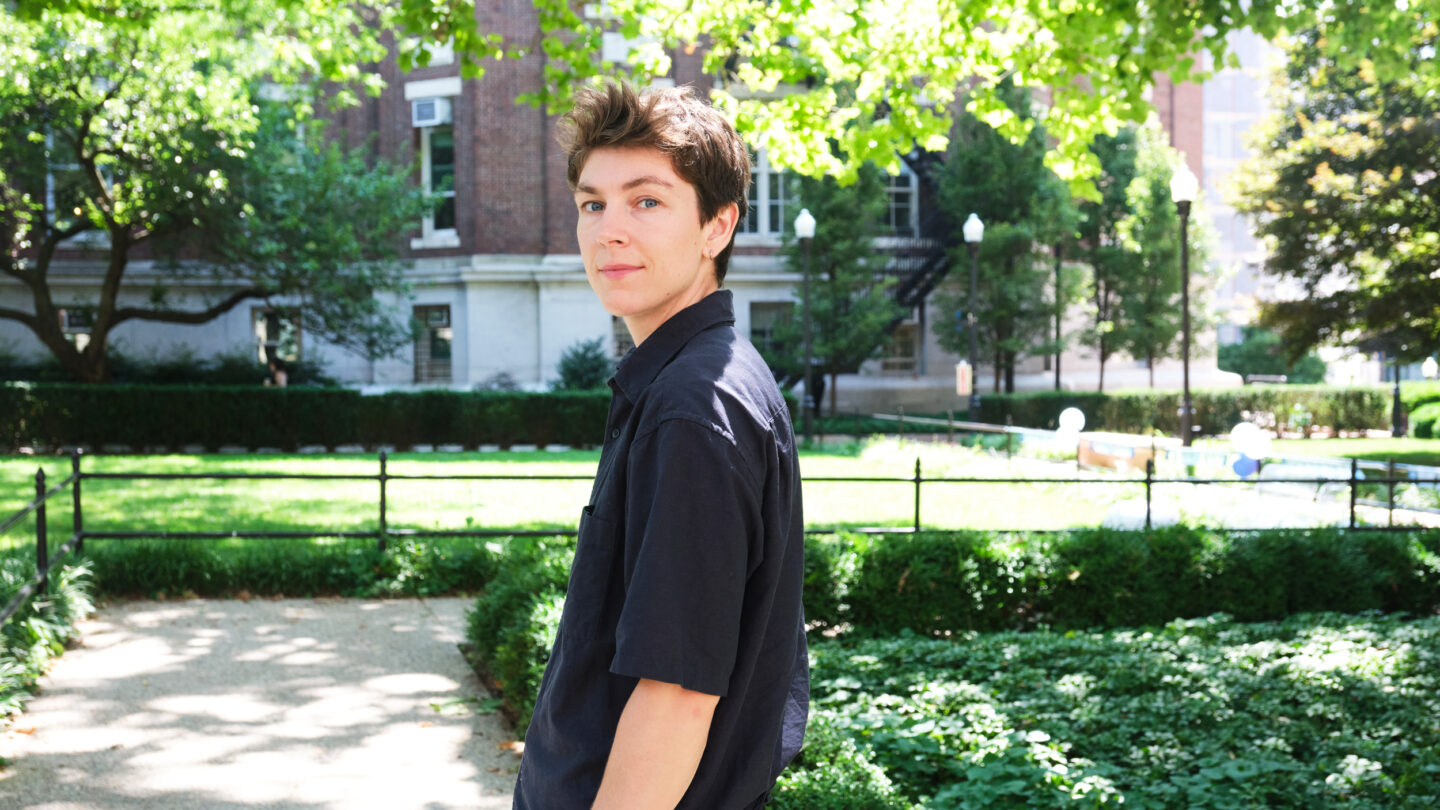
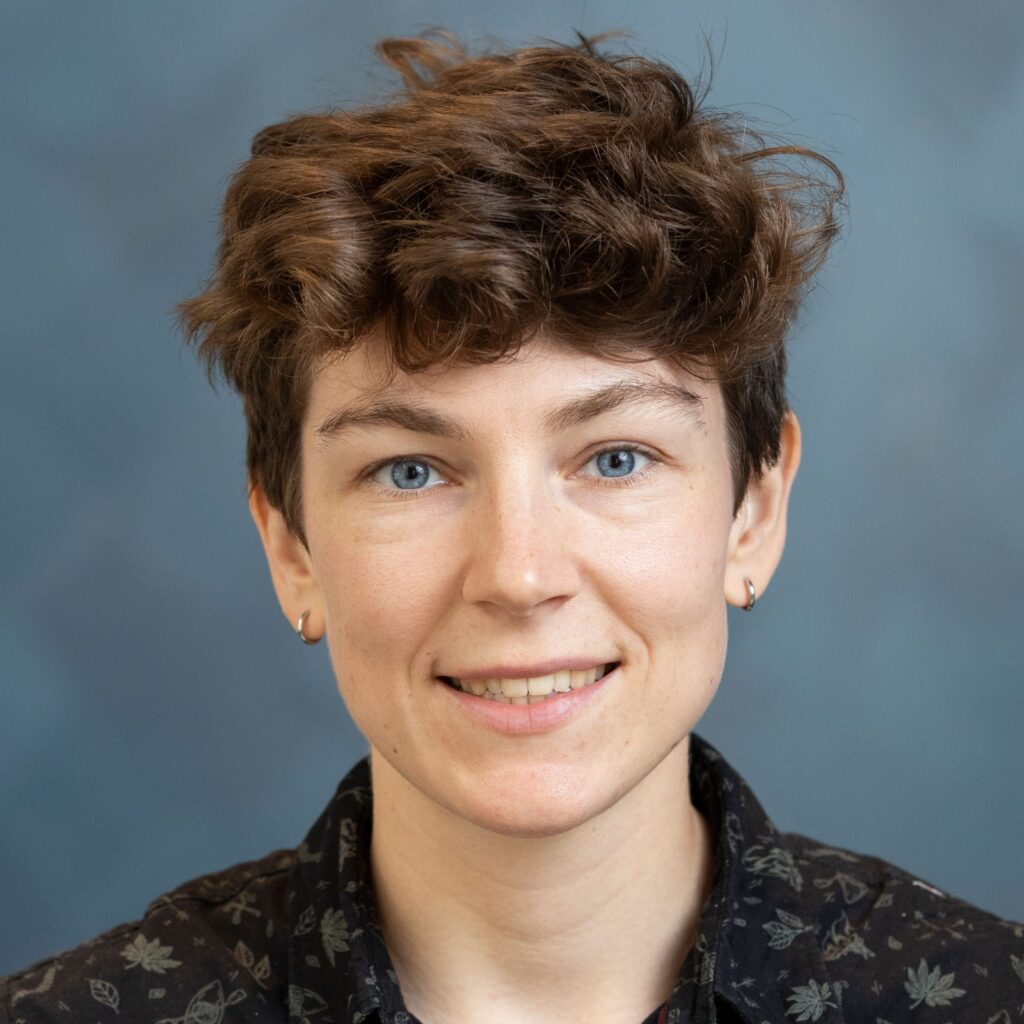
Junior Fellow Elise LePage of the Simons Society of Fellows turns intuition from theoretical physics into new mathematics.
String theory provides an avenue for uniting quantum physics and gravity, but it remains highly speculative. The theory predicts that the universe is made of one-dimensional strings of energy, but such predictions are unobservable by even the most cutting-edge physics experiments.
But even without experimental evidence, string theory has proven to be a wellspring of new mathematical ideas. Junior Fellow Elise LePage of the Simons Society of Fellows is one of the mathematicians forging new mathematics driven by string theory.
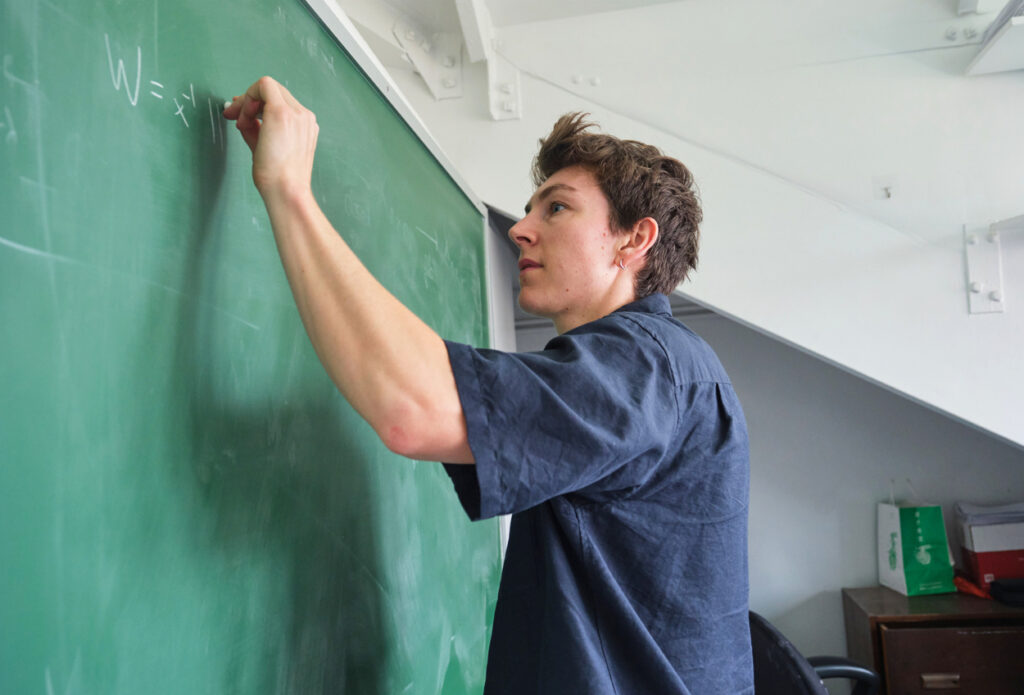
LePage is a postdoctoral research scientist in the Department of Mathematics at Columbia University, working with Andrei Okounkov. LePage holds a doctorate in physics from the University of California, Berkeley, a master’s degree in theoretical physics from Canada’s Perimeter Institute for Theoretical Physics at the University of Waterloo and a bachelor’s degree in math and physics from Hamilton College. She is a second-year fellow.
LePage recently discussed how physics problems can lead to interesting math and how string theory has its own types of membranes. This conversation was edited for clarity.
What inspired your interest in physics, math and string theory?
I’ve been interested in math for as long as I can remember. Over time, I shifted toward physics because, in my opinion, the most exciting math comes from physics. And I personally learned so much interesting math through physics and string theory. So that became my focus.
I want to understand string theory in a mathematically rigorous way. I see mathematical physics as a continuous source of inspiration and of new problems to solve. My ultimate goal is to become a math professor, and I hope to inspire this same excitement in students while continuing to do my own research.
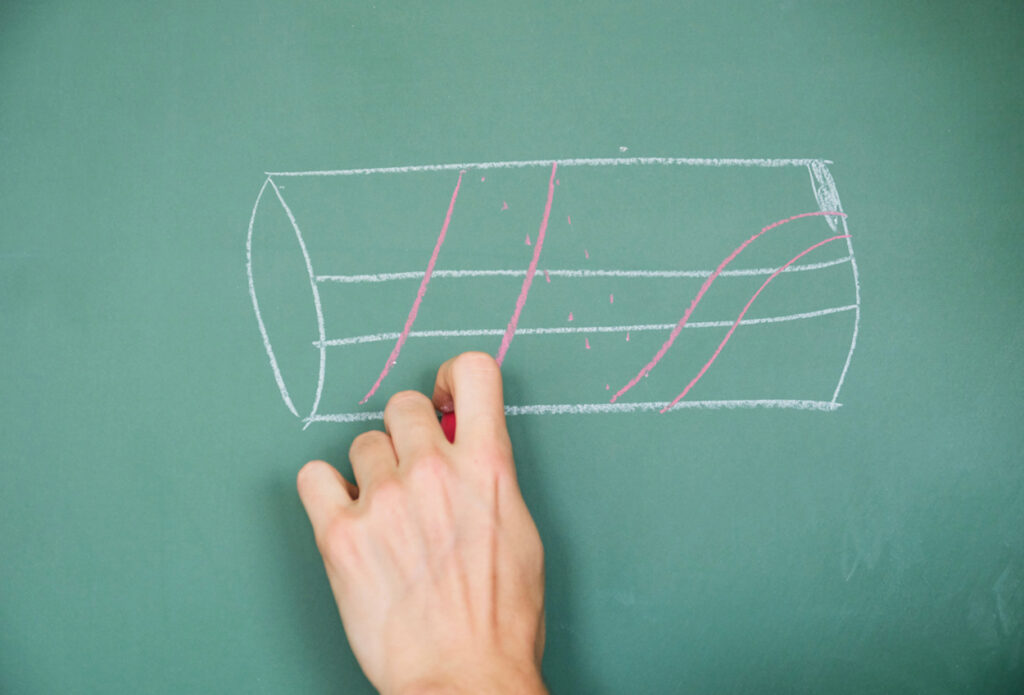
Let me start by mentioning particles, which are points in space that trace out one-dimensional paths in space-time. Much of modern physics studies the dynamics of these point-like objects. String theory replaces particles with one-dimensional objects called strings and attempts to study these objects using similar techniques. A string traces out a two-dimensional surface in space-time, which string theorists call a ‘world sheet.’
A string could be a closed loop like a necklace or a rubber band. We call these closed strings. Or it could stretch between different points, like a guitar string would. We call these open strings. If we have open strings in our theory, we need a rule for where these strings are allowed to end. It turns out that one way to formulate this rule is to specify certain subspaces of space-time where strings are allowed to end. We call these subspaces ‘branes,’ short for membranes.
If you want, you can visualize branes as surfaces in space-time, but they could be higher-dimensional spaces too, possibly twisted in a way that’s harder to picture. A lot of the interesting physics in string theory comes from the branes, not just the strings themselves.
It’s possible to cook up many different types of branes, which intersect each other in many different configurations. For example, I could arrange branes that intersect each other along a circle, or even a knotted circle. For a knotted circle, you can think of a rope that’s tied into a knot and then had the ends connected.
For a given configuration of branes, we want to study how open strings ending on these branes behave. In general configurations, this is a pretty hard question, but it turns out that we can answer it for simple enough configurations, and the answers tend to be really interesting. For example, in a setting where the branes intersect along a knotted circle, the behavior of the strings depends on which knot we have, and so studying the behavior of the strings can actually teach us something about the knot and allow us to distinguish different knots from each other. It’s an interesting problem with many variations, which I really enjoy.
String theorists often posit that space-time has 10 dimensions. This is a technical requirement to make the theory work. Having 10 dimensions to work with gives a lot of freedom in the types of branes one can consider. For example, a brane could fill all 10 dimensions, consuming all of space-time, or it could be a single one-dimensional line in space-time. I tend to focus on problems coming from branes of three to six dimensions, both because they are interesting to me and because branes of these dimensions tend to relate to open questions in mathematics.
Indeed there are. Studying branes in their full generality is pretty hard to make mathematically rigorous, so we often restrict to studying branes with extra symmetry.
The usual choices here are called ‘A-branes’ and ‘B-branes.’ They have pretty different mathematical incarnations, and I tend to focus on A-branes, which are studied using tools from symplectic geometry. In some sense, A-branes are harder to study, so for a long time, people tended to study them less. But as we develop more tools to understand A-branes, it is becoming feasible to understand them just as well as B-branes.
In addition to studying knots, these same frameworks can be used to study quantum groups and their representations. Quantum groups are algebraic structures that appear throughout math and physics. Remarkably, they happen to describe the structure of certain collections of A-branes. I am currently working on making this precise. I focused more on knots during my doctorate and spent the first year of my postdoc on quantum groups.
I am also studying collections of A-branes that are “generators” for the other A-branes. They are generators in the sense that for a given theory, all of the A-branes can be built out of the generating A-branes. Just identifying the generators is a hard question to start with. Then I want to understand the different choices we can make for the generators and how they change as we adjust the parameters of theory.
My overall goal is to build a more complete understanding of A-branes in a mathematically rigorous way. Putting string theory on a solid mathematical footing is advantageous, both for proving new mathematical theorems and for understanding the structure of quantum field theory and string theory. I am always seeking out seminars and conferences to meet people. I regularly interact with colleagues at Columbia, at Berkeley and other members of the Simons Society of Fellows. For me, it’s always about keeping ideas fresh. I could not do math alone; it’s much better with collaboration.