Simons Foundation
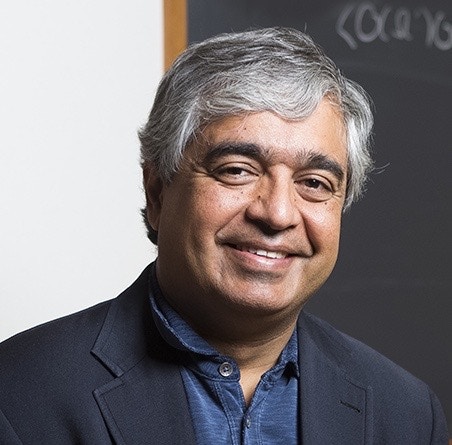
Quantum Entanglement, Strange Metals and Black Holes
Gerald D. Fischbach Auditorium 160 5th Avenue, New York, NY, United StatesIn this lecture, Subir Sachdev will present a simple model of many-particle entanglement, which has led to new insights into two very different classes of systems.
Simons Collaboration on the Many Electron Problem Annual Meeting 2017
Gerald D. Fischbach Auditorium 160 5th Ave, New York, NY, United StatesNote: Videos for the Dominika Zgid's "Quantum Embedding Beyond DMFT" and Guifre Vidal's "Continuous Tensor Networks: Recent Results and a Route Map" are unfortunately unavailable due to a file storage error.
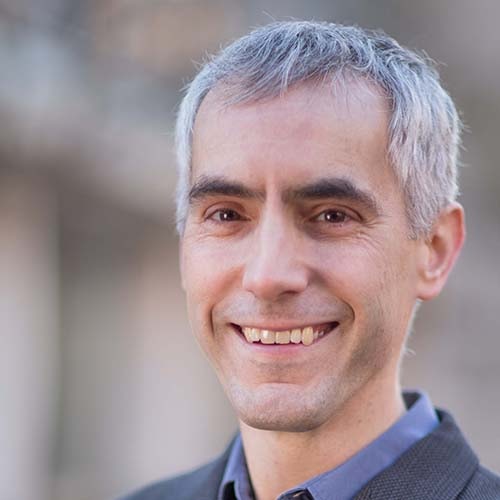
Exploiting Genetics to Identify Environmental Risks for Autism
Gerald D. Fischbach Auditorium 160 5th Avenue, New York, NY, United StatesIn this lecture, Mark Zylka will describe how candidate environmental risk factors for autism can be identified rationally, by pinpointing chemicals that interfere with the same molecular pathways that are affected in individuals with autism. His research focuses on identifying environmental-use chemicals that target autism-linked molecular pathways, using environmental sampling data to assess the exposure threat to people, and validating risk potential in animal models.
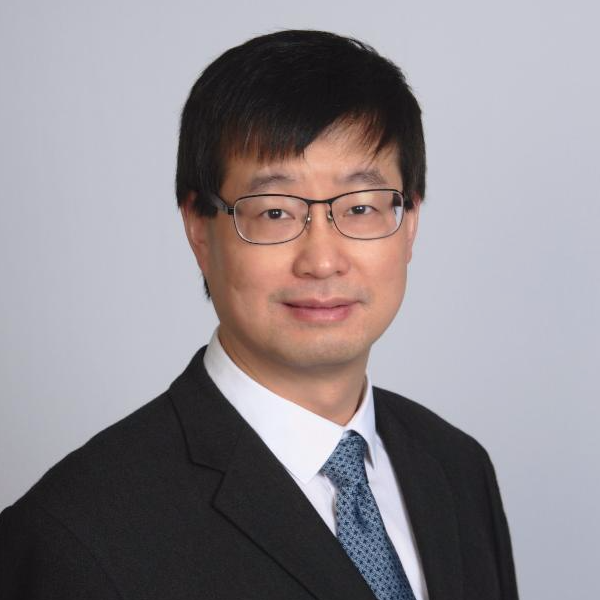
Atomic Clocks and Quantum Physics
Gerald D. Fischbach Auditorium 160 5th Avenue, New York, NY, United StatesNew abilities with laser light have enabled us to create and probe atomic gases at ultralow temperatures, forming the basis of atomic clocks accurate to 18 decimal places. This talk will discuss the history of such advanced clocks and how they are used to test fundamental laws of nature, search for new physics and create a range of technologies.
Simons Collaboration on Cracking the Glass Problem First Annual Meeting
Gerald D. Fischbach Auditorium 160 5th Ave, New York, NY, United StatesThursday, March 9th – Friday, March 10th 2017 Simons Foundation Gerald D. Fischbach Auditorium New York, New York Simons Collaboration on Cracking the Glass Problem homepage Agenda Thursday, March 9 8:00 AM CHECK-IN & BREAKFAST 9:00 AM S. Nagel: State of the Collaboration 9:30 AM G. Tarjus: In Search of Length Scales Characterizing Glass Formation...
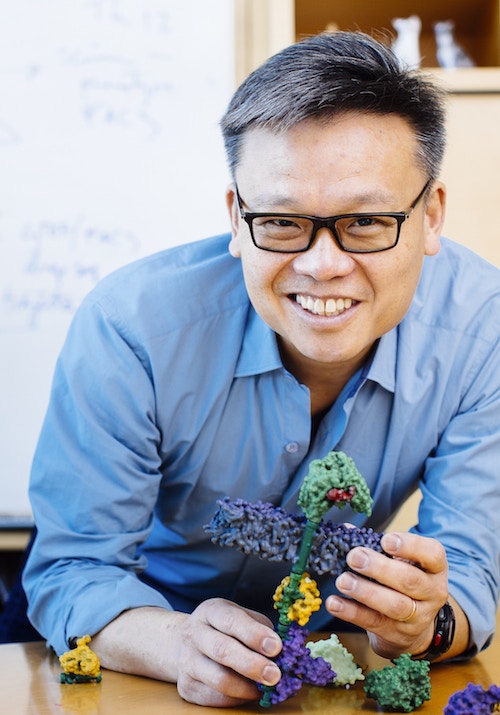
Programming Cell Signaling Networks
Gerald D. Fischbach Auditorium 160 5th Avenue, New York, NY, United StatesIn this lecture, Wendell Lim will discuss the design principles of molecular circuits that govern cell decision-making and responses. He will also describe how these principles can be harnessed to engineer cells with customized therapeutic response programs.
1% Precision Meeting
Math for America, 915 Broadway, 17th Floor 915 Broadway, New York City, NY, United States
2017 Simons Society of Fellows Retreat
Miami, Florida1% Precision Meeting
Math For America, 915 Broadway, 14th fl., New York, NY 10010, USA
Strange New Worlds
Gerald D. Fischbach Auditorium 160 5th Avenue, New York, NY, United StatesIn this lecture, Josh Winn will describe the discovery of exoplanets, why it took so long to find them, what new technologies were required, and where the research field is headed.
Neutrino Workshop
MFA 915 Broadway, 17th Floor, New York, NY, United States2017 Conference on Theory & Biology
Gerald D. Fischbach Auditorium 160 5th Ave, New York, NY, United States
Virus Evolution and the Predictability of Next Year’s Flu
Gerald D. Fischbach Auditorium 160 5th Avenue, New York, NY, United StatesIn this lecture, Richard Neher will present recent progress in our understanding of the evolutionary dynamics of organisms such as HIV and the influenza virus.
SCGB NY-Area Postdoc Meeting Series
Simons Foundation 9th Floor, Multipurpose Room 160 Fifth Ave, New York, NY, United States
The Unpredicted: In Science, Literature and Politics
Gerald D. Fischbach Auditorium 160 5th Avenue, New York, NY, United StatesWe are drawn to the new, the unusual, the unexpected: what we could not predict on the basis of what came before. As vast archives of our cultural past and present go online, scientists can now break out of the laboratory to see how novelty, innovation and creativity are both made and received in the...