Archives: Events Archives: Events

Views Navigation

Event Views Navigation

Today

The Power and Weakness of Randomness (When You are Short on Time)

Man has grappled with the meaning and utility of randomness for centuries. This talk describes two main aspects of the research on randomness with respect to the theory of computation, demonstrating respectively its power and weakness for making algorithms faster.
Strategic Behavior and the Science of Social Networks

The modern ability to carefully measure large-scale social networks has driven new empirical studies and theoretical models of growth, dynamics, influence, and collective behavior in such systems.

Normalization as a Canonical Neural Computation

This talk presents the normalization model of neural computation and elaborates the hypothesis that dysfunctions of normalization may be associated with schizophrenia, amblyopia, epilepsy, and autism spectrum disorders.

The Missing Circuits: Studying Entire Brains

Fundamental gaps remain in our understanding of animal brains, especially human brains, in comparison with other organ systems in the body. One of these gaps is our very partial knowledge of the circuit architecture of brains, even in the best studied model organisms.

The Regulation of Fidelity in the Transmission of Genetic Information from Parent to Offspring

The evolution of organisms requires the generation of some diversity in the offspring and then the selection of the fittest in the present environment from among this diversity in the population. The rates of evolution can be influenced by mutation rates that are in turn influenced by a wide variety of stresses that can occur as sperm or eggs are produced or even as the organism develops.

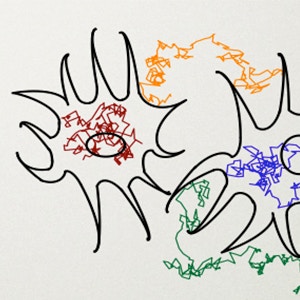
Beautiful Thoughts from Ugly Neurons

This talk is based on mathematical and computational studies of neural network models. Understanding the range of dynamic phenomena in such models provides a basis for thinking about the more complex dynamics of real neural circuits.

Quantum Mechanics and Space-Time in the 21st Century

Nima Arkani-Hamed's research has shown how the extreme weakness of gravity, relative to other forces of nature, might be explained by the existence of extra dimensions of space, and how the structure of comparatively low-energy physics is constrained within the context of string theory.

Quantum Physics Beyond Simple Systems: Complex Dynamics, Decoherence, Topology and Information (2012)

Condensed matter physics has evolved greatly in recent years from studying bulk properties of naturally occurring materials to constructing complex materials and systems not found in nature, and to controlling rather than observing quantum mechanics. This dramatic broadening has been accompanied by corresponding advancement in experimental and theoretical tools. Diversification has enriched the subject greatly...

Analysis of Boolean Functions: New Directions and Applications (2012)

The 2012 Analysis of Boolean Functions workshop focused mainly on application areas in theoretical computer science, including: Hardness of approximation Property testing Pseudorandomness Concrete complexity Computational learning theory The symposium included some traditional talks on recent results, but its aim was also to encourage research through a variety of talk/discussion formats: group exploration of new...

Taking the Universe’s Baby Picture

While significant progress has been made on key cosmological questions, many remain unanswered: What happened during the first moments of the big bang? What is dark energy? What were the properties of the first stars?

Geometry Over Non-Closed Fields (2012)

Classically, arithmetic is the study of rational or integral solutions of diophantine equations and geometry the study of lines and conics. From the modern standpoint, these areas are synthesized in the study of rational and integral points on algebraic varieties over nonclosed fields. A major insight of the 20th century was that the arithmetic properties...

New Technologies for Measuring Neural Circuit Dynamics

A talk on recent advances in methods and instrumentation that combine genetically encoded molecular sensors, optical imaging and virtual-reality systems to measure neural-circuit dynamics in the mouse brain during virtual navigation and decision making.

Knot Homologies and BPS States (2012)

In recent years, homological knot invariants have been gaining momentum in both mathematics and physics, and recent developments promise it will only be growing. Therefore, a symposium on “the physics of knot homologies” is very timely. Moreover, this subject is intimately connected with another active area of research at the interface of geometry and physics:...

The Mathematics of Mind and Brain

The mind and brain can be thought of as computational systems — but what kinds of computations do they carry out, and what kinds of mathematics can best characterize these computations? Josh Tenenbaum attempts to answer these questions through the integration of disparate branches of mathematics and paradigms of computation.

Animation, Teeth and Skeletons

The talk describes (dis)similarity distances between pairs of two-dimensional surfaces (embedded in three-dimensional space) that use both local structures and global information in the surfaces.

New Directions in Approximation Algorithms (2013)

Organizers: Sanjeev Arora, Uriel Feige, Michel Goemans & David Shmoys Many of the striking advances in theoretical computer science over the past two decades concern
 approximation algorithms, which compute provably near-optimal solutions to NP-hard optimization problems.
 Yet the approximability of several fundamental problems such as TSP, Graph Coloring, Graph Partitioning etc.
remains an open question. For...

January 31, 2013: Resting State fMRI

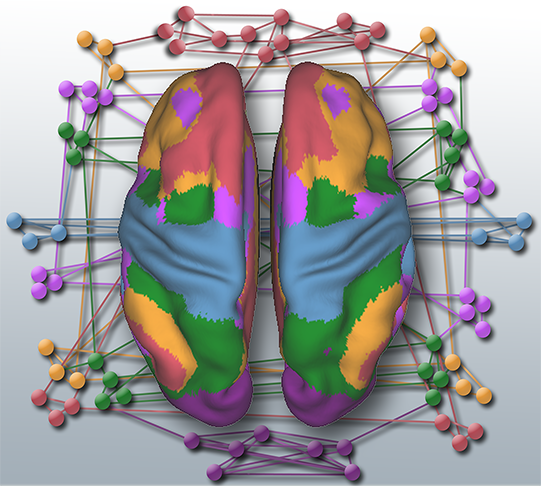
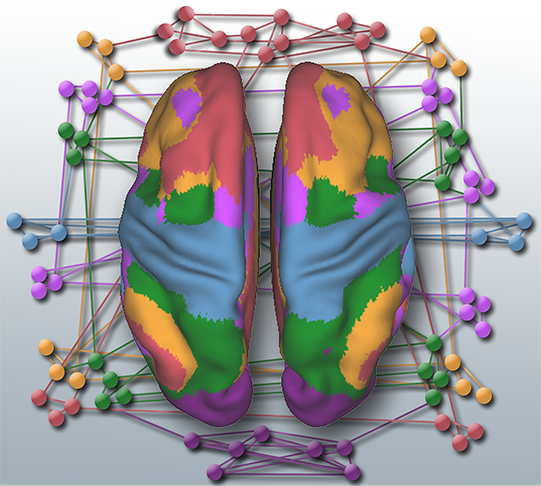
Resting-state functional magnetic resonance imaging (fMRI) has been used to identify consistent functional patterns in neurotypical individuals, as well as changes in neurologic and psychiatric diseases.

Resting State fMRI

Gerald D. Fischbach Auditorium 160 5th Avenue, New York, NY, United States

Resting-state functional magnetic resonance imaging (fMRI) has been used to identify consistent functional patterns in neurotypical individuals, as well as changes in neurologic and psychiatric diseases.

Simons Symposium on Quantum Entanglement (2013)

February 3-9, 2013 The goal of our meeting will be to explore exotic quantum states of matter, with a particular focus on the role of quantum entanglement. A variety of new tools arising from both the study of quantum field theoretic techniques in condensed matter physics, and from the "holographic" duality between field theories and...

Probability & Intuition

Probability theory was devised in order to understand gambling, but now is the underpinning of statistics, without which we would be clueless in our complex society.  Yet probability itself is a mysterious quantity, hard to define, and awkward for our human intuition to cope with.  Does it even exist, except in our minds?

The Kardar-Parisi-Zhang Equation and Universality Class (2013)

February 24-March 2, 2013 Organizers: Alexei Borodin, Jeremy Quastel, Herbert Spohn The Kardar-Parisi-Zhang equation is a nonlinear stochastic partial differential equation widely used in the physics literature as a model of randomly growing interfaces, but until recently very poorly understood from the mathematical point of view. In one dimension, it is a member of a...

Autism, Oxytocin, and Neural Signaling

Genetics tells us that abnormal synaptic and nuclear proteins are often at the root of major neuropsychiatric disorders. Autism, a prominent and often debilitating disorder of the brain, has been traced to small contributions of hundreds of genes, creating a formidable challenge for those interested in exploring pathophysiology and possible therapeutic interventions.

Hurricanes: Present and Future

Gerald D. Fischbach Auditorium 160 5th Avenue, New York, NY, United States

Some 90 tropical cyclones develop each year. In this lecture, Professor Kerry Emanuel will review the theory of tropical cyclones and how it informs observed variability. He will also discuss how these storms may have important feedbacks on such phenomena as El Niño-Southern Oscillation and global climate change.

The Most Random of All Possible Worlds

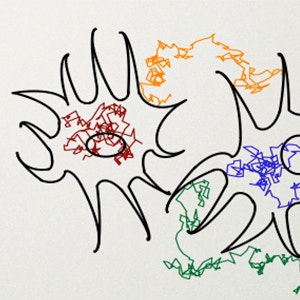
Andrei Okounkov presents a talk about the law of large numbers, in its various manifestations. This is a real cornerstone of probability, which states that a random system of a very large size is typically not random: its deterministic state is the one that has the largest probability to occur.

Climate Feedbacks: Magnitude & Uncertainty in Global Warming

Gerald D. Fischbach Auditorium 160 5th Avenue, New York, NY, United States

This lecture presented by Brian J. Soden outlines our understanding of the main feedback processes in the climate system and how they impact both the magnitude of future changes in Earth’s climate and the uncertainty in our predictions of these changes.

Water: Climate’s Great Orchestrator

Gerald D. Fischbach Auditorium 160 5th Avenue, New York, NY, United States

The mighty water molecule is responsible for much of what we know about climate and climate change, and even more of what we don’t know. In this lecture, Bjorn B. Stevens discusses the molecule’s short sojourn to the atmosphere, during which it helps to create the world as we know it.

New Genetic Insights into the Pathophysiology of Autism Spectrum Disorders

Gerald D. Fischbach Auditorium 160 5th Avenue, New York, NY, United States

The genetics and genomics of autism spectrum disorders have reached a tipping point. The recent focus on de novo mutations has led to systematic, highly productive gene discovery efforts. These have begun to clarify a tremendously heterogeneous allelic architecture as well as specific genes contributing to social disability syndromes. This lecture will review these recent discoveries and address the challenges facing the path forward from reliable gene discovery to an actionable understanding of the molecular pathophysiology of autism spectrum disorders.

New Genetic Insights into the Pathophysiology of Autism Spectrum Disorders

Gerald D. Fischbach Auditorium 160 5th Avenue, New York, NY, United States

The genetics and genomics of autism spectrum disorders have reached a tipping point. The recent focus on de novo mutations has led to systematic, highly productive gene discovery efforts. These have begun to clarify a tremendously heterogeneous allelic architecture as well as specific genes contributing to social disability syndromes. This lecture will review these recent discoveries and address the challenges facing the path forward from reliable gene discovery to an actionable understanding of the molecular pathophysiology of autism spectrum disorders.

Climate Projections over North America in the Coming Decades

Gerald D. Fischbach Auditorium 160 5th Avenue, New York, NY, United States

Earth’s climate trajectory over the next few decades will be influenced by human-induced climate change and by internally generated variability in the climate system. Clara Deser’s lecture highlights the substantial contribution of internal variability to projected climate trends over North America in the next 50 years.

Parking Cars, Rolling Balls, and Falling Cats: The Concept of Holonomy

The mathematical concept of 'holonomy' was gradually developed in the late 19th and early 20th centuries in a number of different contexts, and it was found to lie at the base of many everyday phenomena. Anyone who has ever tried to control the orientation of a 3-dimensional object on a computer screen using a trackball...

May 30, 2013: Antibodies, behavior and cognition

Gerald D. Fischbach Auditorium 160 5th Ave, New York, NY, United States

Betty Diamond discusses immune-system-mediated alterations in brain development, as part of the Autism: Emerging Concepts lecture series.

Antibodies, behavior and cognition

Gerald D. Fischbach Auditorium 160 5th Avenue, New York, NY, United States

Betty Diamond discusses immune-system-mediated alterations in brain development, as part of the Autism: Emerging Concepts lecture series.

Stem Cells: Our Lifelong Tissue Rejuvenators And Their Promise for Regenerative Medicine

How do stem cells retain their remarkable capacity to regenerate tissue? Why are some stem cells, such as those of the skin, so extraordinarily good at making new tissue? And why are other stem cells, such as those of the heart and brain, more limited in their potential? These are some of the many questions that fascinate Rockefeller University’s Rebecca C. Lancefield Professor Elaine Fuchs, Ph.D.

Foundation Hosts Symposium: Foliation Theory in Algebraic Geometry

Gerald D. Fischbach Auditorium 160 5th Ave, New York, NY, United States

The Simons Foundation’s Mathematics and Physical Sciences department is pleased to host Foliation Theory in Algebraic Geometry, a five-day symposium intended to foster communication and interaction between experts in the fields of holomorphic foliation theory and higher dimensional algebraic geometry.

The Energetic Ear

As the gateway to human communication, the sense of hearing is of enormous importance in our lives.  Research on hearing has recently been revolutionized by the demonstration that the ear is not simply a passive receiver for sound, but also an amplifier that augments, filters, and compresses its inputs.

September 20, 2013: Diffusion Tensor Imaging

The first Neuroimaging Symposium focuses on diffusion tensor imaging — a magnetic resonance imaging technique used to study brain tissue design, especially white tracts, in both normal and diseased states.

This lecture has already taken place. To view slides from the lecture, visit the lecture page.

Diffusion Tensor Imaging

Gerald D. Fischbach Auditorium 160 5th Avenue, New York, NY, United States

The first Neuroimaging Symposium focuses on diffusion tensor imaging — a magnetic resonance imaging technique used to study brain tissue design, especially white tracts, in both normal and diseased states.

September 26, 2013: Evolving Perspectives on Autism

Tremendous progress has been made in our understanding of autism, with major contributions coming from a variety of research fields, including genetics, neuroscience and psychology. Other changes afoot include a revamping of the clinical definition of autism in the fifth edition of the Diagnostic and Statistical Manual of Mental Disorders. Such evolutions in conceptual views of autism in turn affect the future of autism research, and the development of interventions.

Evolving Perspectives on Autism

Gerald D. Fischbach Auditorium 160 5th Avenue, New York, NY, United States

Tremendous progress has been made in our understanding of autism, with major contributions coming from a variety of research fields, including genetics, neuroscience and psychology. Other changes afoot include a revamping of the clinical definition of autism in the fifth edition of the Diagnostic and Statistical Manual of Mental Disorders. Such evolutions in conceptual views of autism in turn affect the future of autism research, and the development of interventions.


privacy consent banner

Privacy preference

We use cookies to provide you with the best online experience. By clicking "Accept All," you help us understand how our site is used and enhance its performance. You can change your choice at any time here. To learn more, please visit our Privacy Policy.
Advancing Research in Basic Science and MathematicsSubscribe to our newsletters to receive news & updates

privacy consent banner

Privacy preference

We use cookies to provide you with the best online experience. By clicking "Accept All," you help us understand how our site is used and enhance its performance. You can change your choice at any time here. To learn more, please visit our Privacy Policy.