Archives: Events Archives: Events

Views Navigation

Event Views Navigation

Today

Discrete Analysis: Beyond the Boolean Cube (2014)

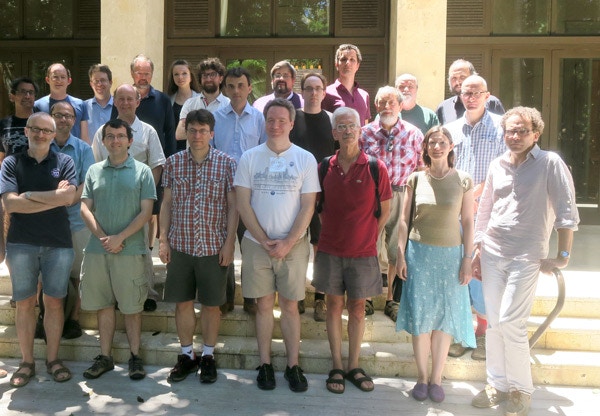
March 9 – 15, 2014 Organizers: Elchanan Mossel, UC Berkeley Ryan O'Donnell, Carnegie Mellon University Krzysztof Oleszkiewicz, University of Warsaw The Simons Symposium on Discrete Analysis: Beyond the Boolean Cube was the second symposium organized on this topic. The first was held in 2012 and was called Analysis of Boolean Functions. This most recent meeting...
March 12, 2014: Learning With a Nontrivial Teacher

Learning Using Privileged Information (LUPI) is a new paradigm that uses an intelligent agent (a ‘nontrivial teacher’) to supplement standard training data in the context of supervised learning algorithms. Rather than using standard, brute-force methods to address the general problem of inference and the construction of intelligent machines, the LUPI learning model allows the teacher to add additional (privileged) information to the training examples.

Learning With a Nontrivial Teacher

Gerald D. Fischbach Auditorium 160 5th Avenue, New York, NY, United States

Learning Using Privileged Information (LUPI) is a new paradigm that uses an intelligent agent (a ‘nontrivial teacher’) to supplement standard training data in the context of supervised learning algorithms. Rather than using standard, brute-force methods to address the general problem of inference and the construction of intelligent machines, the LUPI learning model allows the teacher to add additional (privileged) information to the training examples.

Galactic Superwinds: Beyond Phenomenology (2014)

March 23 - 29, 2014 Organizers: Andrew Benson, Carnegie Observatories Juna Kollmeier, Carnegie Observatories The goal of this symposium was to bring together leading experts in the theory and observation of galactic superwinds — outflows of mass, momentum and energy from galaxies thought to be driven by radiation and winds from stars, and by supernova...
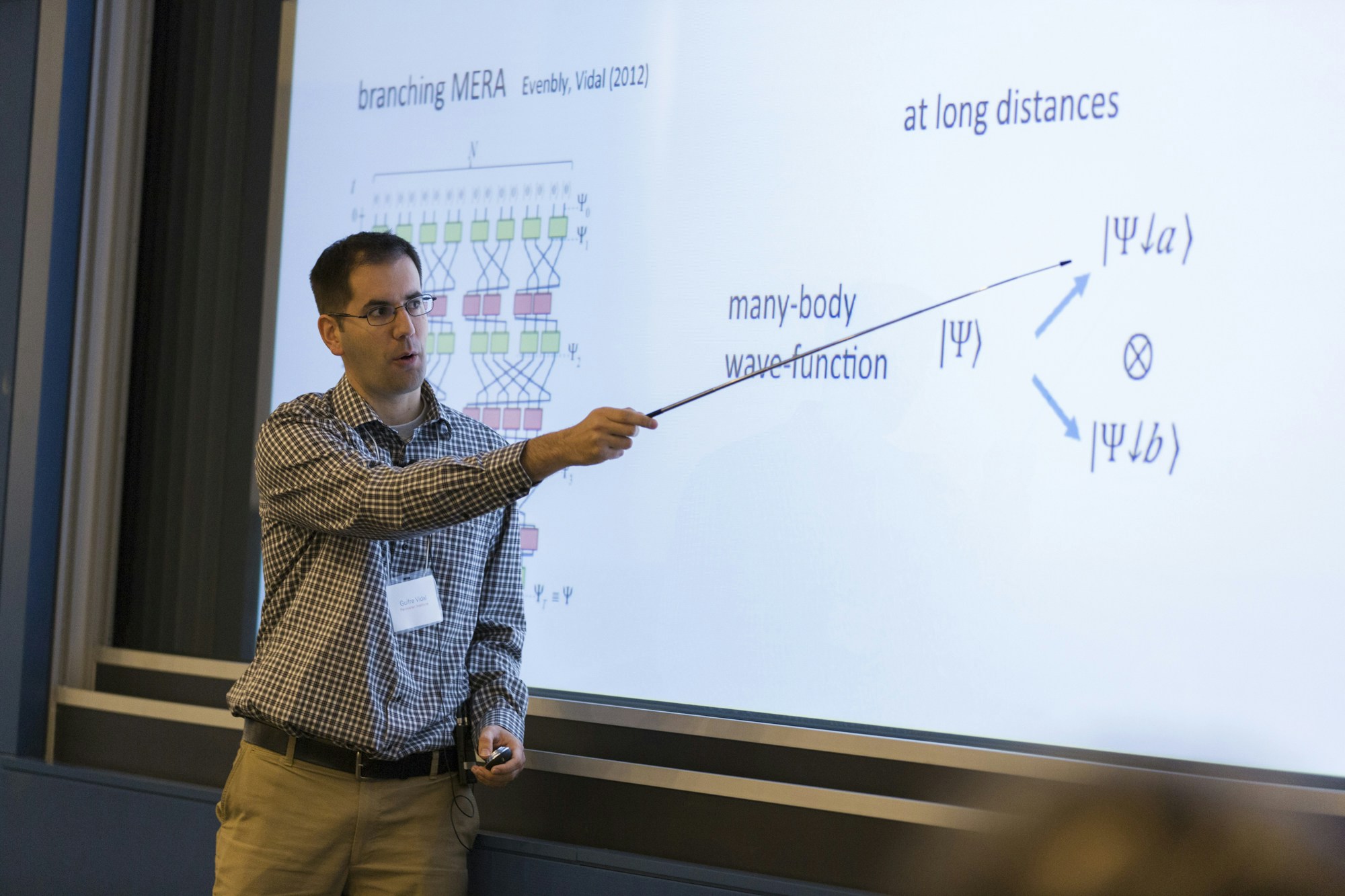
March 26, 2014: An Attempt at Redefining Autism for the Biological Sciences: Implications and Translational Opportunities

Advances in molecular genetics have implicated a variety of genetic variations in autism, yet understanding of what these variations mean is still limited. Advances in classification of diseases have made autism among the most reliably diagnosed neurodevelopmental or neuropsychiatric disorders. But symptoms used to define autism are likely outcomes of earlier disruptions in normative social and communication development rather than causally linked to genetic perturbations.

An Attempt at Redefining Autism for the Biological Sciences: Implications and Translational Opportunities

Gerald D. Fischbach Auditorium 160 5th Avenue, New York, NY, United States

Advances in molecular genetics have implicated a variety of genetic variations in autism, yet understanding of what these variations mean is still limited. Advances in classification of diseases have made autism among the most reliably diagnosed neurodevelopmental or neuropsychiatric disorders. But symptoms used to define autism are likely outcomes of earlier disruptions in normative social and communication development rather than causally linked to genetic perturbations.

Transcriptional and Epigenetic Mechanisms of Depression

Depression is a common, chronic, and debilitating disease. Although many patients benefit from antidepressant medications or other therapies, only about half show complete remission. Factors that precipitate depression, such as stress, are incompletely understood. We have used chronic social defeat stress as an animal model of depression. Prolonged exposure to an aggressor induces lasting changes in behavior such as social avoidance and anhedonia-like symptoms, which are reversed by chronic (but not acute) treatment with available antidepressants.

April 11, 2014: Conference on Theory & Biology

This day-long conference will highlight areas where theoretical ideas are having an impact on the life sciences, and will be of interest to established researchers, postdoctoral fellows and graduate students working in the life sciences and allied fields.

April 15, 2014: Von Neumann Machines and Molecular Darwinism

In this lecture, Gerald Joyce focuses on the perpetuation of genetic information as a defining characteristic of life. He draws a connection between digital computers (von Neumann machines), especially those with the capacity to self-reproduce, and molecular Darwinian systems that maintain heritable ‘bits’ of information, which are refined through evolution.

April 15, 2014: Von Neumann Machines and Molecular Darwinism

In this lecture, Gerald Joyce focuses on the perpetuation of genetic information as a defining characteristic of life. He draws a connection between digital computers (von Neumann machines), especially those with the capacity to self-reproduce, and molecular Darwinian systems that maintain heritable ‘bits’ of information, which are refined through evolution.

Von Neumann Machines and Molecular Darwinism

Gerald D. Fischbach Auditorium 160 5th Avenue, New York, NY, United States

In this lecture, Gerald Joyce focuses on the perpetuation of genetic information as a defining characteristic of life. He draws a connection between digital computers (von Neumann machines), especially those with the capacity to self-reproduce, and molecular Darwinian systems that maintain heritable ‘bits’ of information, which are refined through evolution.

April 23, 2014: New Insights and Approaches for Studying Rett Syndrome, an Autism-Associated Disorder

A central goal in neuroscience is determining the genetic basis of neurological disorders — from autism to brain tumors. Many of these pathological states result from defects in gene regulatory programs that are fundamental to all cell types but lead to dysfunction specifically within the nervous system. Gail Mandel investigates the basis of this phenomenon and has identified cell-cell interactions between neurons and glia involved in pathological states of brain development. Mandel has ameliorated the neuropathology of one autism spectrum disorder, Rett syndrome, by genetically replacing the defective MeCP2 gene with a good copy of the gene in astrocytes – glia cells in the brain. She is now exploring the underlying mechanisms crucial for neuronal signaling.

New Insights and Approaches for Studying Rett Syndrome, an Autism-Associated Disorder

Gerald D. Fischbach Auditorium 160 5th Avenue, New York, NY, United States

A central goal in neuroscience is determining the genetic basis of neurological disorders — from autism to brain tumors. Many of these pathological states result from defects in gene regulatory programs that are fundamental to all cell types but lead to dysfunction specifically within the nervous system. Gail Mandel investigates the basis of this phenomenon and has identified cell-cell interactions between neurons and glia involved in pathological states of brain development. Mandel has ameliorated the neuropathology of one autism spectrum disorder, Rett syndrome, by genetically replacing the defective MeCP2 gene with a good copy of the gene in astrocytes – glia cells in the brain. She is now exploring the underlying mechanisms crucial for neuronal signaling.

April 30, 2014: Where is Fundamental Physics Heading?

In recent decades, physicists and astronomers have discovered two beautiful standard models, one for the quantum world of extremely short distances and one for the universe as a whole. Both models have had spectacular success, but there are also strong arguments for new physics beyond these models.

Where is Fundamental Physics Heading?

Gerald D. Fischbach Auditorium 160 5th Avenue, New York, NY, United States

In recent decades, physicists and astronomers have discovered two beautiful standard models, one for the quantum world of extremely short distances and one for the universe as a whole. Both models have had spectacular success, but there are also strong arguments for new physics beyond these models.

Big Data Analytics and a Path to Enhancing Our Understanding of Human Disease

Dr. Schadt provides an overview of how his team organizes very large scale data across many different types, and then integrates these data using sophisticated mathematical algorithms to construct predictive network models of disease, and discusses the application of this type of modeling in the cancer arena.

May 21, 2014: Probabilistic Topic Models of Text and Users

Probabilistic topic models provide a suite of tools for analyzing large collections of electronic documents. A traditional topic model analyzes a collection of documents to discover its hidden themes.  These themes can be used to organize, visualize, summarize and navigate the collection. Many collections are associated with corresponding reader behavior data, which is useful both for making predictions about readers (such as which articles they will like) and in understanding patterns in how they read.


Probabilistic Topic Models of Text and Users

Gerald D. Fischbach Auditorium 160 5th Avenue, New York, NY, United States

Probabilistic topic models provide a suite of tools for analyzing large collections of electronic documents. A traditional topic model analyzes a collection of documents to discover its hidden themes.  These themes can be used to organize, visualize, summarize and navigate the collection. Many collections are associated with corresponding reader behavior data, which is useful both for making predictions about readers (such as which articles they will like) and in understanding patterns in how they read.

May 28, 2014: Keeping Your Brain in Balance: Do Defects in Neuronal Homeostasis Contribute to Autism Spectrum Disorders?

Although most people regularly tune up their cars, you probably haven’t needed to bring your brain in for a tune-up, despite the fact that the human brain is far more complex than the internal combustion engine. What’s more, unlike most machines, your brain is constantly changing in order to store memories and adapt to a fluid environment. Our brains are faced with a fundamental challenge: They must preserve the integrity of the neural circuits that subserve behaviors over the lifetime of an organism, while at the same time allowing plastic mechanisms to shape and fine-tune their function.

Keeping Your Brain in Balance: Do Defects in Neuronal Homeostasis Contribute to Autism Spectrum Disorders?

Gerald D. Fischbach Auditorium 160 5th Avenue, New York, NY, United States

Although most people regularly tune up their cars, you probably haven’t needed to bring your brain in for a tune-up, despite the fact that the human brain is far more complex than the internal combustion engine. What’s more, unlike most machines, your brain is constantly changing in order to store memories and adapt to a fluid environment. Our brains are faced with a fundamental challenge: They must preserve the integrity of the neural circuits that subserve behaviors over the lifetime of an organism, while at the same time allowing plastic mechanisms to shape and fine-tune their function.

Symposium on Evidence in the Natural Sciences

FRIDAY, MAY 30, 2014 Scientific Program: 8:00 AM - 3:15 PM Evening Program: 4:30 - 7:45 PM Gerald D. Fischbach Auditorium 160 5th Avenue, New York, New York, 10010 What is the difference between evidence, fact, and proof? Can we quantify evidence; is something more evident than something else? What does it take to convince...
Complex Data Visualization: Approach and Application

Gerald D. Fischbach Auditorium 160 5th Avenue, New York, NY, United States
This Biotech Symposium will focus on the visualization and representation of analytic results from complex data sets.

Strategies to Prolong Vision in Inherited Forms of Blindness

In the disease retinitis pigmentosa (RP), disease genes directly cause the dysfunction and death of rod photoreceptors, the photoreceptor type that mediates vision in dim light, causing night blindness. Subsequently, the cone photoreceptors, which mediate color and daylight vision, also lose function and die. Dr. Cepko et al have suggested a model wherein cones are affected due to the dysregulated metabolism that follows rod death. They have begun to develop gene therapy to combat this, using adenovirus-associated vectors (AAV) to deliver genes that help cones fight oxidation and other forms of stress. Their progress in treating RP mice using such vectors will be presented.

The Social Brain: A Hypothesis Space for Understanding Autism

Gerald D. Fischbach Auditorium 160 5th Avenue, New York, NY, United States

In this talk, Nancy Kanwisher will consider the functional architecture of the social brain in typical subjects as an avenue for considering which functions are affected and which are preserved in autism.

Testing the Cortical Column Conjecture

Gerald D. Fischbach Auditorium 160 5th Avenue, New York, NY, United States

In his talk, Carey Priebe will present the conjecture that neurons in the neocortex are connected in a graph that exhibits motifs representing repeated processing modules.

Urban Social Science Au Naturel

Gerald D. Fischbach Auditorium 160 5th Avenue, New York, NY, United States

The enormous amount of information that is now available about cities and the people who live in them offers intriguing opportunities for better understanding human behavior. That understanding can be applied to optimize urban policy and operations. Steven Koonin will discuss examples of and prospects for gaining insight into human behavior within the context of work at...

Numerical Quantum Simulations of Realistic Materials

Simulating quantum mechanics on classical computers appears at first to require exponential computational resources, yet at the same time rapid progress is being made in accurate simulations of the quantum properties of realistic materials. How is this discrepancy resolved?

2014 MPS Annual Meeting

Thursday, October 23rd – Friday, October 24th, 2014 Download the 2014 Annual Meeting booklet (PDF). The Simons Foundation Division of Mathematics and Physical Sciences (MPS) held its second Annual Meeting on October 23 and 24, 2014. MPS-supported scientists were invited to the foundation to meet, share ideas and hear talks representing the spectrum of MPS-supported...

MoSAIC Math + Art Festival

Columbia University, Columbia Secondary School 425 W 123rd St between Amsterdam & Morningside Ave., New York, NY, United States

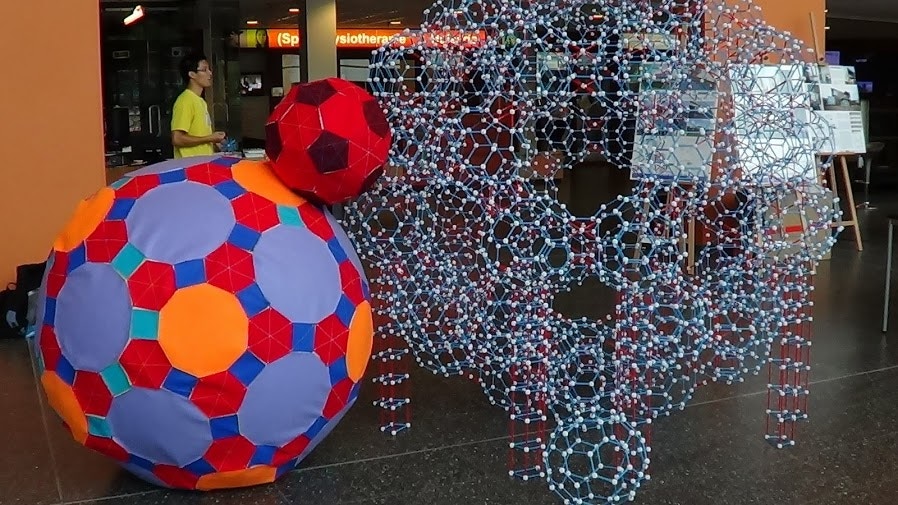
The MoSAIC Festival includes a variety of hands-on workshops, lectures, a mathematical art exhibit, short films and an area for informal exchange. It is designed to be easily accessible to audiences high-school age and up.

MEG/EEG Part 1: Acquisition, Modeling and Localization

Gerald D. Fischbach Auditorium 160 5th Avenue, New York, NY, United States

MEG and EEG Signals and Their Sources: Insights from Physics, Physiology and Anatomy Matti Hamalainen, Massachusetts General Hospital Understanding the biophysics and physiology underlying the generation of detectable extracranial magnetic fields and electric potentials is of prime importance for correct interpretation of magnetoencephalography (MEG) and electroencephalography (EEG) data. Matti Hamalainen will discuss the neural sources of...

Belief Propagation Algorithms with Applications to Cancer Genomics

Gerald D. Fischbach Auditorium 160 5th Avenue, New York, NY, United States

In this talk, Christian Borgs will give an introduction to belief propagation, discuss how the accuracy of belief propagation has been rigorously established, and present recent applications to systems biology.

Topology and Complexity

Topology, the "rubber sheet geometry", studies properties that do not change when objects are pulled and stretched. Accepting somewhat fuzzy input, it is the part of mathematics typically applied when qualitative conclusions are reached. However, it has a quantitative aspect important in understanding singularities, and potentially, high-dimensional noisy data and aspects of large-scale geometry of networks. Prof. Weinberger will discuss a variety of phenomena that arise or are illuminated by tracking of the complexity of geometric constructions.

December 3, 2014: Learning to Move

Basic motor skills such as looking, reaching and walking do not simply appear as the result of maturation. Rather, infants must learn to move. Learning entails discovering new forms of movements to suit the task at hand and using perceptual information to select and modify movements adaptively.

Learning to Move

Gerald D. Fischbach Auditorium 160 5th Avenue, New York, NY, United States

Basic motor skills such as looking, reaching and walking do not simply appear as the result of maturation. Rather, infants must learn to move. Learning entails discovering new forms of movements to suit the task at hand and using perceptual information to select and modify movements adaptively.

Why Prove Theorems?

Since at least the time when it was understood that the circumference of a circle is pi multiplied by its diameter, the applications of mathematics have raced on far ahead of the foundations of the subject itself. By considering a variety of examples, principally from the 19th century, we will explore the tension between mathematics and its applications, and reasons why it remains a valuable and rewarding occupation to develop the necessary framework for existing and “well understood” theories.

MEG/EEG Part 2: Analysis, Application and Interpretation

Gerald D. Fischbach Auditorium 160 5th Avenue, New York, NY, United States

Speakers: Jonathan Simon, University of Maryland Timothy Roberts, Children's Hospital of Philadelphia Jonathan Winawer, New York University   https://vimeo.com/117625451 Signal Analysis Primer and Applications Jonathan Z. Simon, University of Maryland Modern cognitive neuroscientists using electrocorticography (ECoG), MEG and electroencephalography (EEG) are under substantial pressure to use advanced signal processing and analysis techniques, but typically receive...

Non-Archimedean and Tropical Geometry (2015)

February 1-7, 2015   Organizers: Matt Baker, Georgia Institute of Technology Same Payne, Yale University This symposium focused on setting a clear agenda for future developments in the related fields of tropical and nonarchimedean analytic geometry. One of the goals of the meeting was to produce high-quality expository material presenting the methods, results and ambitions...

The Origin of Specificity in Regulated Protein Degradation

One of the characteristic features of life — specificity — emerges in metabolism, information transfer from DNA to protein, embryology, immunology and virtually every other process. Its explanation on the molecular level is thermodynamic stability and structural complementarity. Yet one disturbing issue persists: the protein and nucleic acid sequences coding for that specificity are generally too small to distinguish actual partners from competitors. Similarly, protein degradation conveys specificity through very short sequences. The process is so kinetically complex that bulk kinetic experiments and a few molecular structures are insufficient to explain how specificity is achieved. Using single molecule kinetic measurements, we have deconvolved much of that specificity.

New Directions in Approximations Algorithms (2015)

February 22-28, 2015   Organizers: Sanjeev Arora, Princeton University Uriel Feige, Weizmann Institute Michel Goemans, Massachusetts Institute of Technology David Shmoys, Cornell University This is the second Simons Symposium on Approximation Algorithms for NP-hard problems. The first, in January 2013, focused on core techniques and problems of this field. The upcoming meeting is expected to...

A Dark Matter Hunter’s Guide to the Universe

Gerald D. Fischbach Auditorium 160 5th Avenue, New York, NY, United States

Kathryn Zurek will review evidence for the presence of dark matter in our universe and the need for a new theory to describe the dark matter sector.

Mineral Evolution and Ecology, and the Co-evolution of Life and Rocks

Gerald D. Fischbach Auditorium 160 5th Avenue, New York, NY, United States

In this lecture, Hazen will examine how Earth’s near-surface environment has evolved as a consequence of selective physical, chemical and biological processes — an evolution that is preserved in the mineralogical record.

Quantum Entanglement (2015)

March 15-21, 2015   Organizers: Shamit Kachru, Stanford University Hirosi Ooguri, Caltech Subir Sachdev, Harvard University Since our last symposium, quantum entanglement has become even more important in areas of theoretical physics ranging from condensed matter physics and quantum information to quantum gravity. In quantum gravity, it is playing a key role in elucidating the...

Online Social Systems

People spend hours a day interacting in online settings, ranging from social media sites to a broad range of digital communities designed for work, education and entertainment. Such systems are generally intended to elicit particular activities or forms of engagement, yet we have relatively little understanding of the resulting behaviors or of how system design may contribute to those behaviors. This talk will discuss work that aims to develop models of human behavior in online settings, both to inform system design but also to address fundamental questions in the social sciences.

Geometry Over Nonclosed Fields: Geometry and Arithmetic of Holomorphic Symplectic Varieties (2015)

March 22–28, 2015   Organizing committee: Fedor Bogomolov, Courant Institute of Mathematical Sciences Brendan Hassett, Rice University Yuri Tschinkel, Simons Foundation The second Simons Symposium on Geometry over Nonclosed Fields took place March 22-28. The first symposium in this series focused on rational curves on higher-dimensional algebraic varieties and outlined applications of the theory of...

Light to Life

Gerald D. Fischbach Auditorium 160 5th Avenue, New York, NY, United States

All life on Earth is based on electron transfer reactions far from thermodynamic equilibrium. In this talk, Paul Falkowski will discuss the possibility that photobiochemical reactions of minerals were transformational in the origins and persistence of biologically catalyzed electron transfer reactions on Earth.

Genomics in Single Cells and Microbiomes

Gerald D. Fischbach Auditorium 160 5th Avenue, New York, NY, United States

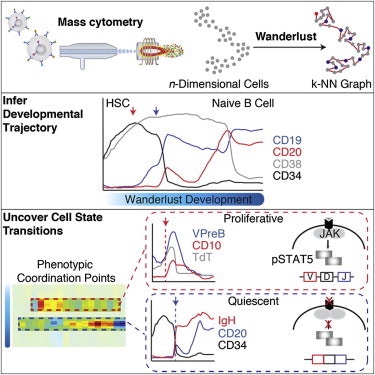
Speakers: Curtis Huttenhower, Aviv Regev, Dana Pe’er, Michael Schatz Curtis Huttenhower High-precision Functional Profiling of Microbial Communities and the Human Microbiome https://vimeo.com/125281142 Aviv Regev Towards a Human Cell Atlas https://vimeo.com/125270869 Dan Pe'er Single Cell Mapping of Developmental Trajectories Underlying Health and Disease https://vimeo.com/125270868 Michael Schatz Algorithms for Single Cell and Single Molecule Biology https://vimeo.com/125281143

Reproducible Research and the Common Task Method

Gerald D. Fischbach Auditorium 160 5th Avenue, New York, NY, United States

In this lecture, Mark Liberman will describe the origins and development of the ‘Common Task’ method in DARPA’s human language technology program, its broader influence on recent research and development practices, and its lessons for the future.

Imaging as Exploration

Gerald D. Fischbach Auditorium 160 5th Avenue, New York, NY, United States

Advanced data generation capabilities require other enhanced abilities — with increasing data size and complexity, the development of more efficient acquisition and analysis methods is essential. In this lecture, Lawrence R. Frank will discuss how this new paradigm of imaging exploration is manifest.

Illuminating Biology at the Nanoscale with Super-Resolution Florescence Microscopy

Stochastic optical reconstruction microscopy (STORM), breaks the diffraction limit on light microscopy by using selective activation of photo-switchable fluorescent probes to temporally separate the spatially overlapping images of individual molecules. This approach has allowed multicolor and 3-D imaging of living cells with nanometer-scale resolution, enabling discoveries of novel sub-cellular structures. In this talk, Prof. Zhuang will discuss her group's development of STORM and its biological applications.

Extra-Solar Planets: Search, Characterization and Population Inferences

Gerald D. Fischbach Auditorium 160 5th Avenue, New York, NY, United States

David W. Hogg will explore how planets are discovered in the Kepler dataset, how the data are understood and how researchers can make inferences about the full population of planets in the galaxy.

Solving the 3-D Puzzle of Rotation Assignment in Single Particle Cryo-Electron Microscopy

Gerald D. Fischbach Auditorium 160 5th Avenue, New York, NY, United States

This lecture will explore algorithms for estimating the unknown pose parameters. The main focus will be on algorithms that are based on semidefinite programming relaxations that can be viewed as extensions to existing approximation algorithms to max-cut and unique games, two fundamental problems in theoretical computer science.


privacy consent banner

Privacy preference

We use cookies to provide you with the best online experience. By clicking "Accept All," you help us understand how our site is used and enhance its performance. You can change your choice at any time here. To learn more, please visit our Privacy Policy.
Advancing Research in Basic Science and MathematicsSubscribe to our newsletters to receive news & updates

privacy consent banner

Privacy preference

We use cookies to provide you with the best online experience. By clicking "Accept All," you help us understand how our site is used and enhance its performance. You can change your choice at any time here. To learn more, please visit our Privacy Policy.