Controlling Quantum Coherence: Toward New Paradigms of Computation
This talk describes experimental progress toward controlling quantum mechanical coherence and entanglement in a solid-state environment.
This talk describes experimental progress toward controlling quantum mechanical coherence and entanglement in a solid-state environment.
Nima Arkani-Hamed's research has shown how the extreme weakness of gravity, relative to other forces of nature, might be explained by the existence of extra dimensions of space, and how the structure of comparatively low-energy physics is constrained within the context of string theory.
Condensed matter physics has evolved greatly in recent years from studying bulk properties of naturally occurring materials to constructing complex materials and systems not found in nature, and to controlling rather than observing quantum mechanics. This dramatic broadening has been accompanied by corresponding advancement in experimental and theoretical tools. Diversification has enriched the subject greatly...
The 2012 Analysis of Boolean Functions workshop focused mainly on application areas in theoretical computer science, including: Hardness of approximation Property testing Pseudorandomness Concrete complexity Computational learning theory The symposium included some traditional talks on recent results, but its aim was also to encourage research through a variety of talk/discussion formats: group exploration of new...
While significant progress has been made on key cosmological questions, many remain unanswered: What happened during the first moments of the big bang? What is dark energy? What were the properties of the first stars?
Classically, arithmetic is the study of rational or integral solutions of diophantine equations and geometry the study of lines and conics. From the modern standpoint, these areas are synthesized in the study of rational and integral points on algebraic varieties over nonclosed fields. A major insight of the 20th century was that the arithmetic properties...
A talk on recent advances in methods and instrumentation that combine genetically encoded molecular sensors, optical imaging and virtual-reality systems to measure neural-circuit dynamics in the mouse brain during virtual navigation and decision making.
Most sensory stimuli in the natural world exhibit strong statistical regularities. A proposed general principle of sensory neuroscience is that the brain’s circuitry is designed to take advantage of these statistical regularities.
In recent years, homological knot invariants have been gaining momentum in both mathematics and physics, and recent developments promise it will only be growing. Therefore, a symposium on “the physics of knot homologies” is very timely. Moreover, this subject is intimately connected with another active area of research at the interface of geometry and physics:...
The mind and brain can be thought of as computational systems — but what kinds of computations do they carry out, and what kinds of mathematics can best characterize these computations? Josh Tenenbaum attempts to answer these questions through the integration of disparate branches of mathematics and paradigms of computation.
The talk describes (dis)similarity distances between pairs of two-dimensional surfaces (embedded in three-dimensional space) that use both local structures and global information in the surfaces.
Organizers: Sanjeev Arora, Uriel Feige, Michel Goemans & David Shmoys Many of the striking advances in theoretical computer science over the past two decades concern approximation algorithms, which compute provably near-optimal solutions to NP-hard optimization problems. Yet the approximability of several fundamental problems such as TSP, Graph Coloring, Graph Partitioning etc. remains an open question. For...
This comprehensive and accessible series features some of today’s most pressing issues. This series will not only inform the public about the connection between math and sustainability but will also encourage progress toward solving some of planet Earth’s fundamental problems and foster communication between science and mathematics educators.
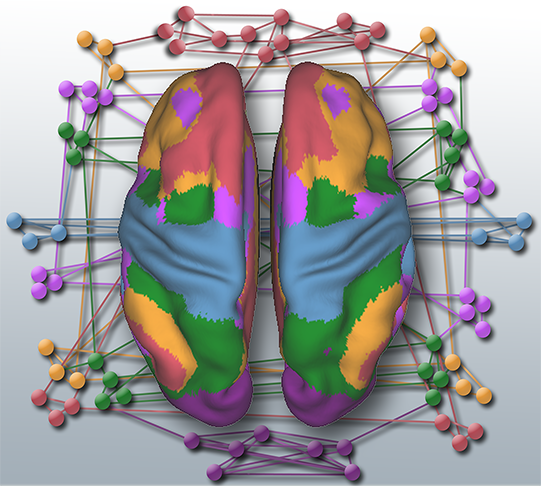
Resting-state functional magnetic resonance imaging (fMRI) has been used to identify consistent functional patterns in neurotypical individuals, as well as changes in neurologic and psychiatric diseases.
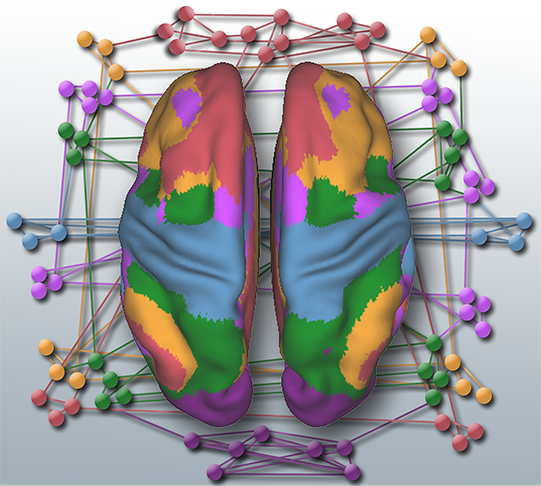
Resting-state functional magnetic resonance imaging (fMRI) has been used to identify consistent functional patterns in neurotypical individuals, as well as changes in neurologic and psychiatric diseases.
February 3-9, 2013 The goal of our meeting will be to explore exotic quantum states of matter, with a particular focus on the role of quantum entanglement. A variety of new tools arising from both the study of quantum field theoretic techniques in condensed matter physics, and from the "holographic" duality between field theories and...
Probability theory was devised in order to understand gambling, but now is the underpinning of statistics, without which we would be clueless in our complex society. Yet probability itself is a mysterious quantity, hard to define, and awkward for our human intuition to cope with. Does it even exist, except in our minds?
February 24-March 2, 2013 Organizers: Alexei Borodin, Jeremy Quastel, Herbert Spohn The Kardar-Parisi-Zhang equation is a nonlinear stochastic partial differential equation widely used in the physics literature as a model of randomly growing interfaces, but until recently very poorly understood from the mathematical point of view. In one dimension, it is a member of a...
Genetics tells us that abnormal synaptic and nuclear proteins are often at the root of major neuropsychiatric disorders. Autism, a prominent and often debilitating disorder of the brain, has been traced to small contributions of hundreds of genes, creating a formidable challenge for those interested in exploring pathophysiology and possible therapeutic interventions.
Some 90 tropical cyclones develop each year. In this lecture, Professor Kerry Emanuel will review the theory of tropical cyclones and how it informs observed variability. He will also discuss how these storms may have important feedbacks on such phenomena as El Niño-Southern Oscillation and global climate change.
Andrei Okounkov presents a talk about the law of large numbers, in its various manifestations. This is a real cornerstone of probability, which states that a random system of a very large size is typically not random: its deterministic state is the one that has the largest probability to occur.
This lecture presented by Brian J. Soden outlines our understanding of the main feedback processes in the climate system and how they impact both the magnitude of future changes in Earth’s climate and the uncertainty in our predictions of these changes.
The mighty water molecule is responsible for much of what we know about climate and climate change, and even more of what we don’t know. In this lecture, Bjorn B. Stevens discusses the molecule’s short sojourn to the atmosphere, during which it helps to create the world as we know it.
The genetics and genomics of autism spectrum disorders have reached a tipping point. The recent focus on de novo mutations has led to systematic, highly productive gene discovery efforts. These have begun to clarify a tremendously heterogeneous allelic architecture as well as specific genes contributing to social disability syndromes. This lecture will review these recent discoveries and address the challenges facing the path forward from reliable gene discovery to an actionable understanding of the molecular pathophysiology of autism spectrum disorders.
The genetics and genomics of autism spectrum disorders have reached a tipping point. The recent focus on de novo mutations has led to systematic, highly productive gene discovery efforts. These have begun to clarify a tremendously heterogeneous allelic architecture as well as specific genes contributing to social disability syndromes. This lecture will review these recent discoveries and address the challenges facing the path forward from reliable gene discovery to an actionable understanding of the molecular pathophysiology of autism spectrum disorders.
Earth’s climate trajectory over the next few decades will be influenced by human-induced climate change and by internally generated variability in the climate system. Clara Deser’s lecture highlights the substantial contribution of internal variability to projected climate trends over North America in the next 50 years.
The mathematical concept of 'holonomy' was gradually developed in the late 19th and early 20th centuries in a number of different contexts, and it was found to lie at the base of many everyday phenomena. Anyone who has ever tried to control the orientation of a 3-dimensional object on a computer screen using a trackball...
Betty Diamond discusses immune-system-mediated alterations in brain development, as part of the Autism: Emerging Concepts lecture series.
Betty Diamond discusses immune-system-mediated alterations in brain development, as part of the Autism: Emerging Concepts lecture series.
How do stem cells retain their remarkable capacity to regenerate tissue? Why are some stem cells, such as those of the skin, so extraordinarily good at making new tissue? And why are other stem cells, such as those of the heart and brain, more limited in their potential? These are some of the many questions that fascinate Rockefeller University’s Rebecca C. Lancefield Professor Elaine Fuchs, Ph.D.
The Simons Foundation’s Mathematics and Physical Sciences department is pleased to host Foliation Theory in Algebraic Geometry, a five-day symposium intended to foster communication and interaction between experts in the fields of holomorphic foliation theory and higher dimensional algebraic geometry.
In this talk, Terry Hwa will explore the opportunities that exist at this new frontier using several examples at the molecular, cellular and population levels.
In this talk, Terry Hwa will explore the opportunities that exist at this new frontier using several examples at the molecular, cellular and population levels.
In this talk, Terry Hwa will explore the opportunities that exist at this new frontier using several examples at the molecular, cellular and population levels.
As the gateway to human communication, the sense of hearing is of enormous importance in our lives. Research on hearing has recently been revolutionized by the demonstration that the ear is not simply a passive receiver for sound, but also an amplifier that augments, filters, and compresses its inputs.
The first Neuroimaging Symposium focuses on diffusion tensor imaging — a magnetic resonance imaging technique used to study brain tissue design, especially white tracts, in both normal and diseased states.
This lecture has already taken place. To view slides from the lecture, visit the lecture page.
The first Neuroimaging Symposium focuses on diffusion tensor imaging — a magnetic resonance imaging technique used to study brain tissue design, especially white tracts, in both normal and diseased states.
Tremendous progress has been made in our understanding of autism, with major contributions coming from a variety of research fields, including genetics, neuroscience and psychology. Other changes afoot include a revamping of the clinical definition of autism in the fifth edition of the Diagnostic and Statistical Manual of Mental Disorders. Such evolutions in conceptual views of autism in turn affect the future of autism research, and the development of interventions.
Tremendous progress has been made in our understanding of autism, with major contributions coming from a variety of research fields, including genetics, neuroscience and psychology. Other changes afoot include a revamping of the clinical definition of autism in the fifth edition of the Diagnostic and Statistical Manual of Mental Disorders. Such evolutions in conceptual views of autism in turn affect the future of autism research, and the development of interventions.
Deligne, of the Institute for Advanced Study in Princeton, New Jersey, has long been a leader in mathematics innovation and exploration. This year, the Norwegian Academy of Science and Letters recognized his pioneering contributions to algebraic geometry by awarding him the Abel Prize.
In this talk, Ila Fiete will argue that it is time to develop and apply information-theoretic principles specific to coding in the noisy brain.
In this talk, Ila Fiete will argue that it is time to develop and apply information-theoretic principles specific to coding in the noisy brain.
In this talk, Ila Fiete will argue that it is time to develop and apply information-theoretic principles specific to coding in the noisy brain.
The inaugural Annual Meeting was an opportunity for awardees to get to know each other and their work.
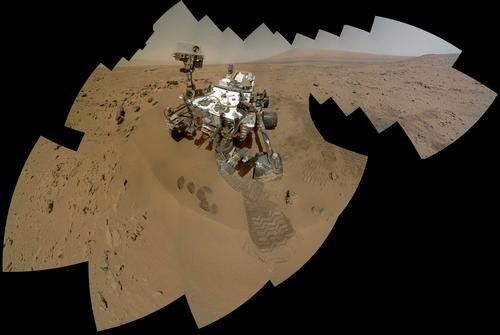
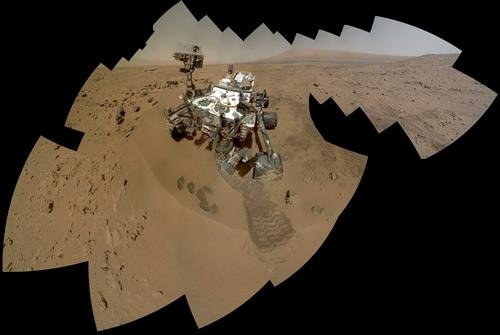
In this talk, Roger E. Summons outlines approaches to seeking evidence of life in Earth’s oldest sedimentary rocks and shows, by analogy, how the Mars Science Laboratory mission is designed to investigate Mars’ capacity for supporting a biosphere.
No one knows when life first colonized planet Earth, nor if or when Mars ever supported life. We see numerous, unequivocal lines of evidence for life on Earth from some 3.5 billion years ago to the present day. But the further back in time we look, the more clues about our earliest ancestors are clouded by doubts, uncertainties and controversies.
No one knows when life first colonized planet Earth, nor if or when Mars ever supported life. We see numerous, unequivocal lines of evidence for life on Earth from some 3.5 billion years ago to the present day. But the further back in time we look, the more clues about our earliest ancestors are clouded by doubts, uncertainties and controversies.
In this talk, Mike Shelley discusses problems in fluid-structure interaction ranging from the macroscopic, i.e. flapping of flags and bending of tree leaves, to the micro – collective behaviors of micro-organisms and the transport of subcellular structures.
Autism and epilepsy are often comorbid disorders with overlapping epidemiology, genetics, clinical features, neuroanatomic abnormalities and neurophysiological mechanisms. Defining the genetics and clinical features of individuals with comorbid autism and epilepsy is ongoing, and development of genotype-phenotype correlations has just begun. Understanding shared and distinct mechanisms underlying autism and epilepsy is likely to improve prognosis, therapy and prevention.
Autism and epilepsy are often comorbid disorders with overlapping epidemiology, genetics, clinical features, neuroanatomic abnormalities and neurophysiological mechanisms. Defining the genetics and clinical features of individuals with comorbid autism and epilepsy is ongoing, and development of genotype-phenotype correlations has just begun. Understanding shared and distinct mechanisms underlying autism and epilepsy is likely to improve prognosis, therapy and prevention.
On November 1, 2013, the Simons Foundation hosted the sixth annual New York Computer Science and Economics (NYCE) day.
Burgeoning evidence shows that in typical development, the ability to structure actions according to intentions emerges during infancy. And recent evidence reveals that infancy is a period of rapid change and development in this ability. Early social knowledge depends critically on infants’ active engagement with the physical and social world.
Burgeoning evidence shows that in typical development, the ability to structure actions according to intentions emerges during infancy. And recent evidence reveals that infancy is a period of rapid change and development in this ability. Early social knowledge depends critically on infants’ active engagement with the physical and social world.
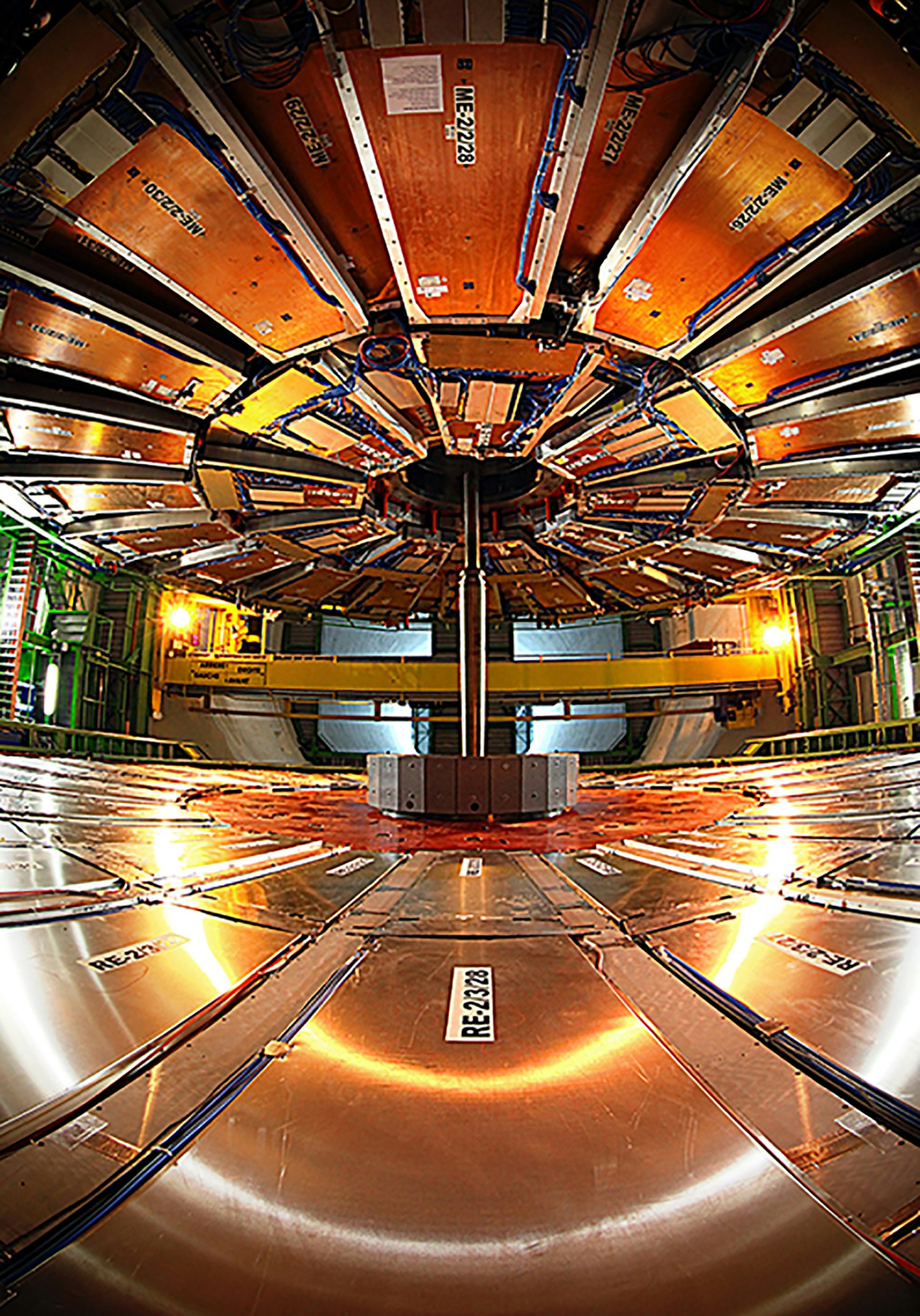
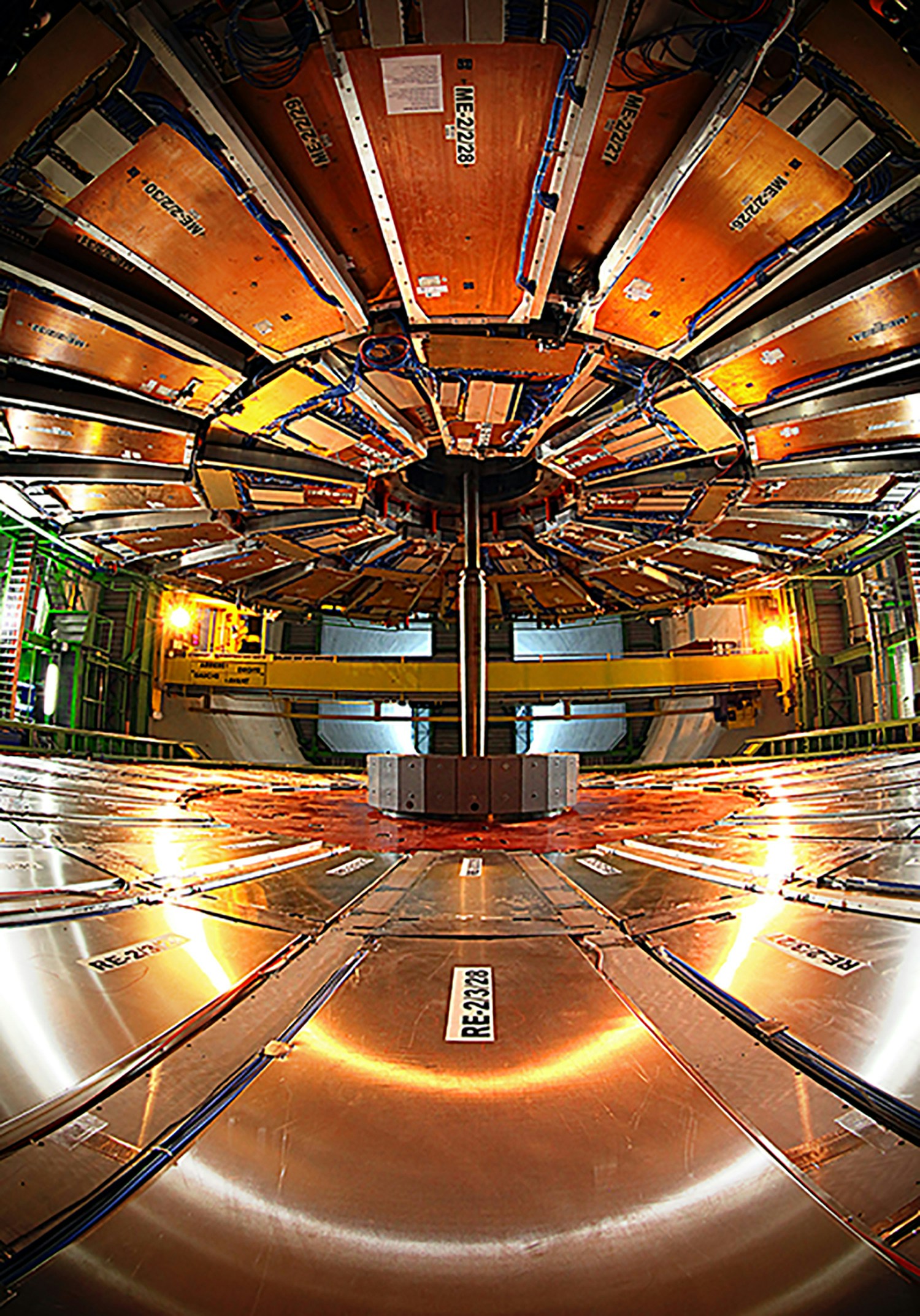
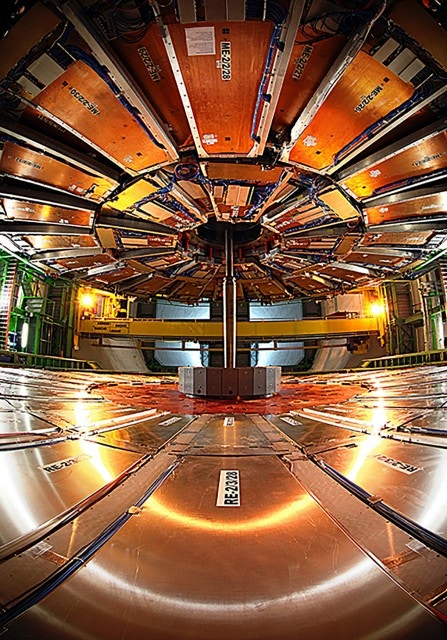
The Large Hadron Collider (LHC) at the European Organization for Nuclear Research (CERN) near Geneva, Switzerland has performed spectacularly well in its first major running period: from December 2009 through February 2013. Data of unprecedented quality and quantity have been recorded for proton-proton collisions at energies of 7 and 8 trillion electron volts — the highest energies ever obtained.
In this talk, Joe Incandela will present an overview of the LHC physics program, including highlights from the discovery of a Higgs boson and a summary of more recent studies that incorporate more data. He will briefly discuss expectations for future results in years to come.
In this talk, Joe Incandela will present an overview of the LHC physics program, including highlights from the discovery of a Higgs boson and a summary of more recent studies that incorporate more data. He will briefly discuss expectations for future results in years to come.
This Biotech Symposium will focus on computational methods for detecting structural variants, which include large chromosomal insertions, deletions, inversions and translocations.
This Biotech Symposium will focus on computational methods for detecting structural variants, which include large chromosomal insertions, deletions, inversions and translocations.
This Biotech Symposium will focus on computational methods for detecting structural variants, which include large chromosomal insertions, deletions, inversions and translocations.
Thought experiments have played an important role in figuring out the laws of physics. For the unification of quantum mechanics and gravity, where the phenomena take place in extreme regimes, they are even more crucial. Hawking’s 1976 paper “Breakdown of Predictability in Gravitational Collapse” presented one of the great thought experiments in the history of physics, arguing that black holes destroy information in a way that requires a modification of the laws of quantum mechanics. Skeptics for years failed to poke holes in Hawking’s argument, but concluded that if quantum mechanics is to be saved then our understanding of spacetime must break down in a radical way.
L. Mahadevan will explain how a combination of biological and physical experiments, together with mathematical models and computations, begin to unravel the physical basis for morphogenesis. He will go on to explore how these pan-disciplinary problems enrich the origins of this topic, creating new questions in mathematics, physics and biology.
L. Mahadevan will explain how a combination of biological and physical experiments, together with mathematical models and computations, begin to unravel the physical basis for morphogenesis. He will go on to explore how these pan-disciplinary problems enrich the origins of this topic, creating new questions in mathematics, physics and biology.
L. Mahadevan will explain how a combination of biological and physical experiments, together with mathematical models and computations, begin to unravel the physical basis for morphogenesis. He will go on to explore how these pan-disciplinary problems enrich the origins of this topic, creating new questions in mathematics, physics and biology.
In biological systems, there are striking examples where complicated structures (i.e., the bacterial ribosome) can spontaneously assemble, driven by specific interactions between the components. But how can systems be designed to have this property? Recent technological advances have created the opportunity for making technologically relevant systems that self assemble, using strands of DNA or objects coated with DNA. We will use these systems as inspiration to formulate theoretical models to understand how self assembly works in these systems, through theory, numerical simulation and experiment — and start to speculate as to whether resulting principles might be useful for unravelling the rules of biological self-assembly.
January 26 – February 1, 2014 Organizers: Werner Mueller, University of Bonn Sug Woo Shin, Massachussets Institute of Technology Nicolas Templier, Princeton University The Simons Symposium on Families of Automorphic Forms and the Trace Formula provided an opportunity for researchers to study families of automorphic representations of higher rank groups. During the symposium participants investigated...