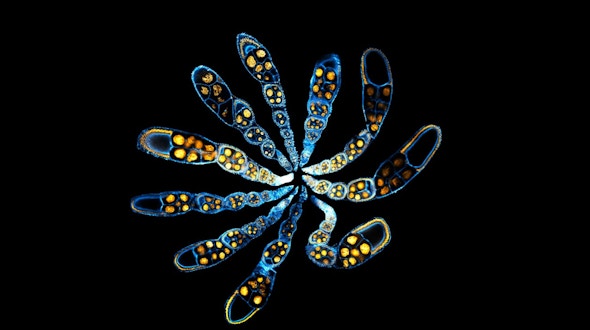
The Developmental Dynamics group combines experiments, theory and computing to elucidate the contributions of encoded genomic instructions and self-organizing physical mechanisms to embryonic development.
Our theoretical and computational work is designed to integrate and abstract rapidly accumulating heterogeneous datasets, to propose critical tests of multiscale regulatory mechanisms, and to guide our own genetic and imaging experiments. Our research is organized around three main themes: the mechanistic modeling of pattern formation and morphogenesis; the synthesis and decomposition of developmental trajectories; and the modeling of human developmental defects. Current projects focus on small cell clusters (motivated by our work on early embryos and animal germline development), graph dynamics in rearranging cell networks (motivated by problems of epithelial morphogenesis), and the effects of activating mutations in signaling enzymes (motivated by our work on a large class of human developmental abnormalities).
Developmental Dynamics Lab