Archives: Events Archives: Events

Views Navigation

Event Views Navigation

Today

Tuberous Sclerosis: Shedding Light on the Neural Circuitry of Autism

Gerald D. Fischbach Auditorium 160 5th Avenue, New York, NY, United States

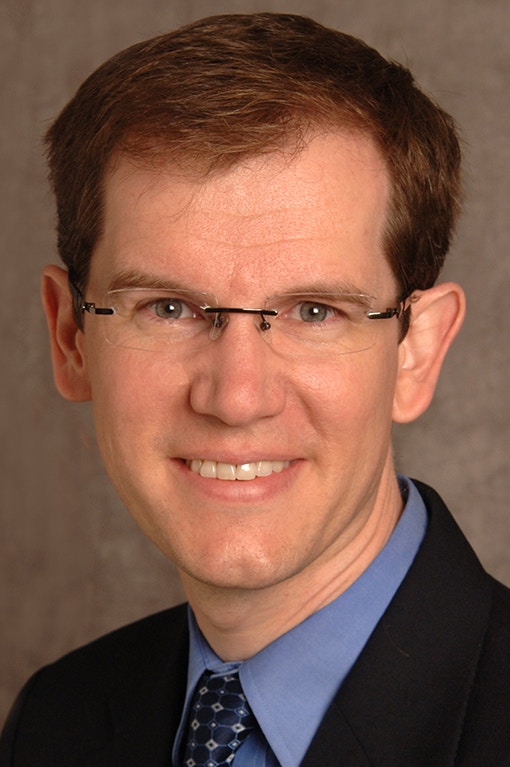
Genetic disorders with high penetrance of autism symptoms provide an opportunity to investigate the cellular and circuitry abnormalities underlying autism spectrum disorder. Mustafa Sahin studies the basis of Tuberous Sclerosis Complex (TSC) in cell culture, in animal models and in the clinic and will present an update on translational research in TSC.
2016 MPS Annual Meeting

Download the meeting booklet for agenda, abstracts and other annual meeting details: The 2016 annual MPS meeting took place October 20–21. It featured exciting talks about research at the frontiers of math, physics and theoretical computer science, as well as lively discussions among the heterogeneous crowd of attending scientists. The keynote speaker, Mina Aganagic, talked...

Curiosity’s Search for Ancient Habitable Environments at Gale Crater, Mars

Gerald D. Fischbach Auditorium 160 5th Avenue, New York, NY, United States

The Mars Science Laboratory rover, Curiosity, was built to search for and explore habitable environments. In this lecture, John Grotzinger will review Curiosity’s latest discoveries and describe the biological viability of ancient environments on Mars, along with the value of robots in geologic exploration.

Solar Convection

Gerald D. Fischbach Auditorium 160 5th Avenue, New York, NY, United States

Katepalli Sreenivasan will describe what is known about the convective phenomena in the sun, using results from basic turbulence modeling, numerical simulations, as well as helioseismology.

How Immune Cells Help Wire the Brain: Implications for Autism and Psychiatric Illness

Gerald D. Fischbach Auditorium 160 5th Avenue, New York, NY, United States

In this lecture, Dr. Beth Stevens will discuss recent work that implicates brain immune cells, called microglia, in sculpting of synaptic connections during development and their relevance to autism, schizophrenia and other brain disorders.

Randomness

Gerald D. Fischbach Auditorium 160 5th Avenue, New York, NY, United States

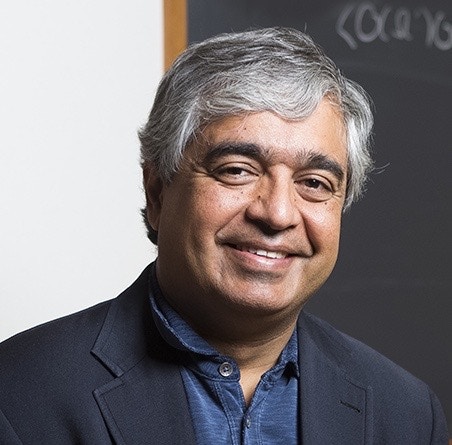
Humanity has pondered the meaning and utility of randomness for millennia. A computational theory of randomness, developed in the past three decades, reveals (perhaps counterintuitively) that very little is lost in such deterministic or weakly random worlds. In this talk, Avi Wigderson will explain the main ideas and results of this theory.

Nanotechnology for Massively-Parallel, Multi-Physical Interrogation of Brain Activity

Gerald D. Fischbach Auditorium 160 5th Avenue, New York, NY, United States

We are still far from elucidating how complex assemblies of neurons — that is, brain circuits — interact to process information. In this lecture, Michael Roukes will outline the immense complexity of such pursuits and describe efforts toward developing new tools for massively multiplexed, multi-physical interrogation of brain activity.

From Covert Consciousness to Human Rights: Neuroethics and the Neuroscience of Disorders of Consciousness

Gerald D. Fischbach Auditorium 160 5th Avenue, New York, NY, United States

Dr. Joseph J. Fins will address how our evolving knowledge of disorders of consciousness has created an ethical imperative for a population often misdiagnosed, neglected and segregated from society. Meeting the needs of conscious individuals often mistakenly diagnosed as permanently unconscious is an emerging civil rights issue and challenge for basic and clinical neuroscience.

It from Qubit 2016 Annual Meeting

Gerald D. Fischbach Auditorium 160 5th Ave, New York, NY, United States

Thursday, December 8th – Friday, December 9th 2016Simons Foundation Gerald D. Fischbach Auditorium New York, New York Mark van Raamsdonk Nonlinear Gravity from Entanglement Download slides (PDF) https://vimeo.com/206297549   Horacio Casini Irreversibility of RG flows from Relative Entropy Download slides (PDF) https://vimeo.com/206297336   Matt Headrick Covariant Bit Threads: Progress Report Download slides (PDF) https://vimeo.com/206297755  ...

Geometry, Topology and Physics

Gerald D. Fischbach Auditorium 160 5th Avenue, New York, NY, United States

This talk will introduce an overview of some of the most important concepts and ideas from geometry and topology and then describe the recent interplay between these mathematical subjects and high energy theoretical physics, interactions that have been of a fundamentally different nature from earlier ones.

Quantum Entanglement, Strange Metals and Black Holes

Gerald D. Fischbach Auditorium 160 5th Avenue, New York, NY, United States

In this lecture, Subir Sachdev will present a simple model of many-particle entanglement, which has led to new insights into two very different classes of systems.

Simons Collaboration on the Many Electron Problem Annual Meeting 2017

Gerald D. Fischbach Auditorium 160 5th Ave, New York, NY, United States

Note: Videos for the Dominika Zgid's "Quantum Embedding Beyond DMFT" and Guifre Vidal's "Continuous Tensor Networks: Recent Results and a Route Map" are unfortunately unavailable due to a file storage error.

Exploiting Genetics to Identify Environmental Risks for Autism

Gerald D. Fischbach Auditorium 160 5th Avenue, New York, NY, United States

In this lecture, Mark Zylka will describe how candidate environmental risk factors for autism can be identified rationally, by pinpointing chemicals that interfere with the same molecular pathways that are affected in individuals with autism. His research focuses on identifying environmental-use chemicals that target autism-linked molecular pathways, using environmental sampling data to assess the exposure threat to people, and validating risk potential in animal models.

Atomic Clocks and Quantum Physics

Gerald D. Fischbach Auditorium 160 5th Avenue, New York, NY, United States

New abilities with laser light have enabled us to create and probe atomic gases at ultralow temperatures, forming the basis of atomic clocks accurate to 18 decimal places. This talk will discuss the history of such advanced clocks and how they are used to test fundamental laws of nature, search for new physics and create a range of technologies.

Simons Collaboration on Cracking the Glass Problem First Annual Meeting

Gerald D. Fischbach Auditorium 160 5th Ave, New York, NY, United States

Thursday, March 9th – Friday, March 10th 2017 Simons Foundation Gerald D. Fischbach Auditorium New York, New York Simons Collaboration on Cracking the Glass Problem homepage Agenda Thursday, March 9 8:00 AM CHECK-IN & BREAKFAST 9:00 AM S. Nagel: State of the Collaboration 9:30 AM G. Tarjus: In Search of Length Scales Characterizing Glass Formation...


privacy consent banner

Privacy preference

We use cookies to provide you with the best online experience. By clicking "Accept All," you help us understand how our site is used and enhance its performance. You can change your choice at any time here. To learn more, please visit our Privacy Policy.
Advancing Research in Basic Science and MathematicsSubscribe to our newsletters to receive news & updates

privacy consent banner

Privacy preference

We use cookies to provide you with the best online experience. By clicking "Accept All," you help us understand how our site is used and enhance its performance. You can change your choice at any time here. To learn more, please visit our Privacy Policy.