Human Neurodegenerative Disease: Insight from Drosophila
The Bonini laboratory focuses on applying the extraordinary power of a very simple model organism — the fruit fly Drosophila — to the complex problem of human neurodegenerative disease.
The Bonini laboratory focuses on applying the extraordinary power of a very simple model organism — the fruit fly Drosophila — to the complex problem of human neurodegenerative disease.
In this lecture, Michael Oppenheimer will describe the physical mechanisms causing observed increases in sea level.
In this lecture, Sonya Dyhrman will focus on photosynthetic microbes called phytoplankton, highlighting the critical and beneficial roles that phytoplankton play in marine systems.
In this lecture, Alfred V. Aho will discuss the role that software plays in the modern world.
David W. Hogg will explore how planets are discovered in the Kepler dataset, how the data are understood and how researchers can make inferences about the full population of planets in the galaxy.
This lecture will explore algorithms for estimating the unknown pose parameters. The main focus will be on algorithms that are based on semidefinite programming relaxations that can be viewed as extensions to existing approximation algorithms to max-cut and unique games, two fundamental problems in theoretical computer science.
Everything around us — everything each of us has ever experienced and virtually everything underpinning our technological society and economy — is governed by quantum mechanics. Yet this most fundamental physical theory of nature often feels like a set of somewhat eerie and counterintuitive ideas of no direct relevance to our lives. Why is this? One reason is that we cannot perceive the strangeness (and astonishing beauty) of the quantum mechanical phenomena all around us by using our own senses.
Recent studies have implicated adult-born hippocampal neurons in pattern separation, a process by which similar experiences or events are transformed into discrete non-overlapping representations. Impaired pattern separation, Dr. Hen proposes, underlies the overgeneralization often seen in age-related memory impairments and in anxiety disorders. Dr. Hen will present evidence that strategies aimed at stimulating hippocampal neurogenesis result in improved pattern separation.
This lecture explores the biological bases of critical periods in brain development. Mechanisms that open and close windows of plasticity (E/I balance and molecular brakes, respectively) are implicated in autism, suggesting mistimed maturational processes that can be strategically rescued at the circuit level.
In this lecture, Yael Niv will argue that the key to learning efficiently in real-world scenarios is to use a simplified representation of the task that includes only those dimensions of the environment that are relevant to obtaining reward.
Thursday, October 22nd – Friday, October 23rd, 2015 Download the 2015 Annual Meeting booklet (PDF). The Mathematics and Physical Sciences Annual Meeting gathered together Simons Investigators, Simons Fellows, Simons Society of Fellows and Math + X Chairs and Investigators to exchange ideas through lectures and informal discussions in a scientifically stimulating environment. Agenda Thursday, October...
In this lecture, Catherine Dulac will discuss the cellular and molecular architecture of neural circuits underlying instinctive social behaviors of mice. She will describe her group’s recent advances in uncovering the identity of sensory neurons that detect social cues and the identity of command circuits associated with specific social responses in male and female mice.
This Biotech Symposium will focus on clinical and translational genomics and the shift to precision medicine.
The study of genes and social behavior is still a young field. In this lecture, Gene E. Robinson will discuss some of the first insights to emerge that describe the relationship between them. These include the surprisingly close relationship between brain gene expression and specific behavioral states; social regulation of brain gene expression; control of social behavior by context-dependent rewiring of brain transcriptional regulatory networks; and evolutionarily conserved genetic toolkits for social behavior that span insects, fish and mammals.
In this lecture, David S. Mandell will talk about why autism interventions rarely are implemented in community practice and why they fail to achieve the same outcomes as those observed in clinical trials.
Prime numbers have intrigued mathematicians, amateur and professional alike, for thousands of years. Some of the most pertinent questions today probably stem from classical times. In this lecture, Dr. Granville will discuss some well-known patterns in the primes and explain some of the latest progress.
The theory of strings started as an attempt to describe the forces holding quarks together. Important remnants of that idea survive in the form of the flux tubes of quantum chromodynamics and their description as “strings” in the gauge-string duality. Applications to quark-gluon plasmas have yielded some of the most quantitative comparisons of string theory with experimental data. For example,...
In this lecture, Dr. Holger Müller will explain recent experimental searches for certain models of dark energy. How can it be that dark energy, which is supposedly ubiquitous in the cosmos, has never been observed in experiments?
In this lecture, Gordon Fishell will describe his investigations of the developmental and genetic origins of interneuron development.
In this lecture, Brian Keating will discuss the search for the polarization of the cosmic microwave background and measurements by the POLARBEAR telescope, which pave the way for the upcoming Simons Array.
In this lecture, Andrew Marks will present new data on the high-resolution structure of the mammalian RyR1/intracellular calcium-release channel obtained using cryogenic electron-microscopy.
In this lecture, Gerald Rubin will discuss efforts to develop and apply the tools that will be required for a comprehensive analysis of the anatomy and function of the fly brain at the level of individual cell types and circuits, using examples from his lab’s recent work on visual perception, as well as the mechanisms of learning and memory.
In this lecture, F. DuBois Bowman will discuss how he and his colleagues are working to identify functional or anatomical properties of the brain that reliably distinguish individuals with Parkinson's disease from healthy controls.
In this lecture, Juna Kollmeier will take you on a cosmic journey, starting with the infant universe and explain the current thinking about how “structure” emerges from this humble start.
In this lecture, Dr. Gloria Coruzzi will focus on time — building predictive network models based on time-series transcriptome data, and perturbing transcription networks in time.
This talk will outline the current state of genetics research in autism, highlight some of the key findings that remain to be discovered, and consider how these findings could ultimately benefit individuals with autism and their families.
In this lecture, Catherine Monk will describe her lab’s studies on women in the perinatal period and fetal and infant neurobehavioral development.
April 3-9, 2016 Organizers: Krzysztof Oleskiewicz, University of Warsaw Elchanan Mossel, University of Pennsylvania Ryan O’Donnell, Carnegie Mellon University Related Links: Discrete Analysis: Beyond the Boolean Cube (2014) Analysis of Boolean Functions: New Directions and Applications (2012) Analysis of Boolean Functions Blog This third symposium for Analysis of Boolean Functions focused on "New Analytic...
April 10-16, 2016 Organizers: Werner Mueller, Mathematisches Institut der Universität Bonn Sug Woo Shin, UC Berkeley Nicolas Templier, Cornell University Related Links: Geometric Aspects of the Trace Formula (external site) 2014 Simons Symposium on Families of Automorphic Forms and the Trace Formula The second gathering of the Simons Symposium on the Trace Formula paved...
In this talk, Robert Kirshner will show how we discovered cosmic acceleration and present evidence that we live in a universe that is only 4 percent ordinary matter, with the balance being dark matter and dark energy.
April 17-23, 2016 Organizers: Fedor Bogomolov, Courant Institute of Mathematical Sciences Brendan Hassett, Brown University Yuri Tschinkel, Simons Foundation Related Links: 2012 Simons Symposium on Geometry Over Nonclosed Fields 2015 Simons Symposium on Geometry Over Nonclosed Fields The focus of this third symposium on Geometry Over Nonclosed Fields was zero-cycles and related Chow-theoretic and...
In this lecture, Alexei Borodin will illustrate how these two concepts work together in examples from random matrices to random interface growth.
Christopher Walsh will review recent work on ‘somatic mutations’ — de novo mutations that are present in some brain cells but not in all cells of the body — in several neurological conditions associated with intellectual disability and seizures.
In this lecture, Thomas Schulthess will show how recent developments in architecture have moved us away from traditional abstractions, forcing software development and mathematical algorithms to acknowledge the physical reality of computing systems.
A canonical task in machine learning is to fit a model to a dataset. Sanjeev Arora will describe models fitted to real-life datasets, which display randomlike properties that can offer insights into the algorithms used for the task.
In this lecture, Eric Betzig will describe advanced optical tools being developed to help scientists delve deeper into the complexity of biological systems.
Image credit: NASA's Goddard Space Flight Center / S. Wiessinger Thursday, June 23 — Friday, June 24, 2016 Simons Foundation Gerald D. Fischbach Auditorium 160 Fifth Avenue New York, New York Saturday, June 25, 2016 Columbia University Pupin Hall 538 W. 120th Street New York, New York On June 23 and 24, 2016, about 60...
Dr. Ruth O’Hara will present on the field’s current understanding of sleep in autism spectrum disorder.
Next-generation sequencing has the power to decode DNA in a matter of hours, but doctors still diagnose infections using methods developed decades ago. This lecture will describe how scientists are using the latest sequencing technology in combination with new, very fast algorithms to sequence a complex mixture of DNA from a sick patient and, in some cases, identify the causative agent of an infection.
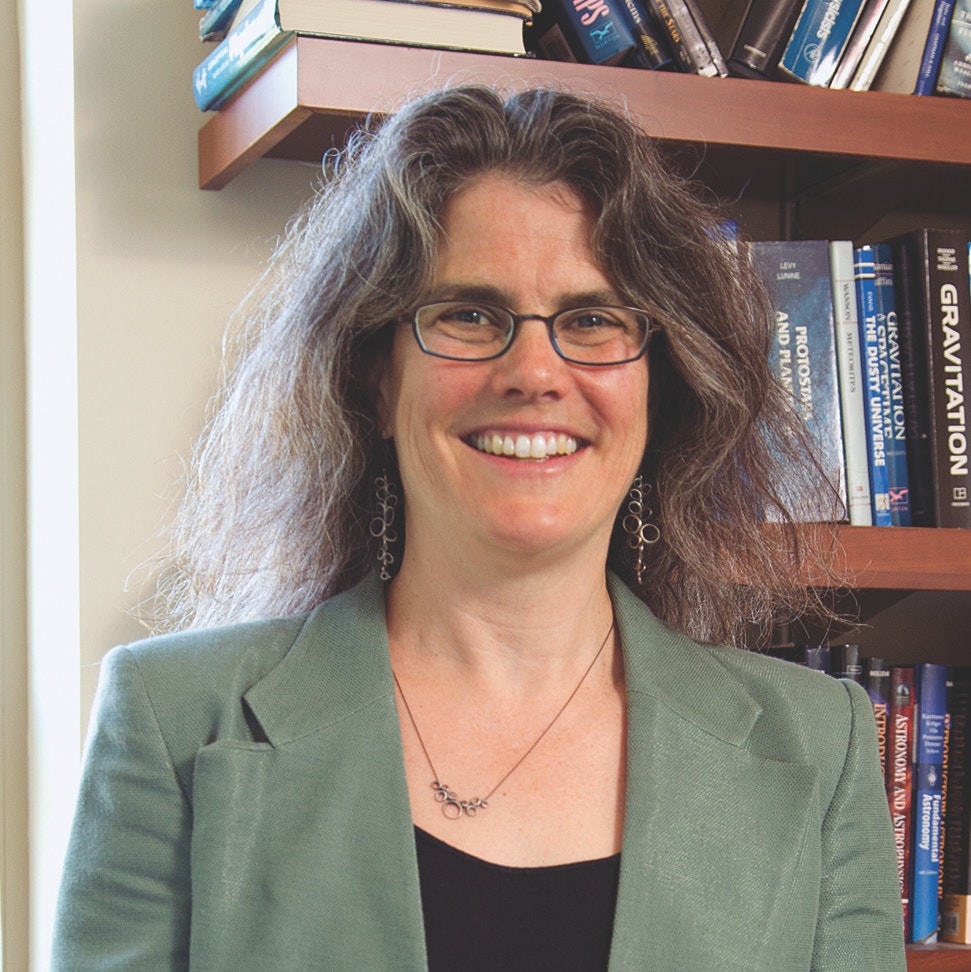
In this lecture, Dr. Andrea Ghez will discuss the latest developments in the study of black holes, specifically how the environment around the black hole at the center of the Milky Way is quite different than astronomers expected. She will also describe how studying the orbits of stars at the galactic center could improve our understanding of gravity.
Genetic disorders with high penetrance of autism symptoms provide an opportunity to investigate the cellular and circuitry abnormalities underlying autism spectrum disorder. Mustafa Sahin studies the basis of Tuberous Sclerosis Complex (TSC) in cell culture, in animal models and in the clinic and will present an update on translational research in TSC.
Download the meeting booklet for agenda, abstracts and other annual meeting details: The 2016 annual MPS meeting took place October 20–21. It featured exciting talks about research at the frontiers of math, physics and theoretical computer science, as well as lively discussions among the heterogeneous crowd of attending scientists. The keynote speaker, Mina Aganagic, talked...
The Mars Science Laboratory rover, Curiosity, was built to search for and explore habitable environments. In this lecture, John Grotzinger will review Curiosity’s latest discoveries and describe the biological viability of ancient environments on Mars, along with the value of robots in geologic exploration.
Katepalli Sreenivasan will describe what is known about the convective phenomena in the sun, using results from basic turbulence modeling, numerical simulations, as well as helioseismology.
In this lecture, Dr. Beth Stevens will discuss recent work that implicates brain immune cells, called microglia, in sculpting of synaptic connections during development and their relevance to autism, schizophrenia and other brain disorders.
Humanity has pondered the meaning and utility of randomness for millennia. A computational theory of randomness, developed in the past three decades, reveals (perhaps counterintuitively) that very little is lost in such deterministic or weakly random worlds. In this talk, Avi Wigderson will explain the main ideas and results of this theory.
We are still far from elucidating how complex assemblies of neurons — that is, brain circuits — interact to process information. In this lecture, Michael Roukes will outline the immense complexity of such pursuits and describe efforts toward developing new tools for massively multiplexed, multi-physical interrogation of brain activity.