Archives: Events Archives: Events

Views Navigation

Event Views Navigation

Today

The Power and Weakness of Randomness (When You are Short on Time)

Man has grappled with the meaning and utility of randomness for centuries. This talk describes two main aspects of the research on randomness with respect to the theory of computation, demonstrating respectively its power and weakness for making algorithms faster.
Strategic Behavior and the Science of Social Networks

The modern ability to carefully measure large-scale social networks has driven new empirical studies and theoretical models of growth, dynamics, influence, and collective behavior in such systems.

Normalization as a Canonical Neural Computation

This talk presents the normalization model of neural computation and elaborates the hypothesis that dysfunctions of normalization may be associated with schizophrenia, amblyopia, epilepsy, and autism spectrum disorders.

The Missing Circuits: Studying Entire Brains

Fundamental gaps remain in our understanding of animal brains, especially human brains, in comparison with other organ systems in the body. One of these gaps is our very partial knowledge of the circuit architecture of brains, even in the best studied model organisms.

The Regulation of Fidelity in the Transmission of Genetic Information from Parent to Offspring

The evolution of organisms requires the generation of some diversity in the offspring and then the selection of the fittest in the present environment from among this diversity in the population. The rates of evolution can be influenced by mutation rates that are in turn influenced by a wide variety of stresses that can occur as sperm or eggs are produced or even as the organism develops.

Beautiful Thoughts from Ugly Neurons

This talk is based on mathematical and computational studies of neural network models. Understanding the range of dynamic phenomena in such models provides a basis for thinking about the more complex dynamics of real neural circuits.

Quantum Mechanics and Space-Time in the 21st Century

Nima Arkani-Hamed's research has shown how the extreme weakness of gravity, relative to other forces of nature, might be explained by the existence of extra dimensions of space, and how the structure of comparatively low-energy physics is constrained within the context of string theory.

Quantum Physics Beyond Simple Systems: Complex Dynamics, Decoherence, Topology and Information (2012)

Condensed matter physics has evolved greatly in recent years from studying bulk properties of naturally occurring materials to constructing complex materials and systems not found in nature, and to controlling rather than observing quantum mechanics. This dramatic broadening has been accompanied by corresponding advancement in experimental and theoretical tools. Diversification has enriched the subject greatly...

Analysis of Boolean Functions: New Directions and Applications (2012)

The 2012 Analysis of Boolean Functions workshop focused mainly on application areas in theoretical computer science, including: Hardness of approximation Property testing Pseudorandomness Concrete complexity Computational learning theory The symposium included some traditional talks on recent results, but its aim was also to encourage research through a variety of talk/discussion formats: group exploration of new...

Taking the Universe’s Baby Picture

While significant progress has been made on key cosmological questions, many remain unanswered: What happened during the first moments of the big bang? What is dark energy? What were the properties of the first stars?

Geometry Over Non-Closed Fields (2012)

Classically, arithmetic is the study of rational or integral solutions of diophantine equations and geometry the study of lines and conics. From the modern standpoint, these areas are synthesized in the study of rational and integral points on algebraic varieties over nonclosed fields. A major insight of the 20th century was that the arithmetic properties...

New Technologies for Measuring Neural Circuit Dynamics

A talk on recent advances in methods and instrumentation that combine genetically encoded molecular sensors, optical imaging and virtual-reality systems to measure neural-circuit dynamics in the mouse brain during virtual navigation and decision making.

Knot Homologies and BPS States (2012)

In recent years, homological knot invariants have been gaining momentum in both mathematics and physics, and recent developments promise it will only be growing. Therefore, a symposium on “the physics of knot homologies” is very timely. Moreover, this subject is intimately connected with another active area of research at the interface of geometry and physics:...

The Mathematics of Mind and Brain

The mind and brain can be thought of as computational systems — but what kinds of computations do they carry out, and what kinds of mathematics can best characterize these computations? Josh Tenenbaum attempts to answer these questions through the integration of disparate branches of mathematics and paradigms of computation.

Animation, Teeth and Skeletons

The talk describes (dis)similarity distances between pairs of two-dimensional surfaces (embedded in three-dimensional space) that use both local structures and global information in the surfaces.

New Directions in Approximation Algorithms (2013)

Organizers: Sanjeev Arora, Uriel Feige, Michel Goemans & David Shmoys Many of the striking advances in theoretical computer science over the past two decades concern
 approximation algorithms, which compute provably near-optimal solutions to NP-hard optimization problems.
 Yet the approximability of several fundamental problems such as TSP, Graph Coloring, Graph Partitioning etc.
remains an open question. For...

Mathematics of Planet Earth 2013 Simons Public Lecture Series

Gerald D. Fischbach Auditorium 160 5th Avenue, New York, NY, United States

This comprehensive and accessible series features some of today’s most pressing issues. This series will not only inform the public about the connection between math and sustainability but will also encourage progress toward solving some of planet Earth’s fundamental problems and foster communication between science and mathematics educators.

January 31, 2013: Resting State fMRI

Resting-state functional magnetic resonance imaging (fMRI) has been used to identify consistent functional patterns in neurotypical individuals, as well as changes in neurologic and psychiatric diseases.

Resting State fMRI

Gerald D. Fischbach Auditorium 160 5th Avenue, New York, NY, United States

Resting-state functional magnetic resonance imaging (fMRI) has been used to identify consistent functional patterns in neurotypical individuals, as well as changes in neurologic and psychiatric diseases.

Simons Symposium on Quantum Entanglement (2013)

February 3-9, 2013 The goal of our meeting will be to explore exotic quantum states of matter, with a particular focus on the role of quantum entanglement. A variety of new tools arising from both the study of quantum field theoretic techniques in condensed matter physics, and from the "holographic" duality between field theories and...

Probability & Intuition

Probability theory was devised in order to understand gambling, but now is the underpinning of statistics, without which we would be clueless in our complex society.  Yet probability itself is a mysterious quantity, hard to define, and awkward for our human intuition to cope with.  Does it even exist, except in our minds?

The Kardar-Parisi-Zhang Equation and Universality Class (2013)

February 24-March 2, 2013 Organizers: Alexei Borodin, Jeremy Quastel, Herbert Spohn The Kardar-Parisi-Zhang equation is a nonlinear stochastic partial differential equation widely used in the physics literature as a model of randomly growing interfaces, but until recently very poorly understood from the mathematical point of view. In one dimension, it is a member of a...

Autism, Oxytocin, and Neural Signaling

Genetics tells us that abnormal synaptic and nuclear proteins are often at the root of major neuropsychiatric disorders. Autism, a prominent and often debilitating disorder of the brain, has been traced to small contributions of hundreds of genes, creating a formidable challenge for those interested in exploring pathophysiology and possible therapeutic interventions.

Hurricanes: Present and Future

Gerald D. Fischbach Auditorium 160 5th Avenue, New York, NY, United States

Some 90 tropical cyclones develop each year. In this lecture, Professor Kerry Emanuel will review the theory of tropical cyclones and how it informs observed variability. He will also discuss how these storms may have important feedbacks on such phenomena as El Niño-Southern Oscillation and global climate change.

The Most Random of All Possible Worlds

Andrei Okounkov presents a talk about the law of large numbers, in its various manifestations. This is a real cornerstone of probability, which states that a random system of a very large size is typically not random: its deterministic state is the one that has the largest probability to occur.

Climate Feedbacks: Magnitude & Uncertainty in Global Warming

Gerald D. Fischbach Auditorium 160 5th Avenue, New York, NY, United States

This lecture presented by Brian J. Soden outlines our understanding of the main feedback processes in the climate system and how they impact both the magnitude of future changes in Earth’s climate and the uncertainty in our predictions of these changes.

Water: Climate’s Great Orchestrator

Gerald D. Fischbach Auditorium 160 5th Avenue, New York, NY, United States

The mighty water molecule is responsible for much of what we know about climate and climate change, and even more of what we don’t know. In this lecture, Bjorn B. Stevens discusses the molecule’s short sojourn to the atmosphere, during which it helps to create the world as we know it.

New Genetic Insights into the Pathophysiology of Autism Spectrum Disorders

Gerald D. Fischbach Auditorium 160 5th Avenue, New York, NY, United States

The genetics and genomics of autism spectrum disorders have reached a tipping point. The recent focus on de novo mutations has led to systematic, highly productive gene discovery efforts. These have begun to clarify a tremendously heterogeneous allelic architecture as well as specific genes contributing to social disability syndromes. This lecture will review these recent discoveries and address the challenges facing the path forward from reliable gene discovery to an actionable understanding of the molecular pathophysiology of autism spectrum disorders.

New Genetic Insights into the Pathophysiology of Autism Spectrum Disorders

Gerald D. Fischbach Auditorium 160 5th Avenue, New York, NY, United States

The genetics and genomics of autism spectrum disorders have reached a tipping point. The recent focus on de novo mutations has led to systematic, highly productive gene discovery efforts. These have begun to clarify a tremendously heterogeneous allelic architecture as well as specific genes contributing to social disability syndromes. This lecture will review these recent discoveries and address the challenges facing the path forward from reliable gene discovery to an actionable understanding of the molecular pathophysiology of autism spectrum disorders.

Climate Projections over North America in the Coming Decades

Gerald D. Fischbach Auditorium 160 5th Avenue, New York, NY, United States

Earth’s climate trajectory over the next few decades will be influenced by human-induced climate change and by internally generated variability in the climate system. Clara Deser’s lecture highlights the substantial contribution of internal variability to projected climate trends over North America in the next 50 years.

Parking Cars, Rolling Balls, and Falling Cats: The Concept of Holonomy

The mathematical concept of 'holonomy' was gradually developed in the late 19th and early 20th centuries in a number of different contexts, and it was found to lie at the base of many everyday phenomena. Anyone who has ever tried to control the orientation of a 3-dimensional object on a computer screen using a trackball...

May 30, 2013: Antibodies, behavior and cognition

Gerald D. Fischbach Auditorium 160 5th Ave, New York, NY, United States

Betty Diamond discusses immune-system-mediated alterations in brain development, as part of the Autism: Emerging Concepts lecture series.

Antibodies, behavior and cognition

Gerald D. Fischbach Auditorium 160 5th Avenue, New York, NY, United States

Betty Diamond discusses immune-system-mediated alterations in brain development, as part of the Autism: Emerging Concepts lecture series.

Stem Cells: Our Lifelong Tissue Rejuvenators And Their Promise for Regenerative Medicine

How do stem cells retain their remarkable capacity to regenerate tissue? Why are some stem cells, such as those of the skin, so extraordinarily good at making new tissue? And why are other stem cells, such as those of the heart and brain, more limited in their potential? These are some of the many questions that fascinate Rockefeller University’s Rebecca C. Lancefield Professor Elaine Fuchs, Ph.D.

Foundation Hosts Symposium: Foliation Theory in Algebraic Geometry

Gerald D. Fischbach Auditorium 160 5th Ave, New York, NY, United States

The Simons Foundation’s Mathematics and Physical Sciences department is pleased to host Foliation Theory in Algebraic Geometry, a five-day symposium intended to foster communication and interaction between experts in the fields of holomorphic foliation theory and higher dimensional algebraic geometry.

The Energetic Ear

As the gateway to human communication, the sense of hearing is of enormous importance in our lives.  Research on hearing has recently been revolutionized by the demonstration that the ear is not simply a passive receiver for sound, but also an amplifier that augments, filters, and compresses its inputs.

September 20, 2013: Diffusion Tensor Imaging

The first Neuroimaging Symposium focuses on diffusion tensor imaging — a magnetic resonance imaging technique used to study brain tissue design, especially white tracts, in both normal and diseased states.

This lecture has already taken place. To view slides from the lecture, visit the lecture page.

Diffusion Tensor Imaging

Gerald D. Fischbach Auditorium 160 5th Avenue, New York, NY, United States

The first Neuroimaging Symposium focuses on diffusion tensor imaging — a magnetic resonance imaging technique used to study brain tissue design, especially white tracts, in both normal and diseased states.

September 26, 2013: Evolving Perspectives on Autism

Tremendous progress has been made in our understanding of autism, with major contributions coming from a variety of research fields, including genetics, neuroscience and psychology. Other changes afoot include a revamping of the clinical definition of autism in the fifth edition of the Diagnostic and Statistical Manual of Mental Disorders. Such evolutions in conceptual views of autism in turn affect the future of autism research, and the development of interventions.

Evolving Perspectives on Autism

Gerald D. Fischbach Auditorium 160 5th Avenue, New York, NY, United States

Tremendous progress has been made in our understanding of autism, with major contributions coming from a variety of research fields, including genetics, neuroscience and psychology. Other changes afoot include a revamping of the clinical definition of autism in the fifth edition of the Diagnostic and Statistical Manual of Mental Disorders. Such evolutions in conceptual views of autism in turn affect the future of autism research, and the development of interventions.

Celebrating the Mathematics of Pierre Deligne: October 5, 2013

Gerald D. Fischbach Auditorium 160 5th Avenue, New York, NY, United States

Deligne, of the Institute for Advanced Study in Princeton, New Jersey, has long been a leader in mathematics innovation and exploration. This year, the Norwegian Academy of Science and Letters recognized his pioneering contributions to algebraic geometry by awarding him the Abel Prize.

Neural Codes for Representation and Memory

Gerald D. Fischbach Auditorium 160 5th Avenue, New York, NY, United States

In this talk, Ila Fiete will argue that it is time to develop and apply information-theoretic principles specific to coding in the noisy brain.

Foundation Hosts First MPS Annual Meeting

Gerald D. Fischbach Auditorium 160 5th Ave, New York, NY, United States

The inaugural Annual Meeting was an opportunity for awardees to get to know each other and their work.

October 14, 2013: The Search for Early Life on Earth and Mars

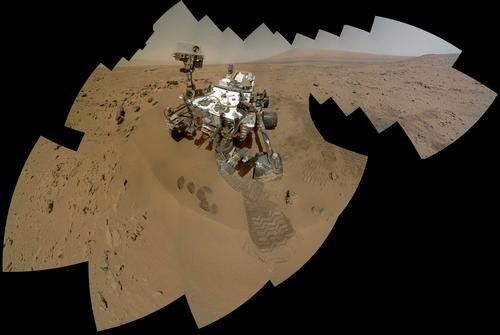
In this talk, Roger E. Summons outlines approaches to seeking evidence of life in Earth’s oldest sedimentary rocks and shows, by analogy, how the Mars Science Laboratory mission is designed to investigate Mars’ capacity for supporting a biosphere.

October 14, 2013: The Search for Early Life on Earth and Mars

No one knows when life first colonized planet Earth, nor if or when Mars ever supported life. We see numerous, unequivocal lines of evidence for life on Earth from some 3.5 billion years ago to the present day. But the further back in time we look, the more clues about our earliest ancestors are clouded by doubts, uncertainties and controversies.

The Search for Early Life on Earth and Mars

Gerald D. Fischbach Auditorium 160 5th Avenue, New York, NY, United States

No one knows when life first colonized planet Earth, nor if or when Mars ever supported life. We see numerous, unequivocal lines of evidence for life on Earth from some 3.5 billion years ago to the present day. But the further back in time we look, the more clues about our earliest ancestors are clouded by doubts, uncertainties and controversies.

Fluid-structure Interactions From the Large to the Very Small

In this talk, Mike Shelley discusses problems in fluid-structure interaction ranging from the macroscopic, i.e. flapping of flags and bending of tree leaves, to the micro – collective behaviors of micro-organisms and the transport of subcellular structures.

October 23, 2013: Epilepsy and Autism: Comorbid Disorders with Shared Etiologies

Autism and epilepsy are often comorbid disorders with overlapping epidemiology, genetics, clinical features, neuroanatomic abnormalities and neurophysiological mechanisms. Defining the genetics and clinical features of individuals with comorbid autism and epilepsy is ongoing, and development of genotype-phenotype correlations has just begun. Understanding shared and distinct mechanisms underlying autism and epilepsy is likely to improve prognosis, therapy and prevention.

October 23, 2013: Epilepsy and Autism: Comorbid Disorders with Shared Etiologies

Gerald D. Fischbach Auditorium 160 5th Avenue, New York, NY, United States

Autism and epilepsy are often comorbid disorders with overlapping epidemiology, genetics, clinical features, neuroanatomic abnormalities and neurophysiological mechanisms. Defining the genetics and clinical features of individuals with comorbid autism and epilepsy is ongoing, and development of genotype-phenotype correlations has just begun. Understanding shared and distinct mechanisms underlying autism and epilepsy is likely to improve prognosis, therapy and prevention.

Infants’ Grasp of Others’ Intentions: The Development of Social Understanding

Gerald D. Fischbach Auditorium 160 5th Avenue, New York, NY, United States

Burgeoning evidence shows that in typical development, the ability to structure actions according to intentions emerges during infancy. And recent evidence reveals that infancy is a period of rapid change and development in this ability. Early social knowledge depends critically on infants’ active engagement with the physical and social world.

November 13, 2013: The Discovery and Study of a Higgs Boson at the Large Hadron Collider

The Large Hadron Collider (LHC) at the European Organization for Nuclear Research (CERN) near Geneva, Switzerland has performed spectacularly well in its first major running period: from December 2009 through February 2013. Data of unprecedented quality and quantity have been recorded for proton-proton collisions at energies of 7 and 8 trillion electron volts — the highest energies ever obtained.

The Discovery and Study of a Higgs Boson at the Large Hadron Collider

Gerald D. Fischbach Auditorium 160 5th Avenue, New York, NY, United States

In this talk, Joe Incandela will present an overview of the LHC physics program, including highlights from the discovery of a Higgs boson and a summary of more recent studies that incorporate more data. He will briefly discuss expectations for future results in years to come.

November 15, 2013: Structural Variant Detection

This Biotech Symposium will focus on computational methods for detecting structural variants, which include large chromosomal insertions, deletions, inversions and translocations.

November 15, 2013: Structural Variant Detection

This Biotech Symposium will focus on computational methods for detecting structural variants, which include large chromosomal insertions, deletions, inversions and translocations.

Structural Variant Detection

Gerald D. Fischbach Auditorium 160 5th Avenue, New York, NY, United States

This Biotech Symposium will focus on computational methods for detecting structural variants, which include large chromosomal insertions, deletions, inversions and translocations.

Black Holes, Quantum Mechanics and Firewalls

Thought experiments have played an important role in figuring out the laws of physics. For the unification of quantum mechanics and gravity, where the phenomena take place in extreme regimes, they are even more crucial. Hawking’s 1976 paper “Breakdown of Predictability in Gravitational Collapse” presented one of the great thought experiments in the history of physics, arguing that black holes destroy information in a way that requires a modification of the laws of quantum mechanics. Skeptics for years failed to poke holes in Hawking’s argument, but concluded that if quantum mechanics is to be saved then our understanding of spacetime must break down in a radical way.

December 4, 2013: On Growth and Form: Geometry, Physics and Biology

L. Mahadevan will explain how a combination of biological and physical experiments, together with mathematical models and computations, begin to unravel the physical basis for morphogenesis. He will go on to explore how these pan-disciplinary problems enrich the origins of this topic, creating new questions in mathematics, physics and biology.

December 4, 2013: On Growth and Form: Geometry, Physics and Biology

L. Mahadevan will explain how a combination of biological and physical experiments, together with mathematical models and computations, begin to unravel the physical basis for morphogenesis. He will go on to explore how these pan-disciplinary problems enrich the origins of this topic, creating new questions in mathematics, physics and biology.

On Growth and Form: Geometry, Physics and Biology

Gerald D. Fischbach Auditorium 160 5th Avenue, New York, NY, United States

L. Mahadevan will explain how a combination of biological and physical experiments, together with mathematical models and computations, begin to unravel the physical basis for morphogenesis. He will go on to explore how these pan-disciplinary problems enrich the origins of this topic, creating new questions in mathematics, physics and biology.

Identities About Self Assembly

In biological systems, there are striking examples where complicated structures (i.e., the bacterial ribosome) can spontaneously assemble, driven by specific interactions between the components. But how can systems be designed to have this property? Recent technological  advances have created the opportunity for making technologically relevant systems that self assemble, using strands of DNA or objects coated with DNA. We will use these systems as inspiration to formulate theoretical models to understand how self assembly works in these systems, through theory, numerical simulation and experiment — and start to speculate as to whether resulting principles might be useful for unravelling the rules of biological self-assembly.

Families of Automorphic Forms and the Trace Formula (2014)

January 26 – February 1, 2014 Organizers: Werner Mueller, University of Bonn Sug Woo Shin, Massachussets Institute of Technology Nicolas Templier, Princeton University The Simons Symposium on Families of Automorphic Forms and the Trace Formula provided an opportunity for researchers to study families of automorphic representations of higher rank groups. During the symposium participants investigated...

February 12, 2014: Other Earths and the Origins of Life

New evidence of exoplanets reveals a higher-than-expected occurrence of potentially habitable worlds in our galactic neighborhood. What does this evidence tell us about life on other planets? How can we search for signs of life on other planets?

February 12, 2014: Other Earths and the Origins of Life

New evidence of exoplanets reveals a higher-than-expected occurrence of potentially habitable worlds in our galactic neighborhood. What does this evidence tell us about life on other planets? How can we search for signs of life on other planets?

Other Earths and the Origins of Life

Gerald D. Fischbach Auditorium 160 5th Avenue, New York, NY, United States

New evidence of exoplanets reveals a higher-than-expected occurrence of potentially habitable worlds in our galactic neighborhood. What does this evidence tell us about life on other planets? How can we search for signs of life on other planets?

Robust Integral Equation Methods for Forward and Inverse Scattering

Integral equation methods play an important role in the numerical simulation of electromagnetic scattering. They are easy to employ in complex geometry and impose the desired radiation conditions at infinity without the need for artificial numerical boundaries. Two of the obstacles faced by current forward simulation tools are “low-frequency breakdown” and the lack of easy to use high order quadrature rules for complicated surfaces. In this talk, I will review the relevant background material, discuss a new mathematical formalism for scattering from perfect conductors and briefly describe a new quadrature technique that yields easily implementable high order rules for singular and weakly singular integrals. The scheme, denoted QBX (quadrature by expansion) is compatible with fast hierarchical algorithms such as the fast multipole method.

Quantum Physics Beyond Simple Systems (2014)

St. Regis Bahia Beach Resort State Road 187 kilometer 4.2, Río Grande, Puerto Rico

Organizers: Boris Altshuler, Columbia University Vladimir Falko, Lancaster University Charles Marcus, Neils Bohr Institute   The Simons Symposium on Quantum Physics Beyond Simple Systems was the second symposium organized on this topic, the first having been held in 2012. It offered another opportunity for researchers to discuss the fast-evolving themes of modern quantum complex systems....

February 26, 2014: Neuroimaging Contributions to the Understanding of Brain Development in Autism

While autism clearly involves altered function of the central nervous system, the neuropathology of the disorder remains controversial. This is due in part,to the enormous complexity of the disorder, which likely has many causes and many biological trajectories. It is also due to the fact that few neuroimaging studies involve very young children or severely affected individuals. This lack of information is compounded by the fact that findings at the magnetic resonance imaging (MRI) level of analysis cannot be confirmed and extended to the cellular level due to a lack of postmortem brains.

Neuroimaging Contributions to the Understanding of Brain Development in Autism

Gerald D. Fischbach Auditorium 160 5th Avenue, New York, NY, United States

While autism clearly involves altered function of the central nervous system, the neuropathology of the disorder remains controversial. This is due in part,to the enormous complexity of the disorder, which likely has many causes and many biological trajectories. It is also due to the fact that few neuroimaging studies involve very young children or severely affected individuals. This lack of information is compounded by the fact that findings at the magnetic resonance imaging (MRI) level of analysis cannot be confirmed and extended to the cellular level due to a lack of postmortem brains.

Genes That Regulate Sleep and Circadian Rhythms in Drosophila

Circadian (~24 hour) clocks are endogenous mechanisms that time the recurring, daily activities observed in most organisms. These clocks are genetically regulated, and generate biochemical oscillations within individual cells composing most tissues. Recently our laboratory has searched for and identified genes that affect the homeostatic regulation of sleep in Drosophila. This research has uncovered specific neurons whose activity promotes sleep.

Perspectives on Big Data in Biology

Gerald D. Fischbach Auditorium 160 5th Avenue, New York, NY, United States

This Biotech Symposium will focus on perspectives on big data in biology from leading practitioners in the field.

Discrete Analysis: Beyond the Boolean Cube (2014)

March 9 – 15, 2014 Organizers: Elchanan Mossel, UC Berkeley Ryan O'Donnell, Carnegie Mellon University Krzysztof Oleszkiewicz, University of Warsaw The Simons Symposium on Discrete Analysis: Beyond the Boolean Cube was the second symposium organized on this topic. The first was held in 2012 and was called Analysis of Boolean Functions. This most recent meeting...

March 12, 2014: Learning With a Nontrivial Teacher

Learning Using Privileged Information (LUPI) is a new paradigm that uses an intelligent agent (a ‘nontrivial teacher’) to supplement standard training data in the context of supervised learning algorithms. Rather than using standard, brute-force methods to address the general problem of inference and the construction of intelligent machines, the LUPI learning model allows the teacher to add additional (privileged) information to the training examples.

Learning With a Nontrivial Teacher

Gerald D. Fischbach Auditorium 160 5th Avenue, New York, NY, United States

Learning Using Privileged Information (LUPI) is a new paradigm that uses an intelligent agent (a ‘nontrivial teacher’) to supplement standard training data in the context of supervised learning algorithms. Rather than using standard, brute-force methods to address the general problem of inference and the construction of intelligent machines, the LUPI learning model allows the teacher to add additional (privileged) information to the training examples.

Galactic Superwinds: Beyond Phenomenology (2014)

March 23 - 29, 2014 Organizers: Andrew Benson, Carnegie Observatories Juna Kollmeier, Carnegie Observatories The goal of this symposium was to bring together leading experts in the theory and observation of galactic superwinds — outflows of mass, momentum and energy from galaxies thought to be driven by radiation and winds from stars, and by supernova...

March 26, 2014: An Attempt at Redefining Autism for the Biological Sciences: Implications and Translational Opportunities

Advances in molecular genetics have implicated a variety of genetic variations in autism, yet understanding of what these variations mean is still limited. Advances in classification of diseases have made autism among the most reliably diagnosed neurodevelopmental or neuropsychiatric disorders. But symptoms used to define autism are likely outcomes of earlier disruptions in normative social and communication development rather than causally linked to genetic perturbations.

An Attempt at Redefining Autism for the Biological Sciences: Implications and Translational Opportunities

Gerald D. Fischbach Auditorium 160 5th Avenue, New York, NY, United States

Advances in molecular genetics have implicated a variety of genetic variations in autism, yet understanding of what these variations mean is still limited. Advances in classification of diseases have made autism among the most reliably diagnosed neurodevelopmental or neuropsychiatric disorders. But symptoms used to define autism are likely outcomes of earlier disruptions in normative social and communication development rather than causally linked to genetic perturbations.

Transcriptional and Epigenetic Mechanisms of Depression

Depression is a common, chronic, and debilitating disease. Although many patients benefit from antidepressant medications or other therapies, only about half show complete remission. Factors that precipitate depression, such as stress, are incompletely understood. We have used chronic social defeat stress as an animal model of depression. Prolonged exposure to an aggressor induces lasting changes in behavior such as social avoidance and anhedonia-like symptoms, which are reversed by chronic (but not acute) treatment with available antidepressants.

April 11, 2014: Conference on Theory & Biology

This day-long conference will highlight areas where theoretical ideas are having an impact on the life sciences, and will be of interest to established researchers, postdoctoral fellows and graduate students working in the life sciences and allied fields.

April 15, 2014: Von Neumann Machines and Molecular Darwinism

In this lecture, Gerald Joyce focuses on the perpetuation of genetic information as a defining characteristic of life. He draws a connection between digital computers (von Neumann machines), especially those with the capacity to self-reproduce, and molecular Darwinian systems that maintain heritable ‘bits’ of information, which are refined through evolution.

April 15, 2014: Von Neumann Machines and Molecular Darwinism

In this lecture, Gerald Joyce focuses on the perpetuation of genetic information as a defining characteristic of life. He draws a connection between digital computers (von Neumann machines), especially those with the capacity to self-reproduce, and molecular Darwinian systems that maintain heritable ‘bits’ of information, which are refined through evolution.

Von Neumann Machines and Molecular Darwinism

Gerald D. Fischbach Auditorium 160 5th Avenue, New York, NY, United States

In this lecture, Gerald Joyce focuses on the perpetuation of genetic information as a defining characteristic of life. He draws a connection between digital computers (von Neumann machines), especially those with the capacity to self-reproduce, and molecular Darwinian systems that maintain heritable ‘bits’ of information, which are refined through evolution.

April 23, 2014: New Insights and Approaches for Studying Rett Syndrome, an Autism-Associated Disorder

A central goal in neuroscience is determining the genetic basis of neurological disorders — from autism to brain tumors. Many of these pathological states result from defects in gene regulatory programs that are fundamental to all cell types but lead to dysfunction specifically within the nervous system. Gail Mandel investigates the basis of this phenomenon and has identified cell-cell interactions between neurons and glia involved in pathological states of brain development. Mandel has ameliorated the neuropathology of one autism spectrum disorder, Rett syndrome, by genetically replacing the defective MeCP2 gene with a good copy of the gene in astrocytes – glia cells in the brain. She is now exploring the underlying mechanisms crucial for neuronal signaling.

New Insights and Approaches for Studying Rett Syndrome, an Autism-Associated Disorder

Gerald D. Fischbach Auditorium 160 5th Avenue, New York, NY, United States

A central goal in neuroscience is determining the genetic basis of neurological disorders — from autism to brain tumors. Many of these pathological states result from defects in gene regulatory programs that are fundamental to all cell types but lead to dysfunction specifically within the nervous system. Gail Mandel investigates the basis of this phenomenon and has identified cell-cell interactions between neurons and glia involved in pathological states of brain development. Mandel has ameliorated the neuropathology of one autism spectrum disorder, Rett syndrome, by genetically replacing the defective MeCP2 gene with a good copy of the gene in astrocytes – glia cells in the brain. She is now exploring the underlying mechanisms crucial for neuronal signaling.

April 30, 2014: Where is Fundamental Physics Heading?

In recent decades, physicists and astronomers have discovered two beautiful standard models, one for the quantum world of extremely short distances and one for the universe as a whole. Both models have had spectacular success, but there are also strong arguments for new physics beyond these models.

Where is Fundamental Physics Heading?

Gerald D. Fischbach Auditorium 160 5th Avenue, New York, NY, United States

In recent decades, physicists and astronomers have discovered two beautiful standard models, one for the quantum world of extremely short distances and one for the universe as a whole. Both models have had spectacular success, but there are also strong arguments for new physics beyond these models.

Big Data Analytics and a Path to Enhancing Our Understanding of Human Disease

Dr. Schadt provides an overview of how his team organizes very large scale data across many different types, and then integrates these data using sophisticated mathematical algorithms to construct predictive network models of disease, and discusses the application of this type of modeling in the cancer arena.

May 21, 2014: Probabilistic Topic Models of Text and Users

Probabilistic topic models provide a suite of tools for analyzing large collections of electronic documents. A traditional topic model analyzes a collection of documents to discover its hidden themes.  These themes can be used to organize, visualize, summarize and navigate the collection. Many collections are associated with corresponding reader behavior data, which is useful both for making predictions about readers (such as which articles they will like) and in understanding patterns in how they read.


Probabilistic Topic Models of Text and Users

Gerald D. Fischbach Auditorium 160 5th Avenue, New York, NY, United States

Probabilistic topic models provide a suite of tools for analyzing large collections of electronic documents. A traditional topic model analyzes a collection of documents to discover its hidden themes.  These themes can be used to organize, visualize, summarize and navigate the collection. Many collections are associated with corresponding reader behavior data, which is useful both for making predictions about readers (such as which articles they will like) and in understanding patterns in how they read.

May 28, 2014: Keeping Your Brain in Balance: Do Defects in Neuronal Homeostasis Contribute to Autism Spectrum Disorders?

Although most people regularly tune up their cars, you probably haven’t needed to bring your brain in for a tune-up, despite the fact that the human brain is far more complex than the internal combustion engine. What’s more, unlike most machines, your brain is constantly changing in order to store memories and adapt to a fluid environment. Our brains are faced with a fundamental challenge: They must preserve the integrity of the neural circuits that subserve behaviors over the lifetime of an organism, while at the same time allowing plastic mechanisms to shape and fine-tune their function.

Keeping Your Brain in Balance: Do Defects in Neuronal Homeostasis Contribute to Autism Spectrum Disorders?

Gerald D. Fischbach Auditorium 160 5th Avenue, New York, NY, United States

Although most people regularly tune up their cars, you probably haven’t needed to bring your brain in for a tune-up, despite the fact that the human brain is far more complex than the internal combustion engine. What’s more, unlike most machines, your brain is constantly changing in order to store memories and adapt to a fluid environment. Our brains are faced with a fundamental challenge: They must preserve the integrity of the neural circuits that subserve behaviors over the lifetime of an organism, while at the same time allowing plastic mechanisms to shape and fine-tune their function.

Symposium on Evidence in the Natural Sciences

FRIDAY, MAY 30, 2014 Scientific Program: 8:00 AM - 3:15 PM Evening Program: 4:30 - 7:45 PM Gerald D. Fischbach Auditorium 160 5th Avenue, New York, New York, 10010 What is the difference between evidence, fact, and proof? Can we quantify evidence; is something more evident than something else? What does it take to convince...

Complex Data Visualization: Approach and Application

Gerald D. Fischbach Auditorium 160 5th Avenue, New York, NY, United States

This Biotech Symposium will focus on the visualization and representation of analytic results from complex data sets.

Strategies to Prolong Vision in Inherited Forms of Blindness

In the disease retinitis pigmentosa (RP), disease genes directly cause the dysfunction and death of rod photoreceptors, the photoreceptor type that mediates vision in dim light, causing night blindness. Subsequently, the cone photoreceptors, which mediate color and daylight vision, also lose function and die. Dr. Cepko et al have suggested a model wherein cones are affected due to the dysregulated metabolism that follows rod death. They have begun to develop gene therapy to combat this, using adenovirus-associated vectors (AAV) to deliver genes that help cones fight oxidation and other forms of stress. Their progress in treating RP mice using such vectors will be presented.

The Social Brain: A Hypothesis Space for Understanding Autism

Gerald D. Fischbach Auditorium 160 5th Avenue, New York, NY, United States

In this talk, Nancy Kanwisher will consider the functional architecture of the social brain in typical subjects as an avenue for considering which functions are affected and which are preserved in autism.

Testing the Cortical Column Conjecture

Gerald D. Fischbach Auditorium 160 5th Avenue, New York, NY, United States

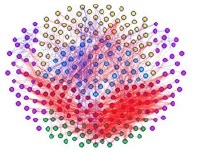
In his talk, Carey Priebe will present the conjecture that neurons in the neocortex are connected in a graph that exhibits motifs representing repeated processing modules.

Urban Social Science Au Naturel

Gerald D. Fischbach Auditorium 160 5th Avenue, New York, NY, United States

The enormous amount of information that is now available about cities and the people who live in them offers intriguing opportunities for better understanding human behavior. That understanding can be applied to optimize urban policy and operations. Steven Koonin will discuss examples of and prospects for gaining insight into human behavior within the context of work at...

Numerical Quantum Simulations of Realistic Materials

Simulating quantum mechanics on classical computers appears at first to require exponential computational resources, yet at the same time rapid progress is being made in accurate simulations of the quantum properties of realistic materials. How is this discrepancy resolved?

2014 MPS Annual Meeting

Thursday, October 23rd – Friday, October 24th, 2014 Download the 2014 Annual Meeting booklet (PDF). The Simons Foundation Division of Mathematics and Physical Sciences (MPS) held its second Annual Meeting on October 23 and 24, 2014. MPS-supported scientists were invited to the foundation to meet, share ideas and hear talks representing the spectrum of MPS-supported...

MoSAIC Math + Art Festival

Columbia University, Columbia Secondary School 425 W 123rd St between Amsterdam & Morningside Ave., New York, NY, United States

The MoSAIC Festival includes a variety of hands-on workshops, lectures, a mathematical art exhibit, short films and an area for informal exchange. It is designed to be easily accessible to audiences high-school age and up.

MEG/EEG Part 1: Acquisition, Modeling and Localization

Gerald D. Fischbach Auditorium 160 5th Avenue, New York, NY, United States

MEG and EEG Signals and Their Sources: Insights from Physics, Physiology and Anatomy Matti Hamalainen, Massachusetts General Hospital Understanding the biophysics and physiology underlying the generation of detectable extracranial magnetic fields and electric potentials is of prime importance for correct interpretation of magnetoencephalography (MEG) and electroencephalography (EEG) data. Matti Hamalainen will discuss the neural sources of...

Belief Propagation Algorithms with Applications to Cancer Genomics

Gerald D. Fischbach Auditorium 160 5th Avenue, New York, NY, United States

In this talk, Christian Borgs will give an introduction to belief propagation, discuss how the accuracy of belief propagation has been rigorously established, and present recent applications to systems biology.

Topology and Complexity

Topology, the "rubber sheet geometry", studies properties that do not change when objects are pulled and stretched. Accepting somewhat fuzzy input, it is the part of mathematics typically applied when qualitative conclusions are reached. However, it has a quantitative aspect important in understanding singularities, and potentially, high-dimensional noisy data and aspects of large-scale geometry of networks. Prof. Weinberger will discuss a variety of phenomena that arise or are illuminated by tracking of the complexity of geometric constructions.

December 3, 2014: Learning to Move

Basic motor skills such as looking, reaching and walking do not simply appear as the result of maturation. Rather, infants must learn to move. Learning entails discovering new forms of movements to suit the task at hand and using perceptual information to select and modify movements adaptively.

Learning to Move

Gerald D. Fischbach Auditorium 160 5th Avenue, New York, NY, United States

Basic motor skills such as looking, reaching and walking do not simply appear as the result of maturation. Rather, infants must learn to move. Learning entails discovering new forms of movements to suit the task at hand and using perceptual information to select and modify movements adaptively.

Why Prove Theorems?

Since at least the time when it was understood that the circumference of a circle is pi multiplied by its diameter, the applications of mathematics have raced on far ahead of the foundations of the subject itself. By considering a variety of examples, principally from the 19th century, we will explore the tension between mathematics and its applications, and reasons why it remains a valuable and rewarding occupation to develop the necessary framework for existing and “well understood” theories.

MEG/EEG Part 2: Analysis, Application and Interpretation

Gerald D. Fischbach Auditorium 160 5th Avenue, New York, NY, United States

Speakers: Jonathan Simon, University of Maryland Timothy Roberts, Children's Hospital of Philadelphia Jonathan Winawer, New York University   https://vimeo.com/117625451 Signal Analysis Primer and Applications Jonathan Z. Simon, University of Maryland Modern cognitive neuroscientists using electrocorticography (ECoG), MEG and electroencephalography (EEG) are under substantial pressure to use advanced signal processing and analysis techniques, but typically receive...

Non-Archimedean and Tropical Geometry (2015)

February 1-7, 2015   Organizers: Matt Baker, Georgia Institute of Technology Same Payne, Yale University This symposium focused on setting a clear agenda for future developments in the related fields of tropical and nonarchimedean analytic geometry. One of the goals of the meeting was to produce high-quality expository material presenting the methods, results and ambitions...

The Origin of Specificity in Regulated Protein Degradation

One of the characteristic features of life — specificity — emerges in metabolism, information transfer from DNA to protein, embryology, immunology and virtually every other process. Its explanation on the molecular level is thermodynamic stability and structural complementarity. Yet one disturbing issue persists: the protein and nucleic acid sequences coding for that specificity are generally too small to distinguish actual partners from competitors. Similarly, protein degradation conveys specificity through very short sequences. The process is so kinetically complex that bulk kinetic experiments and a few molecular structures are insufficient to explain how specificity is achieved. Using single molecule kinetic measurements, we have deconvolved much of that specificity.

New Directions in Approximations Algorithms (2015)

February 22-28, 2015   Organizers: Sanjeev Arora, Princeton University Uriel Feige, Weizmann Institute Michel Goemans, Massachusetts Institute of Technology David Shmoys, Cornell University This is the second Simons Symposium on Approximation Algorithms for NP-hard problems. The first, in January 2013, focused on core techniques and problems of this field. The upcoming meeting is expected to...

A Dark Matter Hunter’s Guide to the Universe

Gerald D. Fischbach Auditorium 160 5th Avenue, New York, NY, United States

Kathryn Zurek will review evidence for the presence of dark matter in our universe and the need for a new theory to describe the dark matter sector.

Mineral Evolution and Ecology, and the Co-evolution of Life and Rocks

Gerald D. Fischbach Auditorium 160 5th Avenue, New York, NY, United States

In this lecture, Hazen will examine how Earth’s near-surface environment has evolved as a consequence of selective physical, chemical and biological processes — an evolution that is preserved in the mineralogical record.

Quantum Entanglement (2015)

March 15-21, 2015   Organizers: Shamit Kachru, Stanford University Hirosi Ooguri, Caltech Subir Sachdev, Harvard University Since our last symposium, quantum entanglement has become even more important in areas of theoretical physics ranging from condensed matter physics and quantum information to quantum gravity. In quantum gravity, it is playing a key role in elucidating the...

Online Social Systems

People spend hours a day interacting in online settings, ranging from social media sites to a broad range of digital communities designed for work, education and entertainment. Such systems are generally intended to elicit particular activities or forms of engagement, yet we have relatively little understanding of the resulting behaviors or of how system design may contribute to those behaviors. This talk will discuss work that aims to develop models of human behavior in online settings, both to inform system design but also to address fundamental questions in the social sciences.

Geometry Over Nonclosed Fields: Geometry and Arithmetic of Holomorphic Symplectic Varieties (2015)

March 22–28, 2015   Organizing committee: Fedor Bogomolov, Courant Institute of Mathematical Sciences Brendan Hassett, Rice University Yuri Tschinkel, Simons Foundation The second Simons Symposium on Geometry over Nonclosed Fields took place March 22-28. The first symposium in this series focused on rational curves on higher-dimensional algebraic varieties and outlined applications of the theory of...

Light to Life

Gerald D. Fischbach Auditorium 160 5th Avenue, New York, NY, United States

All life on Earth is based on electron transfer reactions far from thermodynamic equilibrium. In this talk, Paul Falkowski will discuss the possibility that photobiochemical reactions of minerals were transformational in the origins and persistence of biologically catalyzed electron transfer reactions on Earth.

Genomics in Single Cells and Microbiomes

Gerald D. Fischbach Auditorium 160 5th Avenue, New York, NY, United States

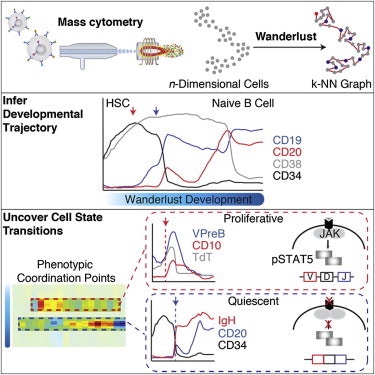
Speakers: Curtis Huttenhower, Aviv Regev, Dana Pe’er, Michael Schatz Curtis Huttenhower High-precision Functional Profiling of Microbial Communities and the Human Microbiome https://vimeo.com/125281142 Aviv Regev Towards a Human Cell Atlas https://vimeo.com/125270869 Dan Pe'er Single Cell Mapping of Developmental Trajectories Underlying Health and Disease https://vimeo.com/125270868 Michael Schatz Algorithms for Single Cell and Single Molecule Biology https://vimeo.com/125281143

Reproducible Research and the Common Task Method

Gerald D. Fischbach Auditorium 160 5th Avenue, New York, NY, United States

In this lecture, Mark Liberman will describe the origins and development of the ‘Common Task’ method in DARPA’s human language technology program, its broader influence on recent research and development practices, and its lessons for the future.

Imaging as Exploration

Gerald D. Fischbach Auditorium 160 5th Avenue, New York, NY, United States

Advanced data generation capabilities require other enhanced abilities — with increasing data size and complexity, the development of more efficient acquisition and analysis methods is essential. In this lecture, Lawrence R. Frank will discuss how this new paradigm of imaging exploration is manifest.

Illuminating Biology at the Nanoscale with Super-Resolution Florescence Microscopy

Stochastic optical reconstruction microscopy (STORM), breaks the diffraction limit on light microscopy by using selective activation of photo-switchable fluorescent probes to temporally separate the spatially overlapping images of individual molecules. This approach has allowed multicolor and 3-D imaging of living cells with nanometer-scale resolution, enabling discoveries of novel sub-cellular structures. In this talk, Prof. Zhuang will discuss her group's development of STORM and its biological applications.

Extra-Solar Planets: Search, Characterization and Population Inferences

Gerald D. Fischbach Auditorium 160 5th Avenue, New York, NY, United States

David W. Hogg will explore how planets are discovered in the Kepler dataset, how the data are understood and how researchers can make inferences about the full population of planets in the galaxy.

Solving the 3-D Puzzle of Rotation Assignment in Single Particle Cryo-Electron Microscopy

Gerald D. Fischbach Auditorium 160 5th Avenue, New York, NY, United States

This lecture will explore algorithms for estimating the unknown pose parameters. The main focus will be on algorithms that are based on semidefinite programming relaxations that can be viewed as extensions to existing approximation algorithms to max-cut and unique games, two fundamental problems in theoretical computer science.

Visualizing Quantum Matter

Gerald D. Fischbach Auditorium 160 5th Avenue, New York, NY, United States

Everything around us — everything each of us has ever experienced and virtually everything underpinning our technological society and economy — is governed by quantum mechanics. Yet this most fundamental physical theory of nature often feels like a set of somewhat eerie and counterintuitive ideas of no direct relevance to our lives. Why is this? One reason is that we cannot perceive the strangeness (and astonishing beauty) of the quantum mechanical phenomena all around us by using our own senses.

Harnessing Hippocampal Stem Cells to Improve Mood and Cognition

Recent studies have implicated adult-born hippocampal neurons in pattern separation, a process by which similar experiences or events are transformed into discrete non-overlapping representations. Impaired pattern separation, Dr. Hen proposes, underlies the overgeneralization often seen in age-related memory impairments and in anxiety disorders. Dr. Hen will present evidence that strategies aimed at stimulating hippocampal neurogenesis result in improved pattern separation.

Timing Mechanisms of Critical Periods in Brain Development

Gerald D. Fischbach Auditorium 160 5th Avenue, New York, NY, United States

This lecture explores the biological bases of critical periods in brain development. Mechanisms that open and close windows of plasticity (E/I balance and molecular brakes, respectively) are implicated in autism, suggesting mistimed maturational processes that can be strategically rescued at the circuit level.

What Do Animals Really Learn? Adventures of Reinforcement Learning in the Real World

Gerald D. Fischbach Auditorium 160 5th Avenue, New York, NY, United States

In this lecture, Yael Niv will argue that the key to learning efficiently in real-world scenarios is to use a simplified representation of the task that includes only those dimensions of the environment that are relevant to obtaining reward.

2015 MPS Annual Meeting

Thursday, October 22nd – Friday, October 23rd, 2015 Download the 2015 Annual Meeting booklet (PDF). The Mathematics and Physical Sciences Annual Meeting gathered together Simons Investigators, Simons Fellows, Simons Society of Fellows and Math + X Chairs and Investigators to exchange ideas through lectures and informal discussions in a scientifically stimulating environment. Agenda Thursday, October...

Molecular and Neural Architecture of Circuits Underlying Social Behavior in the Mouse

Gerald D. Fischbach Auditorium 160 5th Avenue, New York, NY, United States

In this lecture, Catherine Dulac will discuss the cellular and molecular architecture of neural circuits underlying instinctive social behaviors of mice. She will describe her group’s recent advances in uncovering the identity of sensory neurons that detect social cues and the identity of command circuits associated with specific social responses in male and female mice.

Clinical and translational genomics

Gerald D. Fischbach Auditorium 160 5th Avenue, New York, NY, United States

This Biotech Symposium will focus on clinical and translational genomics and the shift to precision medicine.

Understanding the Relationship Between Genes and Social Behavior: Lessons from the Honey Bee

The study of genes and social behavior is still a young field. In this lecture, Gene E. Robinson will discuss some of the first insights to emerge that describe the relationship between them. These include the surprisingly close relationship between brain gene expression and specific behavioral states; social regulation of brain gene expression; control of social behavior by context-dependent rewiring of brain transcriptional regulatory networks; and evolutionarily conserved genetic toolkits for social behavior that span insects, fish and mammals.

Storming the Ivory Tower: How to Make Autism Interventions Work in Schools

Gerald D. Fischbach Auditorium 160 5th Avenue, New York, NY, United States

In this lecture, David S. Mandell will talk about why autism interventions rarely are implemented in community practice and why they fail to achieve the same outcomes as those observed in clinical trials.

Patterns in the Primes

Gerald D. Fischbach Auditorium 160 5th Avenue, New York, NY, United States

Prime numbers have intrigued mathematicians, amateur and professional alike, for thousands of years. Some of the most pertinent questions today probably stem from classical times. In this lecture, Dr. Granville will discuss some well-known patterns in the primes and explain some of the latest progress.

Quarks, Flux Tubes and String Theory Without Calculus

The theory of strings started as an attempt to describe the forces holding quarks together. Important remnants of that idea survive in the form of the flux tubes of quantum chromodynamics and their description as “strings” in the gauge-string duality. Applications to quark-gluon plasmas have yielded some of the most quantitative comparisons of string theory with experimental data. For example,...
Atom-interferometry Limits on Dark Energy

Gerald D. Fischbach Auditorium 160 5th Avenue, New York, NY, United States

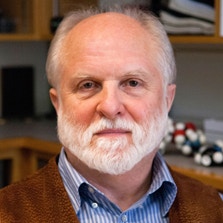
In this lecture, Dr. Holger Müller will explain recent experimental searches for certain models of dark energy. How can it be that dark energy, which is supposedly ubiquitous in the cosmos, has never been observed in experiments?
A Molecular Geneticist’s Approach to Understanding the Fly Brain

Gerald D. Fischbach Auditorium 160 5th Avenue, New York, NY, United States

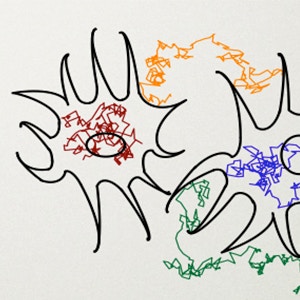
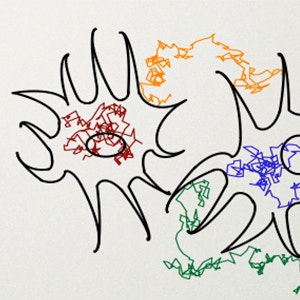
In this lecture, Gerald Rubin will discuss efforts to develop and apply the tools that will be required for a comprehensive analysis of the anatomy and function of the fly brain at the level of individual cell types and circuits, using examples from his lab’s recent work on visual perception, as well as the mechanisms of learning and memory.

The Formation of Structure in the Cosmos

Gerald D. Fischbach Auditorium 160 5th Avenue, New York, NY, United States

In this lecture, Juna Kollmeier will take you on a cosmic journey, starting with the infant universe and explain the current thinking about how “structure” emerges from this humble start.

What Can Genetics Tell Us About Autism Spectrum Disorder?

Gerald D. Fischbach Auditorium 160 5th Avenue, New York, NY, United States

This talk will outline the current state of genetics research in autism, highlight some of the key findings that remain to be discovered, and consider how these findings could ultimately benefit individuals with autism and their families.

Analysis of Boolean Functions (2016)

April 3-9, 2016   Organizers: Krzysztof Oleskiewicz, University of Warsaw Elchanan Mossel, University of Pennsylvania Ryan O’Donnell, Carnegie Mellon University Related Links: Discrete Analysis: Beyond the Boolean Cube (2014) Analysis of Boolean Functions: New Directions and Applications (2012) Analysis of Boolean Functions Blog This third symposium for Analysis of Boolean Functions focused on "New Analytic...

Geometric Aspects of the Trace Formula (2016)

April 10-16, 2016   Organizers: Werner Mueller, Mathematisches Institut der Universität Bonn Sug Woo Shin, UC Berkeley Nicolas Templier, Cornell University Related Links: Geometric Aspects of the Trace Formula (external site) 2014 Simons Symposium on Families of Automorphic Forms and the Trace Formula The second gathering of the Simons Symposium on the Trace Formula paved...

Einstein’s Blunder Undone

Gerald D. Fischbach Auditorium 160 5th Avenue, New York, NY, United States

In this talk, Robert Kirshner will show how we discovered cosmic acceleration and present evidence that we live in a universe that is only 4 percent ordinary matter, with the balance being dark matter and dark energy.

Geometry Over Nonclosed Fields (2016)

April 17-23, 2016   Organizers: Fedor Bogomolov, Courant Institute of Mathematical Sciences Brendan Hassett, Brown University Yuri Tschinkel, Simons Foundation Related Links: 2012 Simons Symposium on Geometry Over Nonclosed Fields 2015 Simons Symposium on Geometry Over Nonclosed Fields The focus of this third symposium on Geometry Over Nonclosed Fields was zero-cycles and related Chow-theoretic and...

Integrability and Universality in Probability

Gerald D. Fischbach Auditorium 160 5th Avenue, New York, NY, United States

In this lecture, Alexei Borodin will illustrate how these two concepts work together in examples from random matrices to random interface growth.


Advancing Research in Basic Science and MathematicsSubscribe to Flatiron Institute announcements and other foundation updates